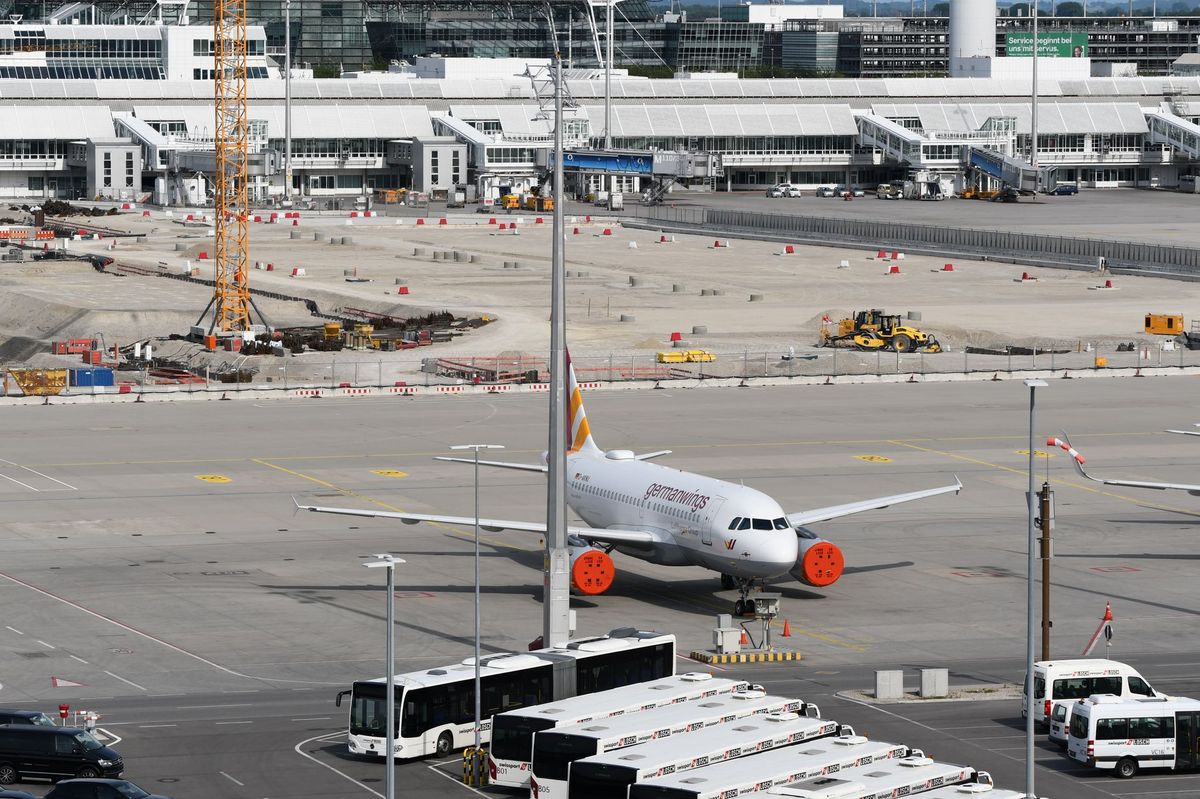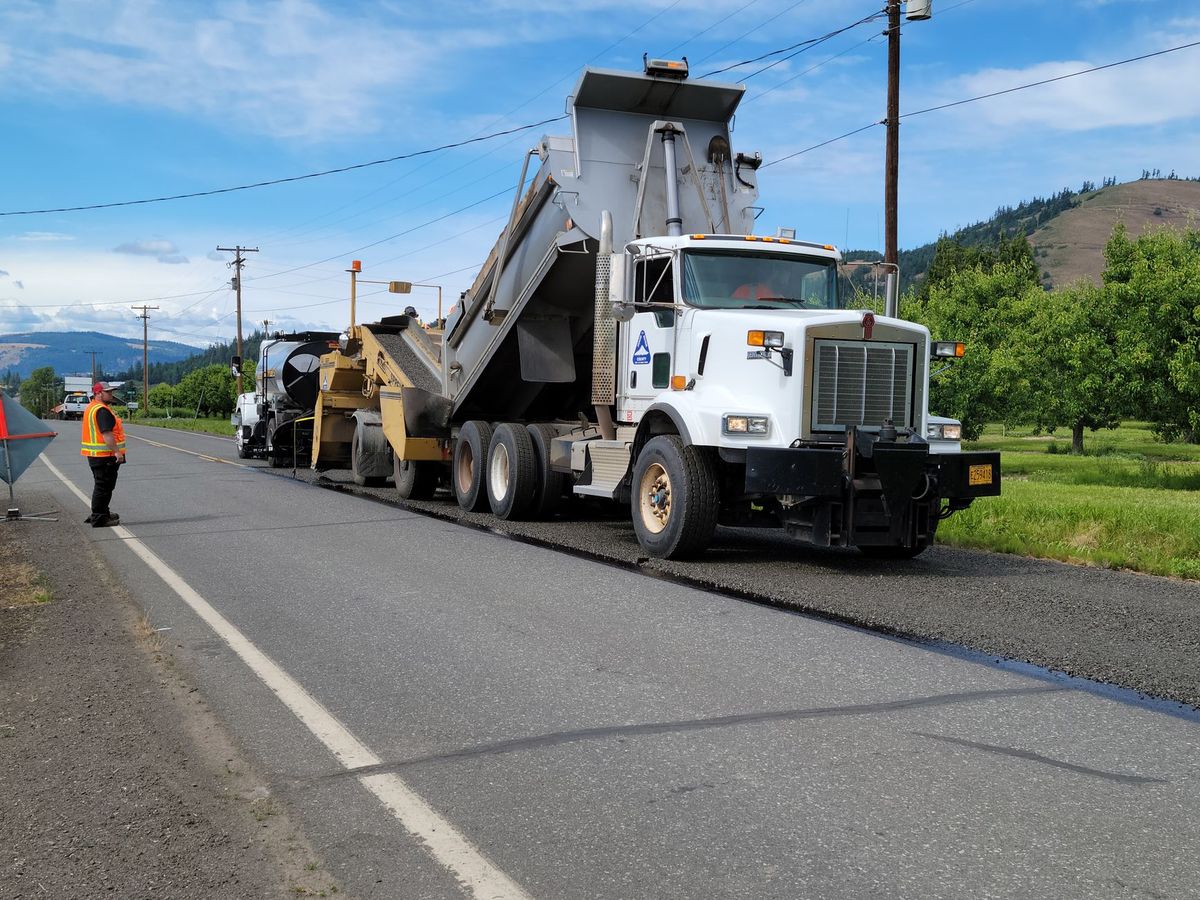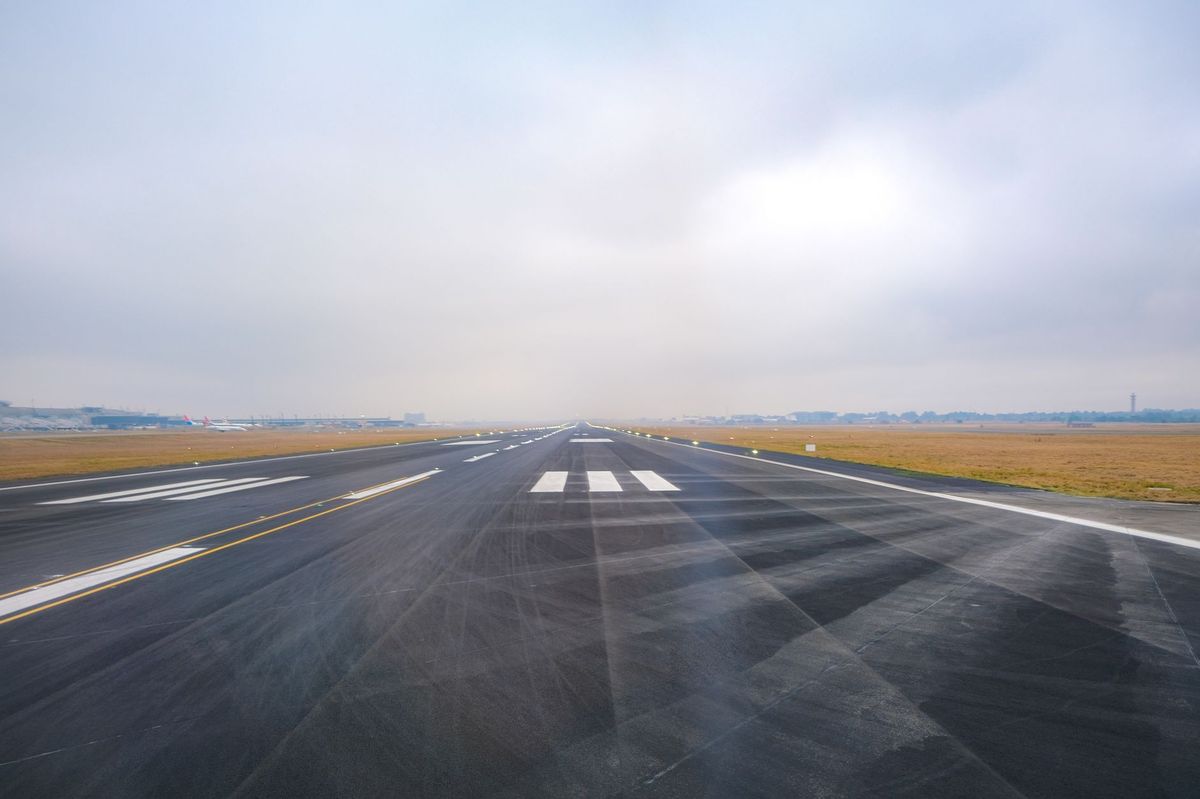
A new commercial airport runway costs approximately $12 million per mile in 2026, and that's the conservative number. When you add full pavement depth, precision drainage, runway lighting, instrument landing systems (ILS), and taxiway connections, you're looking at $14 million to $18 million per mile. That's not a typo, and it's why most airports don't build new runways—they expand existing ones or repair to extend service life.
I've worked commercial airport projects as a general contractor running crews. Airport work is different from highway paving in ways that matter to your margins. The spec is tighter, the inspection regime is federal, and every square yard of concrete has to meet FAA P-501 pavement specifications, which cost 15–25% more to produce and place than standard highway concrete.
Here's what airport runway construction actually costs when you break it down by component, why FAA requirements drive prices up, and where the federal funding comes from for airports that aren't revenue-positive enough to self-fund expansion.
The $12 Million Mile: What's Actually Included
A "mile of runway" is a nominal unit. The FAA classifies runways by design category based on aircraft type and approach speed. A typical commercial runway is 150 feet wide and 10,000–13,000 feet long. That's a working surface of 1.7 million to 2.0 million square feet.
Let me break down a real runway project I bid in 2024 for a regional commercial airport (non-hub, 5–10 million passengers annually):
Project scope:
- 10,000-foot runway extension (new construction, not rehab)
- 150-foot width
- PCC (Portland Cement Concrete) runway with 17-inch slab depth
- Full subgrade preparation and stabilization
- Complete drainage system with underdrain
- Runway lighting (medium intensity, MIRL)
- Precision GPS-guided grooving for friction
Material costs (~38% of total):
- Excavation and subgrade prep: $1.1 million (earthwork, fill compaction to 95% standard proctor)
- Base course material: $280,000 (12-inch crushed stone, lime-stabilized)
- Concrete (1.7M SY at $18–$24/SY): $3.4 million (FAA P-501 spec requires air entrainment, low water-cement ratio, specific aggregate gradation)
- Drainage materials (underdrains, French drains, sump systems): $580,000
- Runway lighting fixtures and wiring: $420,000 (LED retrofit: $8,000–$12,000 per light fixture, typically 50–80 fixtures per runway)
- Signage, markings, paint: $150,000
Labor and equipment costs (~48% of total):
- Concrete placement (pumping, screeding, finishing): $1.8 million (45–65 hours per 1,000 SY at $40–$65/hour crew rate)
- Runway grooving (precision grooving for friction coefficient ≥0.60 wet): $340,000
- Lighting installation and testing: $280,000
- Compaction and testing (nuclear density testing every 200 feet): $180,000
- Equipment rental (concrete pumps, vibratory compactors, GPS-guided scrapers): $520,000
- Project management and quality assurance: $180,000
Overhead and contingency (~14% of total):
- Contractor margin and overhead: $960,000
- Insurance, bonding, weather contingency: $380,000
Total project cost: $10.2 million for a 10,000-foot (1.9-mile) runway = $5.4 million per mile.
Wait—that doesn't match the $12 million per mile headline. Here's why:
The $12M figure includes full airport infrastructure, not just the runway slab:
Runway connector taxiways and aprons: An additional 60–80% of the runway area in taxi lanes and aircraft parking aprons. That's another $3–$4 million.
Instrument Landing System (ILS) and precision approach lighting (Category II/III airports): $2–$6 million depending on approach complexity.
Airfield Lighting Control and Monitoring System (ALCMS): $400K–$800K for automated brightness adjustment and remote diagnostics.
Navigational aids (NAVAIDS): VOR, DME, localizer installation and certification: $1–$3 million depending on whether you're upgrading or new-build.
Terminal building or facility expansion (often bundled with runway projects): $5–$20 million depending on size.
So a full runway expansion project—runway plus taxi infrastructure plus some terminal improvements—hits $12–$18 million per mile of primary runway easily. Highway contractors see that number and balk. Airport contractors know that's the market rate. For context on federal infrastructure spending, public expenditure on construction projects continues to scale these types of airport improvements.
Why Airport Concrete Costs More Than Road Concrete
Here's the tension point for contractors: airport runway concrete costs 18–25% more than highway concrete to produce and place, and specifications are federal, not state.
FAA P-501 requirements (Design of Concrete Pavements for Airports and Heliports):
- Air entrainment mandated: 4–8% air content to prevent freeze-thaw damage. Highway concrete is typically 3–5%. The entrainment agent and testing cost adds $0.80–$1.20 per cubic yard.
- Low water-cement ratio: Maximum 0.45 by FAA spec (highways often allow 0.50–0.55). Lower w/c means lower slump, which means more vibration and finishing labor.
- Specific aggregate gradation: FAA specifies maximum aggregate size, gradation curve, and fines content. Non-compliant aggregates must be rejected or screened, adding procurement cost.
- Strength testing protocol: Every placement requires a minimum of 2 cylinder breaks at 7 days and 3 at 28 days (highways: typically 1 every 500 CY). Cost of testing adds $1.50–$2.00 per cubic yard.
- Skid resistance: Runways must achieve a friction coefficient ≥0.60 wet per ASTM F1679. That requires:
- Precision grooving (0.125-inch depth grooves every 0.5 inches, with specific spacing tolerance ±0.06 inches): $0.35–$0.60 per square yard
- Aggregate selection for friction (polished stone value ≥45): premium-priced aggregates add $1–$2 per ton
- Post-grooving measurement and validation: $30K–$80K for laser profiling of the whole runway
Example cost delta:
- Highway PCC (AASHTO spec): $18–$22 per square yard (material + placement)
- Airport runway PCC (FAA P-501 spec): $24–$30 per square yard
On a 1.7 million SY runway, that's a $10–$13 million material and labor premium just for spec compliance.
Drainage Design: The Hidden Cost Driver
Airport drainage is engineered to a higher standard than highway drainage because standing water on a runway is operationally unacceptable—it closes the airport.
Subsurface drainage system:
- Perforated underdrain pipes (12–18 inches deep, 50–100 feet spacing) running the length of the runway
- French drains or filter blankets along the edges
- Sump collection points with pumping stations (in flat terrain)
- Geotextile separation and stabilization layers
- Cost: $3.50–$5.50 per linear foot of runway, which for a 10,000-foot runway is $35,000–$55,000 just for the underdrain infrastructure
Surface drainage:
- Crowned surface (1.5% slope) pitched to edge drains
- Grooving (mentioned above) also functions as micro-drainage
- Edge sump drains every 300–500 feet
- Cost: included in surface prep and grooving, but accounts for 8–12% of concrete placement labor
I've been on runway projects where the subsurface drainage system failed (inadequate underdrain sizing or sump capacity in high-water conditions), and the repair cost was 15–20% of the original construction cost. Airports learn this the hard way: bid for good drainage design or pay later.
Runway Lighting and Electrical Systems
Runway lighting is a specialized subset of airfield work, and it costs money.
Runway lighting categories (FAA standards):
- LIRL (Low Intensity Runway Lights): 2,000–5,000 candelas, for visual (non-instrument) runways. Cost: $3,000–$6,000 per fixture (installed, including power supply and control modules). Typical runway: 60–100 fixtures = $180K–$600K for lighting alone.
- MIRL (Medium Intensity Runway Lights): 25,000–200,000 candelas, for instrument approaches. Cost: $8,000–$15,000 per fixture. 80 fixtures = $640K–$1.2M.
- HIRL (High Intensity Runway Lights): for Category II/III precision approaches. Cost: $12,000–$20,000 per fixture. 80 fixtures = $960K–$1.6M.
Beyond the fixtures, electrical:
- Direct burial cable (UG), 4–6 cable runs under the runway: $40K–$100K (trenching, boring under active runway surface is complex; often done in phases)
- Constant Current Regulator (CCR) systems: $80K–$150K (automated intensity control based on ambient light)
- Taxiway and approach lighting: another $200K–$400K depending on extent
- Lead-in lighting or approach lighting systems (ALS): $300K–$800K for full precision approach lighting
Total runway lighting (medium-intensity configuration): $1.2M–$2.2M
New LED runway lights are more efficient but cost 8–15% more upfront. Most airports justify the premium because life-cycle cost is better (20-year payoff in reduced energy and maintenance).
Federal Funding: The Airport Improvement Program (AIP)
Most U.S. airports don't self-fund runway projects. They use the FAA Airport Improvement Program (AIP), which distributes approximately $3.5 billion annually to airports nationwide.
AIP funding eligibility:
- Publicly owned commercial or general aviation airports (private airports must meet specific criteria)
- Project must be on the airport's Capital Improvement Plan (CIP), which is multi-year and FAA-approved
- Runway work typically qualifies for 70–90% federal funding, with airport providing 10–30% local match
- Priority scoring: airports serving underserved markets get higher priority; economic development value matters
Typical AIP grant for a regional airport runway project:
- Project cost: $12 million
- Federal grant (80%): $9.6 million
- Local match required (20%): $2.4 million
- Timeline from application to first construction contract: 3–5 years (due to planning, environmental review, design, FAA coordination, permitting)
Why the long lead time?
- Environmental review (NEPA): Document environmental impact, coordinate with EPA, Fish & Wildlife, state environmental agencies. Cost: $200K–$600K. Timeline: 6–12 months.
- Design phase (30%, 60%, 90%, 100%): 12–18 months.
- FAA coordination and approval: Runway design must be reviewed and blessed by FAA. 2–4 months.
- Permitting (state, local, wetlands/waterways if applicable): 2–6 months.
By the time a contractor gets a construction contract, the funding was approved 3–4 years prior. That's why airport projects have such long-term bidding cycles. This mirrors patterns seen in other major infrastructure projects like interstate highway expansion, where planning-to-construction timelines stretch years.
Rehab vs. New Runway: The $12M Question
Most airports don't build new runways. They extend or rehabilitate existing ones because new-build is expensive and land-constrained.
Runway rehabilitation (mil-and-overlay, full depth reclamation):
- Cost: $4–$6 million per mile
- Timeline: 8–16 weeks
- Disruption: Temporary runway closures or single-runway operation (existing runway closed 50% of time during construction)
- Service life extension: 15–20 years
Runway expansion (extend existing runway by 1,000–3,000 feet):
- Cost: $8–$11 million per mile of new pavement
- Timeline: 4–6 months
- Disruption: Lower (construction is adjacent to active runway)
- Service life: Full 30+ years
New runway construction (greenfield):
- Cost: $12–$18 million per mile (including drainage, electrical, taxiway connections)
- Timeline: 6–12 months
- Disruption: None to existing operations (built parallel to active runways)
- Service life: 30+ years
The economics are why most airports extend or rehab: $5 million for 15 years of service life ($333K/year) beats $12 million for 30 years ($400K/year), and the capital requirement is 60% lower.
Concrete Specifications That Matter for Your Bid
If you're bidding runway concrete as a sub or GC, these specs control your costs:
Concrete strength: Typically 4,500–5,000 PSI (28-day compressive), compared to 3,000–3,500 PSI for highways. Mix design and QA testing cost more.
Slab thickness: 14–17 inches for commercial runways, depending on aircraft design group and subgrade CBR. That's 23–28% more concrete volume than a 12-inch highway slab.
Joint spacing: Typically 30 feet (highways: 40–60 feet). More joints = more labor and material for dowels, joint sealant, and joint filler. Cost impact: +$0.50–$1.00 per SY.
Curing protocol: 14-day wet cure or white plastic sheeting, not the 7-day highway standard. Labor impact: additional crew time and water truck hours.
Traffic control during construction: Typically zero traffic—the entire runway is closed during construction phases. This is better for schedule (no alternating traffic) but requires sophisticated phasing if the airport needs to remain operational.
Want project-specific numbers? Our free cost estimator and markup margin calculator do the math in a couple of minutes.
Frequently Asked Questions
How long does a runway last before it needs replacement?
A well-maintained concrete runway lasts 25–35 years for the surface pavement. Underlying base and subgrade can last longer if drainage is adequate. Most airports don't wait for failure—they execute a rehab (mil-and-overlay or recycled asphalt base restoration) at year 20–22 to extend service life another 15 years. A runway that's neglected will fail at 20–25 years (rutting, cracking, surface spalling).
Can general contractors bid airport runway work, or is it specialized?
You need airfield certification—most contractors don't have it. Many airports require contractors to have completed at least 2–3 prior airfield projects and FAA airfield safety training. Prime contractors often bring in specialized airfield subs for the runway concrete placement and lighting work. General contractors can bid and coordinate the project, but you'll subcontract the runway and lighting components to specialists.
What's the biggest cost risk in runway construction?
Weather and subsurface conditions. If you excavate for subgrade and hit unexpected rock or groundwater, costs spike. Concrete placement in cold weather requires heated materials and extended curing time, which costs 10–20% premium. Wind during grooving can cause inconsistent texture, requiring rework. I've seen a $10 million runway project go $800K over budget due to six weeks of rain and groundwater encountered 4 feet deeper than borings predicted.
Why do airports use concrete runways instead of asphalt?
Concrete lasts longer (30+ years vs. 15–20 years for asphalt), and airports need maximum uptime. Asphalt runway rehab cycles are more frequent. However, asphalt costs 25–35% less to construct ($8–$10M per mile vs. $12–$14M for concrete). Some smaller airports use asphalt for that reason. Concrete is industry standard for commercial hubs and busier regionals.
How much does an ILS (Instrument Landing System) cost to add to a runway?
$2–$6 million depending on category. A Category I ILS (basic precision approach): ~$2M. Category II (lower minimums): ~$4M. Category III (minimal visibility, rare): ~$6–$8M. The localizer, glideslope equipment, and approach lighting systems are the large components. Most airports have only 1–2 precision runways; others rely on GPS-based approaches (less expensive infrastructure).
Can a runway project qualify for IIJA (Bipartisan Infrastructure Law) funding?
Yes—but AIP (Airport Improvement Program) is the primary federal funding source, and AIP allocations ate up most IIJA money for airports in the 2022–2024 period. Some airports used IIJA for ancillary projects (terminal expansion, cargo facility, parking). Direct runway construction via IIJA is rare; most went through standard AIP channels. If you have a runway project, apply for AIP first—it's the dedicated program. For general guidance on accessing IIJA contractor opportunities, runway projects follow similar federal procurement and compliance pathways.
What's the most common reason a runway project goes over budget?
Underestimated site prep and drainage work. Boring data is often 10–20 years old and didn't account for subsidence, groundwater changes, or unexpected fill material. Second most common: change orders from FAA during construction (lighting placement, runway orientation, taxiway connection widths). Third: concrete supply delays or mix redesigns due to aggregate quarry sourcing changes.
Your Action Item for This Week
If you're in a region with a major commercial or regional airport, check its Capital Improvement Plan (CIP), which is public record through the airport authority's website. Look for runway projects in the planning or design phase (3–5 years out). Reach out to the airport's chief engineer and ask if they're pre-qualifying contractors or forming a bidders' list for upcoming runway work. Getting visibility 2–3 years early means you can pursue airfield certification and pair with experienced subs before the RFQ hits. The $12 million per mile of runway work is federally funded and on a long, predictable timeline. That's better than speculative work every time.
The margin on airport work is tight (10–15% for GCs, higher for specialized subs), but the funding is real and the backlog is visible. Most airports have 2–4 runway projects in their 5-year capital plan. That's your pipeline—get on it early.