A mechanical scope I priced in December 2024 at $37,800 in material costs came in at $43,200 on the same takeoff fourteen months later. That $5,400 delta — a 14.3% increase on materials alone — is the difference between a profitable job and one that covers overhead and hands back nothing.
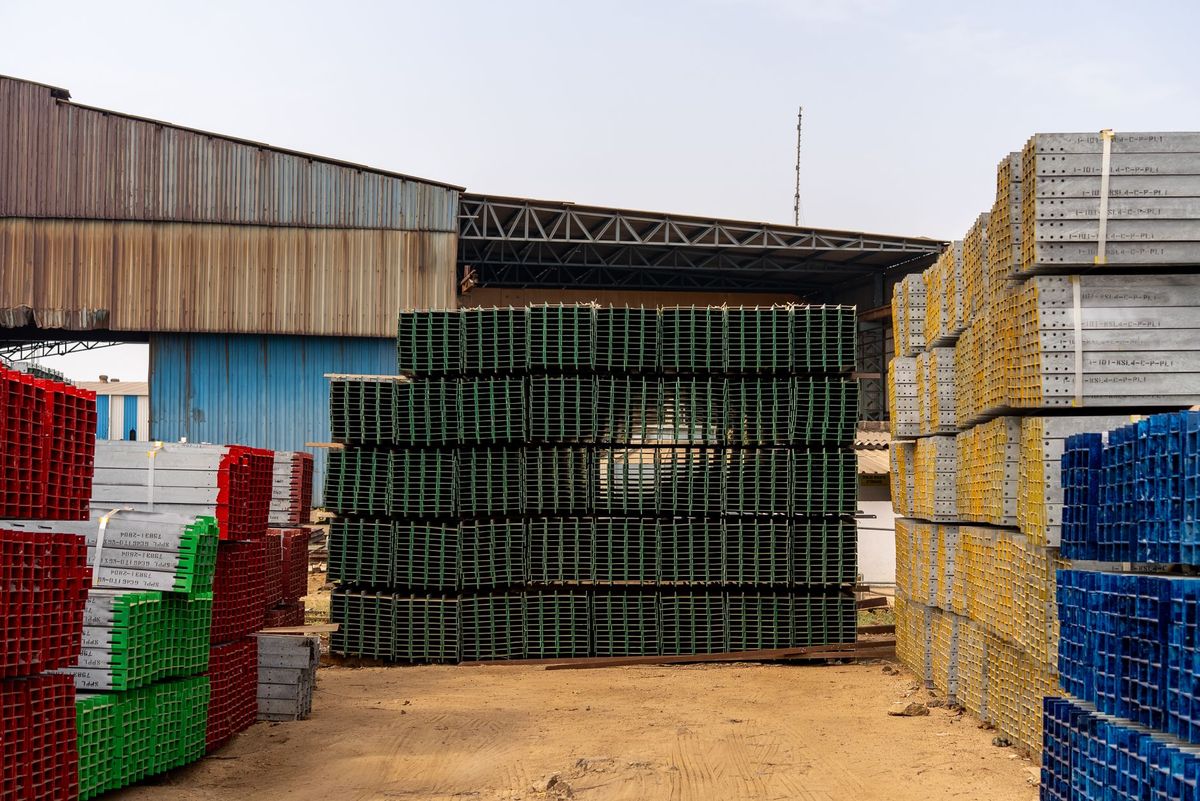
The BLS Producer Price Index for construction materials hit 6.2% year over year in February 2026. Copper is up 15% on COMEX at $4.52 per pound. Random Lengths lumber composite is at $487 per thousand board feet, up 12%. Ready-mix concrete is up 8% in most major markets. Structural steel hot-rolled coil is running $820 per ton, up 5-8% depending on the shape.
The underlying story of what's driving these numbers — tariff exposure, supply chain concentration, currency effects — is documented. What I want to cover here is the specific tactical playbook: the escalation clause language that actually holds up, the pre-purchase calculus, the value engineering calls worth making, and the moments when the right answer is walking away from the bid.
The Escalation Clause Playbook
Most contractor escalation clauses are too vague to be enforceable. "Material costs may be adjusted for significant changes" is not a clause. It's a wish. Here's the language structure that works.
Tie Clauses to Specific BLS PPI Series IDs
The clause needs to reference a specific, publicly available index that neither party controls. BLS Producer Price Index data is the standard. The relevant series IDs you should be citing:
- WPU10250101 — Copper and copper base alloys (this is your copper line for electrical and mechanical work)
- WPU0811 — Lumber and wood products (framing, sheathing, engineered lumber)
- WPU1317 — Ready-mixed concrete
- WPU101703 — Hot rolled steel bars, plates, and structural shapes
A workable escalation clause references these series by ID, uses the published index value at bid date as the baseline, and defines a trigger threshold (typically 5-8% change from baseline) above which you invoice a material adjustment.
The clause should specify: (1) the index and series ID, (2) the baseline date, (3) the trigger threshold, (4) the calculation method (percentage change times material line item in the schedule of values), (5) the frequency of invoicing adjustments (monthly or per-draw), and (6) whether the clause is symmetrical — meaning you'd give back savings if prices drop, which owners often require as the price of agreement.
Get this language reviewed by your contract attorney once and use it as a template. The front-end cost is trivial relative to the exposure.
When Owners Push Back
About 35% of private-sector owners will push back on escalation clauses, particularly on smaller scopes under $500,000. Your response to pushback should depend on the size and duration of the job.
On jobs under 90 days, the escalation risk is limited and you can price in a contingency buffer rather than fight for the clause. On jobs over 180 days with significant material content, the clause is not optional if you want to protect your margin. Walk through the math with the owner: show them the 14.3% material increase on a real recent job. Most owners, once they see the actual numbers rather than abstract percentage arguments, will agree to a trigger threshold of 8% or higher — meaning you only activate the clause if something dramatic happens, which they can live with.
The Pre-Purchase Strategy
Pre-purchasing materials — buying ahead of need and warehousing — is a tool worth using selectively when specific commodity signals align. It's not a strategy to run broadly because carrying costs, storage risk, and cash flow impact are real.
The signal I use: when a commodity is more than 8% above its 12-month rolling average, I look seriously at buying forward for jobs I have under contract or LOI. When copper hit $4.52 and the 12-month average was sitting at $3.90, that was a 16% premium — well past my threshold. For my active mechanical scopes with copper content over $20,000, I bought forward six weeks of material.
Distributors have gotten more flexible on pre-purchase terms because they want the business. Some will offer 60 to 90-day price locks on committed volumes, with net-60 payment terms. That means you can lock in today's price and not pay for 60 days, which is essentially free insurance against further upward movement on your specific jobs. Ask your top two or three material suppliers directly whether they'll do this — it's not advertised, but most will accommodate a contractor with consistent volume.
The math: if I lock in $35,000 of copper at today's price and the market moves up another 8% before I need it, I've saved $2,800. At net-60 terms, I've had use of that $35,000 for two months. The cost of the hedge is essentially zero. The only real risk is if prices drop significantly — but since I'm buying for committed jobs, not speculative inventory, I'm not exposed to a glut market the way a distributor would be.
Value Engineering Substitutions Worth Making (and Some Not To)
Not all value engineering is created equal. Here are the specific substitutions with real ROI in the current market, and the ones to avoid.
PEX vs. Copper in Residential
This is the highest-value substitution in residential and light commercial right now. PEX-A tubing has been running $0.68-$0.82 per linear foot installed in typical residential supply line work, versus $3.20-$3.80 per linear foot for Type L copper at current COMEX prices. The savings run $18-$24 per linear foot depending on run length, fittings complexity, and labor market.
In a 2,500 square foot house, you might have 400-600 linear feet of supply piping. At $20 average savings per foot, that's $8,000-$12,000 on materials alone. PEX has been code-compliant in all 50 states since 2023 for residential applications. The only legitimate technical objection is in applications with UV exposure (PEX degrades in direct sunlight) or in certain municipal reclaimed water applications — outside those edge cases, PEX is the right call on residential.
On the labor side, PEX saves time on runs and reduces the number of soldered connections, which matters in a labor market where journeyman plumbers are clearing $36.90 an hour. Faster installation is margin.
Engineered Lumber vs. Dimensional Lumber in Structural Applications
LVL (laminated veneer lumber) and I-joists can substitute for dimensional lumber in floor framing and header applications with an 8-12% installed cost saving in current conditions, primarily because engineered lumber allows longer spans with fewer supporting elements, reducing both material volume and labor for blocking, bridging, and temporary bracing.
The caveat: dimensional lumber is more field-adjustable. Crews comfortable with stick framing can make cuts and modifications without special handling. If your framing crew isn't experienced with engineered lumber, the learning curve can erode the paper savings. Train the crew before assuming the savings will materialize.
Domestic vs. Imported Steel: The Tariff Arithmetic
This is where the tariff situation changes the calculus directly. Imported steel shapes are subject to 25% tariffs, which means domestic steel, even at premium pricing, often pencils out within 3-5% of imported equivalent once you factor in the tariff and the extended lead time on overseas sourcing.
For structural steel on jobs with a six-plus-week material lead time, domestic sourcing is now almost always the right call — not just on cost, but on schedule certainty. A job that slips three weeks waiting on imported steel costs more in extended general conditions than the steel savings.
Where to be careful: specialty shapes and non-standard sizes where domestic mills don't have the run volumes to be competitive. On standard wide flange and angle shapes, go domestic.
When to Walk Away
There's a version of the margin protection playbook that contractors don't want to talk about, which is the exit decision. I'm going to be direct about it.
If a bid has material content exceeding 35% of total contract value, and the owner has rejected your escalation clause, and your projected margin is below 7% — you should strongly consider declining to bid or declining to execute the contract at terms offered. That is not a sustainable risk profile.
Here's the math: at 35% material content on a $1 million job, you have $350,000 of material exposure. A 10% material price increase — which is not a tail risk in the current market, it's consistent with what copper and lumber have done over the past 14 months — costs you $35,000. At 7% margin ($70,000), that single commodity move cuts your margin in half and leaves you covering overhead with almost nothing.
Contractors who bid and execute under those conditions win work and lose money. That's not a business strategy.
The alternative is to price in an 8-10% material contingency explicitly in your bid, with a note to the owner that this reflects market conditions and can be reduced if an escalation clause is added. Some owners will opt for the clause rather than pay the upfront contingency. Others will go with a competitor who priced tighter without the contingency — and that competitor will either get lucky or learn an expensive lesson.
Your job is not to win every bid. Your job is to make money on the bids you win.
Putting the Playbook Together
For a practical week-one implementation, here's the priority order:
First, add PPI series IDs to your escalation clause template for the top three commodities in your primary scope of work. If you don't have a template clause, draft one this week.
Second, pull your material breakdowns from your last three completed jobs. Calculate actual versus estimated material cost. If you're running more than 6% over on materials consistently, your estimating assumptions need to be updated for current market conditions.
Third, call your top material suppliers and ask directly about forward price locks on committed jobs. You'll be surprised how many will say yes.
Fourth, establish a personal trigger: if commodity X is more than Y% above its 12-month average, I will consider pre-purchasing for committed work. Write it down. Make it a policy, not a case-by-case judgment call.
You can pressure-test these figures for your own project with our free cost estimator and the markup margin calculator.
FAQ
What is the current BLS PPI for construction materials?
BLS Producer Price Index data through February 2026 shows construction materials overall at +6.2% year over year. Individual commodity movements vary significantly: copper is up 15% on COMEX at $4.52/lb, random lengths lumber composite is up 12% at $487/MBF, ready-mix concrete is up approximately 8% in most markets, and hot-rolled structural steel shapes are up 5-8% depending on product. These are the input costs driving the overall PPI figure.
How do I write an enforceable escalation clause for a construction contract?
An enforceable escalation clause must reference a specific, publicly verifiable index — BLS PPI series IDs are the standard. The clause needs to specify: the series ID (e.g., WPU10250101 for copper), the baseline date, the trigger threshold (typically 5-8% change from baseline), the calculation method, and the adjustment invoicing frequency. Vague language like "significant material cost changes" typically doesn't hold up. Have a contract attorney review your template once; then reuse it.
When does pre-purchasing construction materials make sense?
Pre-purchasing makes sense when a commodity you need is more than 8% above its 12-month rolling average and you have committed jobs that will consume it. The combination of locked pricing and net-60 terms from willing distributors means the hedge often costs nearly nothing in carrying costs. The risk is downward price movement — which is why this strategy only makes sense for committed job inventory, not speculative warehouse stock.
What are the best material substitutions in the current price environment?
The highest-value substitutions right now are: PEX versus copper in residential supply piping ($18-$24/LF savings), engineered lumber versus dimensional lumber in floor framing and headers (8-12% installed cost savings), and domestic versus imported steel for standard structural shapes (domestic is now cost-competitive after 25% tariffs on imports and offers better schedule certainty). Each substitution has specific application limits — UV exposure for PEX, crew experience requirements for engineered lumber.
At what margin should I walk away from a material-heavy bid without an escalation clause?
The decision rule I use: if material content exceeds 35% of contract value and the escalation clause is rejected, I want at least 10-12% projected margin to absorb realistic commodity movement risk. Below 7% margin in that situation, the risk-adjusted return doesn't justify the capital and management attention the job requires. Walking away cleanly is better than winning the work and learning the lesson on your balance sheet.
Your Action Item for This Week
Open your current active bid or the last contract you signed and identify the three largest material line items by dollar value. Look up the current BLS PPI series for each one (BLS data is free at bls.gov/ppi). Compare today's index value to the value at your bid date. If any line item has moved more than 5% and you have no escalation protection, you now have a specific, quantified exposure to bring to your owner or to factor into your contingency management on the active job. Do this before the next progress billing — not after the job closes.