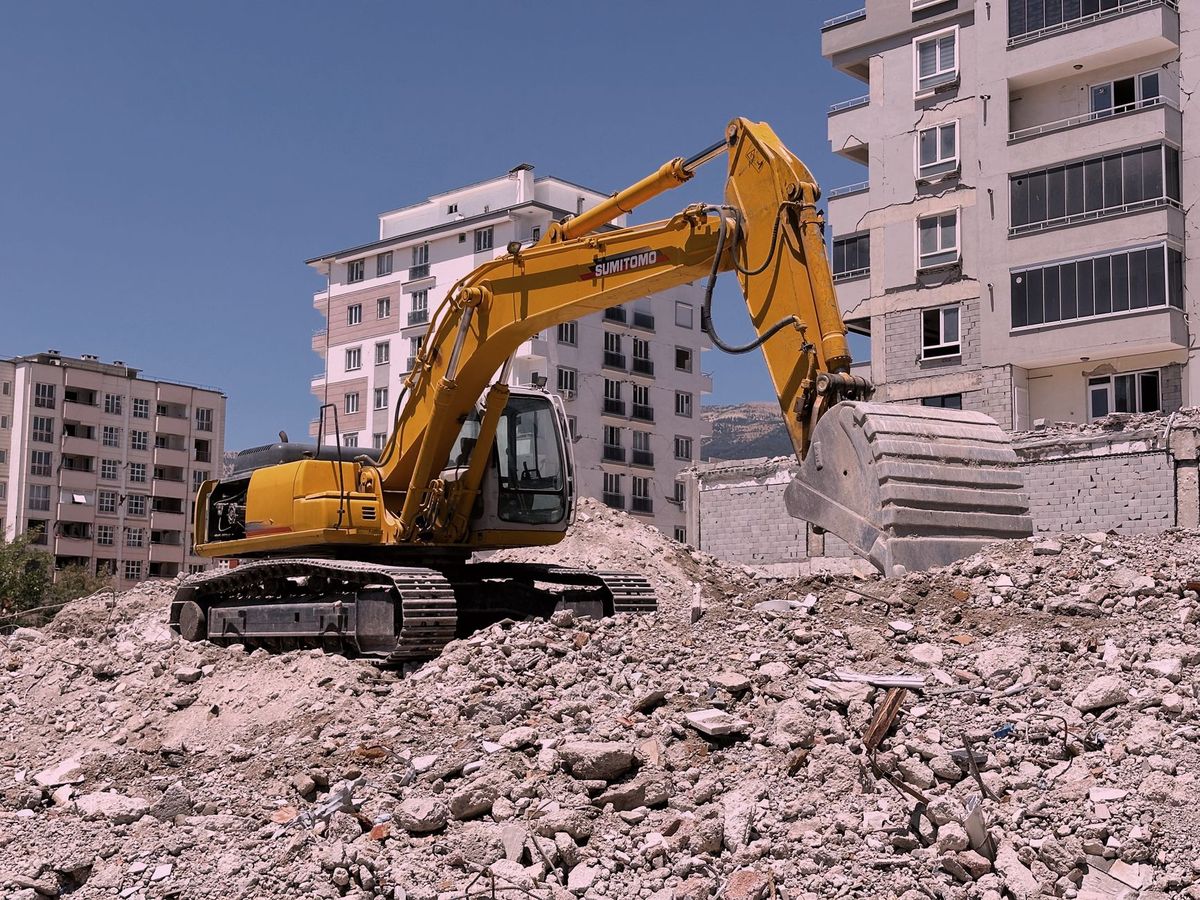
Commercial building demolition runs $8 per square foot on average in 2026, with a realistic range of $4–$15/SF depending on structure type, hazardous material content, and site logistics. A 50,000-square-foot commercial building costs between $200,000 and $750,000 to demolish safely. This spread exists because asbestos and lead abatement under federal and state regulations mandates $2–$8/SF add-on costs that can nearly double your base demolition price. Big-box retail demolitions have hit record volume as retailers consolidate, creating urgent cost-control pressures on demolition contractors.
Residential teardown costs track $5–$10/SF ($50,000–$150,000 for a 10,000-SF single-family home), excluding hazmat remediation. The 37.5% cost uplift for commercial versus residential reflects building code compliance, height restrictions, structural complexity, and OSHA enforcement intensity—commercial demolition operates under 29 CFR Part 1926 Subpart T (Demolition), which mandates engineering surveys, hazard identification, and specific worker protection protocols that residential demolition largely avoids. Ignoring these requirements exposes your firm to federal citations, worker injuries, and crippling liability.
Commercial vs. Residential Demolition: Economics and Code Differences
Commercial Structure Demolition Economics
Commercial buildings cost more to demolish than residential because they're taller (average 8–12 stories versus 1–2 stories), made of structural steel or reinforced concrete (versus wood frame), and occupied longer—meaning extended utility disconnection protocols and community notification requirements. A 50,000-SF single-story commercial building averages $8/SF ($400,000 total), while a 50,000-SF five-story building climbs to $10–$12/SF ($500,000–$600,000) due to crane rental, sequenced upper-floor removal, and dropped debris containment.
Steel-frame buildings demolish efficiently but require specialized equipment: mobile crane rental runs $2,400–$4,200 per day, and high-rise work demands 15–25 days minimum. A 12-story office tower (120,000 SF) budgets $45,000–$85,000 just for crane costs, pushing total demolition to $12–$15/SF. Concrete buildings demolish slower (concrete sawing and crushing take 30–40% longer), adding $2–$3/SF to base costs.
Building footprint and site constraints matter enormously. Urban demolition in dense areas (Chicago Loop, Manhattan, Boston Harbor) costs 50–100% premiums over suburban demolition due to limited equipment staging space, underground utilities (steam lines, fiber, combined sewers), and active adjacent occupancy. A Manhattan commercial demolition that would cost $8/SF in Houston runs $14–$18/SF because you're working around occupied buildings, transit infrastructure, and impossible equipment access.
Asbestos-containing materials (ACM) identification runs $3,500–$8,200 per building and is mandatory under NESHAP (National Emission Standards for Hazardous Air Pollutants, 40 CFR Part 61). If ACM is found—common in buildings constructed 1930–1978—abatement adds $2–$8/SF on top of base demolition. A 50,000-SF building with moderate asbestos contamination budgets $100,000–$400,000 just for licensed abatement, dwarfing the $8/SF base demolition cost for that size. This is why environmental review precedes any demolition estimate.
Residential Demolition Pricing and Scale
Residential teardowns average $5–$10/SF nationally, with regional variation. A 10,000-SF two-story house (realistic footprint: 5,000-SF per level) costs $50,000–$100,000 to demolish completely. Northeast and West Coast markets run $8–$10/SF; Midwest and South cluster at $5–$7/SF. Residential demolition is faster because wood-frame construction yields to excavator bucket work and chipping, requiring just 5–8 working days versus 15–25 days for commercial structures.
Residential projects rarely trigger full OSHA Subpart T protocols because demolition contractors can invoke the "residential fall exception" under 1926.501(b)(15) if structures are single-family homes and a "permit-required" designation is avoided. This regulatory gap doesn't eliminate safety obligations—struck-by hazards, silica dust exposure, and asbestos still apply—but it reduces formal engineering survey costs. OSHA still prosecutes residential demolition injuries at federal rates if willfulness or serious breach is established.
Residential ACM remediation typically runs $15,000–$40,000 (abatement costs $6–$10/SF of affected area, not whole-house). A 10,000-SF home with popcorn ceiling asbestos or asbestos floor tiles often budgets $8,000–$25,000 for abatement alone before the wrecking begins. Residential properties built 1950–1975 carry 65% probability of ACM presence; post-1978 construction carries 8% probability.
The economic gap between $5/SF (cheapest residential) and $15/SF (premium commercial) equals $100,000 on a 50,000-SF project—an enormous variance driven entirely by regulatory compliance intensity, equipment requirements, and hazmat remediation protocols.
Cost Drivers: Structure Type, Hazmat, Debris, and Tipping Fees
Foundation Type and Structural Material
Wooden structures demolish at $4–$6/SF because excavators shred wood efficiently and chipping operations require minimal equipment. A 40,000-SF wood warehouse demolishes in 4–6 days at $160,000–$240,000 total cost.
Steel-frame buildings cost $7–$11/SF because cutting and sorting steel requires torches, cranes, and specialized labor. Structural steel commands $120–$180/ton for scrap recovery, so a 500-ton office building generates $60,000–$90,000 in salvage credit that may offset 15–22% of demolition costs if the contractor captures it (many don't). Your contract language matters: "salvage credit applied to demolition fee" versus "contractor retains salvage" dramatically shifts your final bill.
Reinforced concrete structures cost $9–$15/SF because concrete sawing (cutting load-bearing walls), crushing (recycling concrete), and dust control (silica abatement under 29 CFR 1926.55) demand specialized equipment and environmental protocols. A 10,000-SF concrete bank building budgets $90,000–$150,000.
Hazardous Material Premiums: Asbestos and Lead
Asbestos abatement obligates contractors to follow NESHAP notification requirements 10 days before demolition, employ EPA-licensed abatement firms, conduct containment during removal, and transport waste to CERCLA-permitted disposal sites. This process adds $2–$8/SF on top of demolition costs—doubling your final bill if significant ACM is present. A 50,000-SF building with heavy asbestos (pipe insulation, floor tiles, roofing) budgets $100,000–$400,000 for abatement alone.
Lead abatement under 29 CFR 1926.62 applies to any commercial or residential structure built before 1978 with lead-based paint or lead dust. Licensed lead abatement firms conduct clearance testing after removal ($3,000–$8,000 per building) and manage waste disposal as hazardous material. Lead abatement adds $0.50–$2/SF to total demolition costs, making it a smaller uplift than asbestos but still material.
PCB-contaminated materials (electrical equipment, hydraulic fluids, sealants) trigger EPA oversight under 40 CFR Part 761. Electrical transformer removal alone (PCB transformers common in 1960–1980s construction) costs $2,000–$8,000 per unit and requires licensed disposal.
The cumulative effect: a 50,000-SF commercial building built in 1972 with standard asbestos, lead paint, and PCB transformers budgets baseline demolition ($400,000 at $8/SF) plus $100,000–$400,000 (asbestos), $25,000–$100,000 (lead), and $8,000–$24,000 (PCBs), yielding total cost of $533,000–$924,000. This represents a 33–131% increase over base demolition price due entirely to hazmat compliance.
Debris Disposal and Tipping Fees
Demolition debris volume averages 140 tons per 1,000 SF for wood structures, 180 tons per 1,000 SF for steel, and 250 tons per 1,000 SF for concrete. Hauling costs run $35–$65 per ton depending on distance to disposal facility; tipping fees range $40–$120/ton based on disposal facility type, region, and material contamination level.
A 50,000-SF concrete building (12,500 tons of debris) costs $437,500–$1,500,000 just for hauling and disposal—overwhelming the base demolition cost. Recyclable materials (steel, aluminum, copper) command salvage credits ($120–$180/ton for structural steel) that offset 15–25% of total debris costs if captured. Concrete crushing for road base generates $5–$15/ton salvage credits, incentivizing on-site processing.
Selective demolition—removing hazmat materials, recyclables, and reusable components before bulk demolition—costs 30–50% more than full demolition but recovers 35–60% of material value through salvage. A selective demolition on a 30,000-SF office building budgets $30,000–$60,000 (30–50% premium over full demolition) but generates $80,000–$120,000 in salvage credits, netting a $20,000–$90,000 benefit versus full demolition's lower upfront cost but zero recovery.
Landfill capacity and distance drive tipping fee volatility. Urban markets near capacity (Los Angeles, Chicago, Boston) charge $90–$120/ton; rural areas with open capacity charge $40–$60/ton. This 50–66% variance alone adds $17,500–$100,000 to a 12,500-ton demolition project.
OSHA Demolition Safety Requirements and Regulatory Burden
29 CFR 1926 Subpart T: Engineering Survey and Hazard Protocol
OSHA mandates that every commercial demolition project begin with an engineering survey (29 CFR 1926.850(a)) conducted by a competent person (defined as someone with training to identify hazards, authority to stop work, and industry experience). This survey costs $2,000–$5,000 per building and must document:
- Structural composition and load paths
- Utility locations (electrical, gas, water, sewer, steam, communications)
- Hazardous materials (ACM, lead, PCBs, radioactive materials)
- Potential struck-by or fall hazards
- Sequence of operations required for safe removal
The survey output becomes your demolition plan, required by 29 CFR 1926.850(b). Plan review adds 2–3 weeks to your project timeline before first equipment arrives. Contractors who skip this step face federal citations ($9,000–$15,000 per violation) and worker injuries that expose firms to corporate negligence charges.
Utility disconnection protocols mandate coordination with facility operators and often require extended lead times. Electrical utility disconnects require 5–15 business days; gas disconnects require licensed contractors and OSHA hot-work certification (29 CFR 1926.350). Failing to fully disconnect utilities before interior demolition violates 1926.850(c) and creates electrocution and fire hazards.
Silica Dust Exposure and 29 CFR 1926.55
Concrete and masonry demolition generates crystalline silica dust. OSHA Permissible Exposure Limit (PEL) under 29 CFR 1926.55(a) caps silica dust at 2.4 milligrams per cubic meter over 8 hours (time-weighted average). Demolition work typically generates 8–20 mg/m³ without controls, making silica exposure the leading OSHA violation in demolition (147 citations in 2025, average penalty $12,400 per citation). Silica dust enforcement is intensifying across all construction trades, with demolition contractors facing particular scrutiny and multi-violation penalties exceeding $50,000 per project.
Controls required under 29 CFR 1926.55(c)(1) and (c)(2) include water suppression, local exhaust ventilation, or supplied-air respirators. Water suppression adds 15–25% to demolition costs through equipment rental, disposal of wet debris, and reduced work pace. Supplied-air respiratory protection requires:
- Certified respiratory protection program (document review: $3,000–$8,000)
- Annual fit-testing for every worker ($35–$75 per worker)
- Respirator procurement (HEPA cartridge respirators: $180–$320 per unit)
- Certified atmospheric monitoring ($400–$800 per day)
A 15-worker demolition crew with silica exposure budgets $20,000–$45,000 in respiratory protection and monitoring costs alone. Contractors cutting corners on silica controls face federal penalties and whistleblower complaints from workers.
Struck-By Hazards and Fall Protection
Falling debris kills 25–35 demolition workers annually (Bureau of Labor Statistics, 2024). OSHA requires:
- Perimeter barricades under 29 CFR 1926.852 to prevent unauthorized access
- Catch platforms or safety netting to deflect debris (29 CFR 1926.852(d))
- Exclusion zones monitored by spotters
- Hard hats for all workers (non-negotiable)
- Personal protective equipment per 29 CFR 1926 Subpart E
Fall protection for workers on elevated surfaces during demolition is mandated under 29 CFR 1926.501(b), with specific language requiring personal fall arrest systems (PFAS) rated for demolition loads. Older residential demolition sometimes skips these protocols, but enforcement is increasing—OSHA issued 62 fall-related demolition citations in 2025, averaging $14,200 per violation.
Debris netting rental costs $2,000–$8,000 per project; catch platforms run $5,000–$15,000. These safety measures add 3–7% to total demolition costs and are legally non-negotiable under federal OSHA.
Cost Estimation and Selecting a Demolition Contractor
A reputable demolition firm includes three non-negotiable cost elements in any estimate: the engineering survey ($2,000–$5,000), environmental assessment for hazmat presence ($3,500–$8,200), and contingency for asbestos/lead remediation. Estimates stating only "$8/SF, 50,000 SF = $400,000" without these line items are either dangerously under-bid or structurally dishonest.
Verify that your contractor holds:
- Active general contractor license in your state (searchable on state licensing board websites)
- OSHA 30-hour card for at least three supervisory staff
- EPA lead/asbestos notification compliance history (check EPA Violation Tracker)
- Environmental liability insurance ($1M minimum; $2M–$5M for urban projects)
- Workers' compensation insurance at 100% of payroll
Request references from three similar-sized projects in your state completed within the last 18 months. Call the property managers and ask whether the contractor completed work on schedule, managed dust/debris appropriately, and coordinated utilities cleanly.
Sealed bids from multiple contractors are essential. A 50,000-SF commercial demolition should generate bids within 10–15% of each other ($320,000–$600,000 range for $8–$12/SF). Bids outside this band indicate either severe scope misunderstanding or bid padding. Excavate the outliers in writing before award. See our construction cost estimating guide for strategies on evaluating sealed bids and managing cost variance across trade packages.
To put these numbers to work on your next bid, start with our free construction cost estimator and the markup margin calculator.
Frequently Asked Questions
What's the difference between full demolition and selective demolition costs?
Selective demolition removes hazmat, salvageable materials, and high-value components (copper wiring, structural steel, aluminum cladding) before bulk demolition. It costs 30–50% more upfront ($10.40–$12/SF versus $8/SF full demolition) but generates 35–60% material salvage credits, often netting positive value. Full demolition costs less upfront but yields zero salvage recovery. Selective demolition makes financial sense on buildings with high material value (pre-1970s steel-frame office, high copper content, valuable architectural elements); full demolition is faster on wood-frame or low-salvage structures.
How much does asbestos abatement really add to demolition cost?
Asbestos abatement adds $2–$8/SF on top of base demolition. A 50,000-SF building with moderate asbestos contamination adds $100,000–$400,000 to total project cost. EPA notification requirements (10-day advance notice) and licensed disposal (CERCLA-permitted facilities only) are non-negotiable. Environmental assessment before any bid ($3,500–$8,200) is mandatory to identify ACM presence and estimate abatement scope.
Do I need to hire a separate environmental consultant?
Yes, for buildings constructed before 1978. Phase I Environmental Site Assessment (ESA) costs $2,500–$5,000 and identifies hazmat presence. Phase II ESA (lab testing and sampling) runs $3,500–$8,200 and quantifies ACM, lead, and PCB contamination. This testing informs your demolition bid and prevents cost overruns mid-project. Contractors cannot legally bid demolition without knowing hazmat status—bids missing environmental due diligence are either under-scoped or irresponsible.
What OSHA violations are most common in demolition projects?
Silica dust exposure (141 citations, 2025), struck-by hazards (52 citations), fall protection gaps (48 citations), and inadequate hazard communication (35 citations) top OSHA's demolition violation list. Average penalties per violation exceed $12,000. Your contractor's OSHA record (searchable at osha.gov IMIS database) indicates safety culture; firms with five-plus demolition citations in the last five years are higher risk.
How do I know if my contractor is properly managing silica dust?
Require atmospheric monitoring results (mg/m³ readings taken during high-dust operations). OSHA PEL is 2.4 mg/m³; typical uncontrolled concrete demolition runs 8–20 mg/m³. Your contractor must document:
- Water suppression activation logs
- Atmospheric monitoring results
- Respirator type and fit-test records
- Worker training sign-offs
Request these documents in writing before any work begins. Contractors resisting documentation requests are hiding non-compliance.
What's the timeline for a commercial demolition project?
Full demolition timeline: 2–3 weeks pre-work (survey, environmental assessment, permitting, utility coordination) plus 15–25 working days on-site demolition, totaling 6–10 weeks. Selective demolition extends to 8–14 weeks due to material sorting and salvage coordination. Asbestos abatement adds 2–4 weeks sequentially (cannot proceed with demolition until abatement is complete and clearance certified). Plan for 10–16 weeks from contract to site cleanup completion.
Your Action Item for This Week
If you own or manage a commercial property built before 1980, contact a Phase I Environmental Site Assessment firm and request a no-cost preliminary screening. This 30-minute phone consultation identifies obvious ACM/lead risk indicators without lab expense. Document the building's construction date, original use, and any previous abatement work. This baseline data becomes critical if you ever face demolition, and costs nothing to gather now. For demolition bids you're currently evaluating, demand written line-item costs for environmental assessment, engineering survey, hazmat abatement, and debris disposal separately—never accept lump-sum estimates without this breakdown.