The national average cost to build a new single-family home in 2026 runs between $150 and $280 per square foot, with the median landing around $200/sqft for a standard 2,400-square-foot home — before land. That's a wide range, and for good reason: labor costs, material prices, permit fees, and site conditions vary dramatically by region.
If you're planning a build, budgeting a client project, or just trying to understand where your money goes, here's the actual breakdown — by trade, by region, and by the decisions that move the number most.
What Drives the Per-Square-Foot Cost
The cost-per-square-foot figure that gets thrown around most often is a rough average that collapses a lot of variables. Before you anchor to any number, understand the four main drivers:
Labor market: In high-cost metros — San Francisco, New York, Seattle, Boston — prevailing wages for framing crews, electricians, and plumbers can run 40–60% higher than rural Midwest or Southeast markets. A framer charging $28/hour in Alabama might cost $52/hour in California.
Material costs: Lumber, concrete, and copper wire all fluctuate with commodity markets. Lumber prices in early 2026 are running roughly $420–$450 per thousand board feet — down from 2021 peaks but still elevated versus pre-2020 norms. Lumber price forecasts for 2026 suggest modest softening through mid-year.
Finish level: A production-grade build using standard cabinets, vinyl plank floors, and builder-grade fixtures will come in significantly cheaper than a custom home with hardwood floors, quartz countertops, and high-end appliances. The difference between entry-level and mid-range finishes alone is often $30–$50/sqft.
Site conditions: Grading, soil conditions, utility hookups, and access all affect foundation and site work costs. A flat lot with utilities at the street is a very different project than a sloped lot requiring cut-and-fill, retaining walls, or a private septic system.
National Average Cost to Build: 2026 Data
Based on permit data, contractor surveys, and Census Bureau construction cost reports, here are national benchmarks for 2026:
| Home Type | Low | Mid | High |
|---|---|---|---|
| Entry-level production | $130/sqft | $155/sqft | $175/sqft |
| Mid-range custom | $175/sqft | $210/sqft | $250/sqft |
| High-end custom | $250/sqft | $310/sqft | $400+/sqft |
A 2,000-square-foot entry-level build runs roughly $260,000–$350,000 in materials and labor — excluding land, which ranges from $20,000 in rural markets to $200,000+ in suburban metros.
A 2,400-square-foot mid-range custom home typically runs $420,000–$600,000 in construction costs before land and soft costs (architect fees, permits, engineering, financing).
Regional Cost Breakdown
Regional variation is significant. Here's what contractors and buyers should expect in different markets:
Northeast (NY, MA, CT, NJ): $220–$340/sqft. Labor is the biggest driver. Union rates for electricians and plumbers in metro New York exceed $90/hour with benefits. Permits and inspections add $15,000–$30,000 in soft costs.
West Coast (CA, WA, OR): $250–$380/sqft. California's Title 24 energy code, seismic requirements, and high trades wages push costs to the top of the national range. San Francisco metro routinely exceeds $400/sqft for custom builds.
Mountain West (CO, UT, AZ, NV): $175–$265/sqft. Rapid growth in Phoenix, Denver, and Salt Lake City is tightening labor markets, pushing costs up. Concrete subcontractors are in particularly short supply in Phoenix metro.
Midwest (IL, OH, MI, WI, MN): $145–$210/sqft. The most cost-competitive region. Strong union presence in Chicago elevates costs there, but rural Midwest is among the cheapest construction markets in the country.
South (TX, FL, GA, NC, TN): $140–$220/sqft. Texas and Florida lead new single-family construction volume nationally. Competitive subcontractor markets keep prices moderate, though labor availability has tightened in high-growth Austin and Florida Gulf Coast markets.
Southeast (SC, AL, MS, AR, LA): $125–$180/sqft. Lowest costs nationally. Strong workforce, competitive bid environments, and lower permitting costs make this the value region for new construction.
Trade-by-Trade Cost Breakdown
For a 2,400-square-foot mid-range custom home at $200/sqft ($480,000 total construction budget), here's how the dollars typically allocate:
| Trade / Category | % of Budget | Approx. Cost |
|---|---|---|
| Foundation & concrete | 8–12% | $38,000–$58,000 |
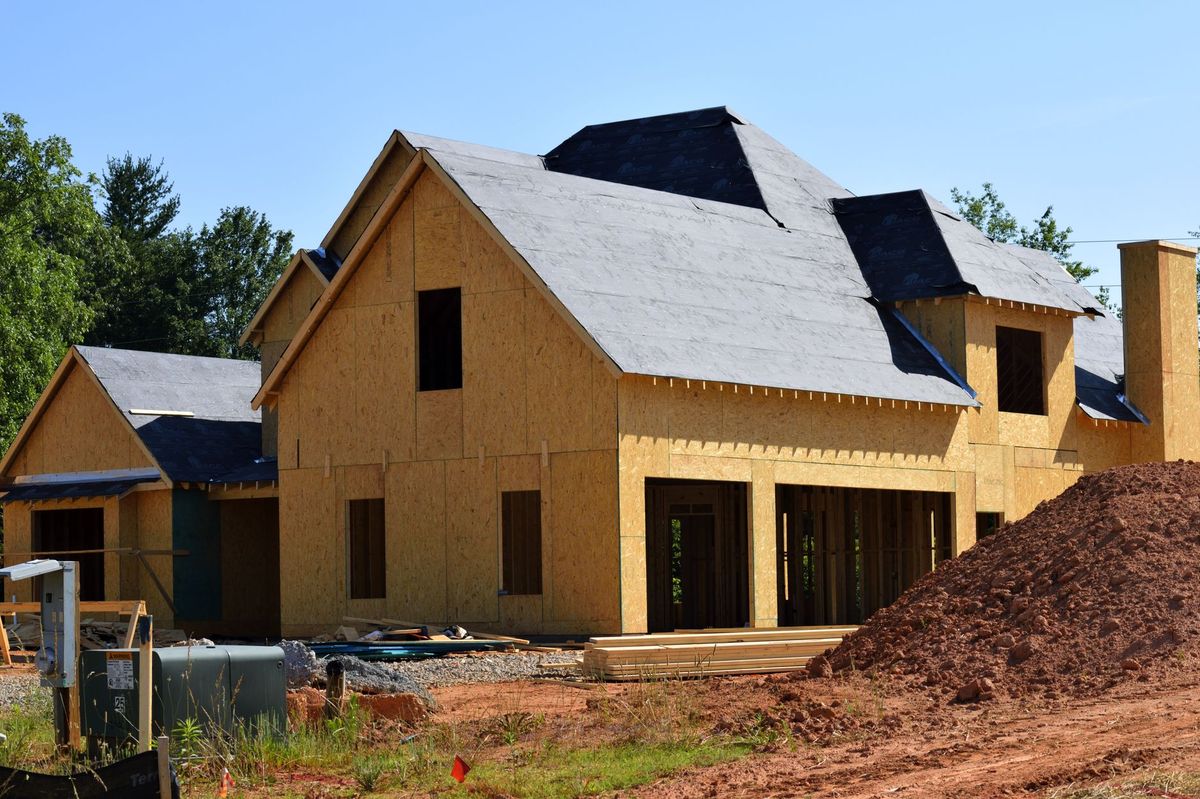
| Framing (labor + materials) | 14–18% | $67,000–$86,000 |
| Roofing | 4–6% | $19,000–$29,000 |
| Windows & doors | 5–7% | $24,000–$34,000 |
| Plumbing (rough + finish) | 5–7% | $24,000–$34,000 |
| Electrical (rough + finish) | 5–7% | $24,000–$34,000 |
| HVAC | 6–8% | $29,000–$38,000 |
| Insulation | 2–3% | $10,000–$14,000 |
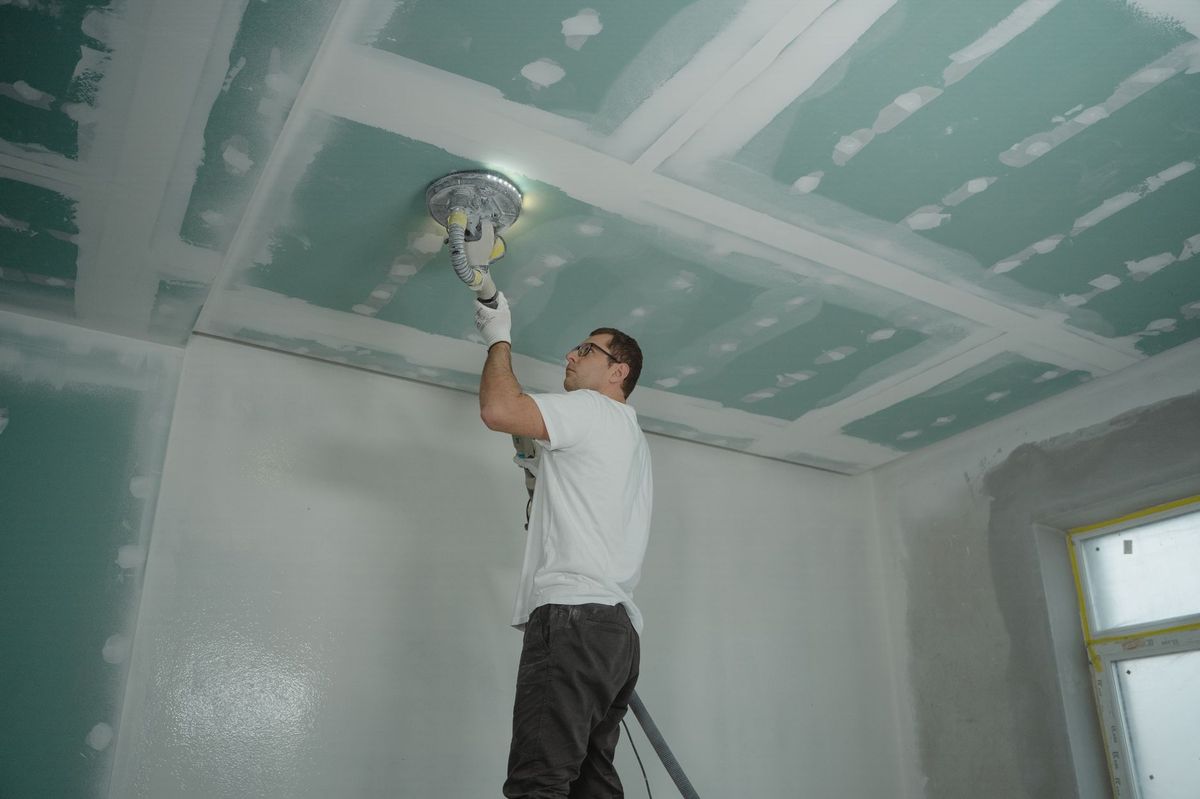
| Drywall | 4–5% | $19,000–$24,000 |
| Flooring | 5–7% | $24,000–$34,000 |
| Cabinets & countertops | 6–9% | $29,000–$43,000 |
| Painting | 3–4% | $14,000–$19,000 |
| Landscaping & flatwork | 3–5% | $14,000–$24,000 |
| General conditions & GC fee | 10–15% | $48,000–$72,000 |
The GC fee (general contractor overhead and profit) typically runs 10–20% of total construction cost, depending on project complexity, market conditions, and contract type.
What's Changed in 2026
Three factors have shifted the cost landscape versus 2024:
Tariffs on imported materials: New tariffs on Canadian softwood lumber, steel, and aluminum products that took effect in early 2025 added an estimated 3–8% to framing and structural material costs. Tariff impacts on construction materials continue to affect bid pricing through mid-2026.
Labor tightening in growth markets: Markets like Austin, Nashville, Charlotte, and Phoenix are seeing framing and concrete subcontractor backlogs stretch to 6–10 weeks. GCs in these markets report being unable to start permitted projects due to sub availability — which pushes costs up when you do book crews.
Energy code upgrades: New IRC energy code requirements adopted in most states by 2025–2026 add $8,000–$18,000 in insulation, air sealing, and HVAC efficiency upgrades versus the prior code cycle.
How to Use This Data When Bidding or Buying
For GCs and builders: Use regional $/sqft benchmarks to validate your preliminary estimates, but don't substitute them for a real takeoff. The numbers above are averages — your specific project will diverge based on site, spec, and your subcontractor relationships.
For homeowners: The common mistake is using the per-square-foot number to reverse-engineer a budget and then designing to hit it. Design first for function, then price what you've designed. A 2,800-sqft home with a great layout and standard finishes will outperform a 2,200-sqft home with premium finishes that blew the budget.
For investors and developers: Track cost-per-square-foot by submarket. Regional variation in construction costs combined with home price data gives you margin per unit — the most important number for feasibility analysis.
The housing starts data for Q1 2026 shows 1.42 million units permitted, concentrated in the South and Mountain West — exactly the markets where labor tightening is most visible in 2026 cost data.
Cost-to-Build vs. Cost-to-Buy: The 2026 Math
In most markets, buying an existing home is still cheaper than building new — but the gap has narrowed. Existing home inventory remains historically tight, and median existing home prices in many Sunbelt metros have converged with new construction pricing after accounting for land.
For buyers considering new construction, the premium is real but so are the benefits: modern energy efficiency, customization, warranty protection, and no deferred maintenance. In markets where existing supply is under three months, builders are often offering incentives — rate buydowns, lot premiums waived, upgrade allowances — that improve the economics.
Want project-specific numbers? Our free cost estimator and markup margin calculator do the math in a couple of minutes. To compare a house against commercial and institutional build costs, see The 2026 Construction Cost Index.
FAQ
What is the average cost per square foot to build a house in 2026? Nationally, the range is $150–$280/sqft, with a typical mid-range custom home landing around $200/sqft. Regional variation is significant — the West Coast runs $250–$380, the Midwest runs $145–$210.
Does the per-square-foot cost include land? No. The $/sqft figures cited here are construction costs only — materials, labor, and GC fee. Land costs vary from $20,000 in rural markets to $200,000+ in suburban metros and are not included.
Why are 2026 construction costs higher than 2022? Costs peaked in 2021–2022 during supply chain disruptions, then moderated through 2023–2024. 2026 costs reflect a new baseline: post-tariff material pricing, tighter labor markets in growth metros, and more stringent energy code requirements.
What size house is most cost-efficient to build? Homes between 1,800 and 2,400 square feet typically have the best cost efficiency. Smaller homes have a higher cost-per-sqft because fixed costs (foundation, roof, mechanical systems, kitchen, bathrooms) don't shrink proportionally. Very large homes see costs per sqft rise again as complexity increases.
How much does a general contractor charge to build a house? GC fees typically run 10–20% of total construction cost, covering overhead, project management, insurance, and profit. On a $480,000 construction budget, that's $48,000–$96,000. Some GCs charge a flat fee; most in residential work charge a percentage.
What's the cheapest state to build a house in 2026? Mississippi, Arkansas, Alabama, and West Virginia consistently rank as the lowest-cost construction states, with average costs running $125–$150/sqft for a standard single-family home.
How much have new energy code requirements added to construction costs? Adoption of the updated IRC energy code by most states in 2025–2026 has added roughly $8,000–$18,000 per home versus the prior code cycle, according to NAHB estimates. That covers improved insulation levels, better air sealing, and higher-efficiency HVAC equipment. On a 2,400-square-foot home, that's an extra $3–$7/sqft — real money, but offset over time by lower operating costs for the homeowner.
Should I build now or wait for costs to come down? Most cost indicators don't support waiting. Labor markets in high-growth metros are tightening further, not loosening, and the Census Bureau construction cost data shows no broad deflation trend in residential building costs. Material prices in 2026 are below the 2021–2022 spike but above 2019 norms, and that appears to be the new baseline. If your project pencils today, waiting 12–18 months on the hope of lower costs is a speculative bet against the current direction of the market.