The overall BLS Producer Price Index for construction materials is up 5.1% year-over-year as of early 2026. But that headline number conceals a market that is sharply bifurcated — some materials are up 30%, others are down 8%. Your bid doesn't care about averages. It cares about the specific materials your jobs use.
This report covers 40+ materials across all major categories, with year-over-year changes, what's driving the moves, and practical bid strategy for each category.
The Summary: Winners and Losers
Before the deep dive, the quick scorecard:
Up significantly (10%+ YoY):
- Copper wire 12 AWG THHN: +18.5% ($298/1,000ft)
- Romex 14/2: +15.5% ($82/roll)
- Rebar #4 Grade 60: +13.8% ($405.31/ton)
- Load centers 200A: +12.2% ($285/unit)
- Drywall 4x8: +11.3% ($14.80/sheet)
- Asphalt shingles: +8.5% ($128/sq)
- CMU 8": +7.3% ($2.95/unit)
- PVC conduit 1": +9.6% ($68.50/100ft)
Up moderately (3-10% YoY):
- PT lumber 2x6: +5.6% ($695/MBF)
- Portland cement: +3.3% ($469.18/ton)
- Ready-mix 4,000 PSI: +2.0% ($399.62/cy)
- PEX 1/2" Type A: +4.8% ($198/500ft coil)
- Copper pipe 3/4" Type L: +16.8% ($4.85/lft) ← copper-driven
Down year-over-year:
- LED troffer 2x4: -8.5% ($38.50/unit)
- Metal stud 3-5/8": -5.6% ($1.18/lft)
- Structural steel W-beam: -4.8% ($985/ton)
- Sheet steel: -6.3%
- Framing lumber 2x4 SPF: -8.4% ($412/MBF)
- Plywood 3/4" OSB: -5.1% ($318/MSF)
The pattern is clear: copper-intensive products and domestic-supply-constrained products are rising. Products tied to global flat steel and sheet markets, along with commodity lumber, are falling.
Lumber: The Best News Story
Framing lumber at $412/MBF, down 8.4% year-over-year, is the strongest positive signal in the materials market.
This comes after the catastrophic 2021 peak of ~$1,700/MBF. The normalization has been slow but genuine — current pricing is moderate by historical standards. The MoM uptick (6.2% in early 2026) is seasonal spring demand, not a new trend.
Key risk: Canadian softwood lumber tariffs. The current 8% countervailing duty rate is subject to renegotiation. A tariff increase of 5-10 percentage points would push framing lumber toward $500/MBF within a quarter — a significant move given the starting point.
Bid strategy for lumber-heavy work: Use current pricing, don't panic-buy on the spring uptick, consider a narrow escalation clause tied to Canadian tariff policy if you have large wood-frame starts in Q3 2026. Full lumber analysis here.
Steel: The Two-Speed Market
Steel is the most interesting story in the materials market because it's moving in two directions simultaneously.
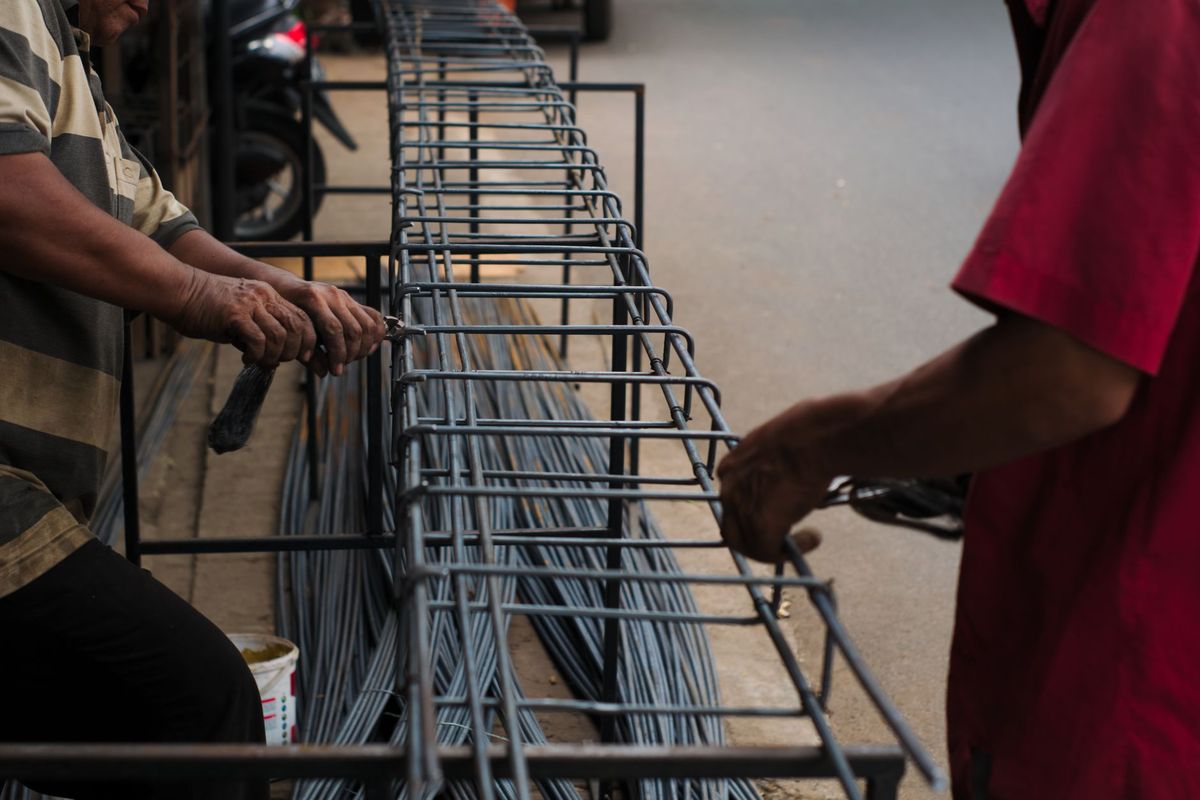
Long products (rebar, wire rod, merchant bar): Rebar at $405.31/ton, +13.8% YoY. Section 232 tariffs (25% on imported steel) protect domestic producers from global competition, giving them pricing power when domestic demand is strong. Data center and warehouse construction is consuming rebar at high rates.
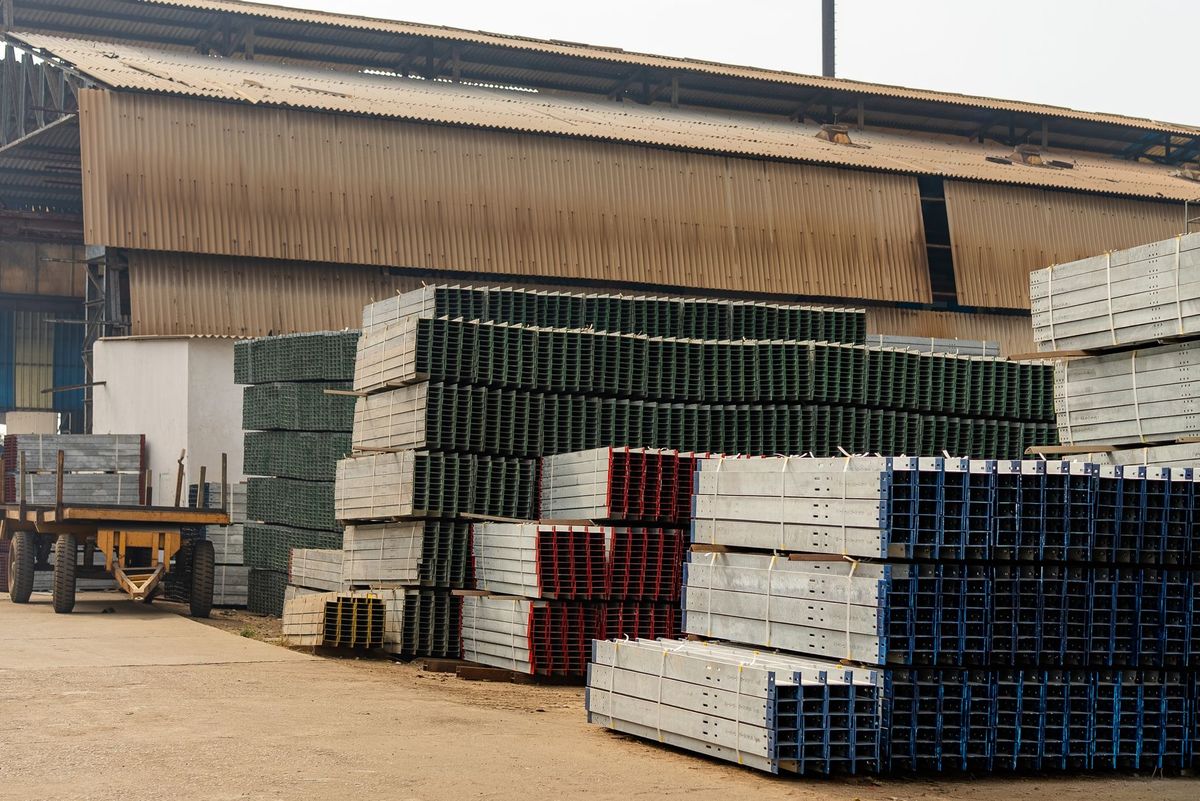
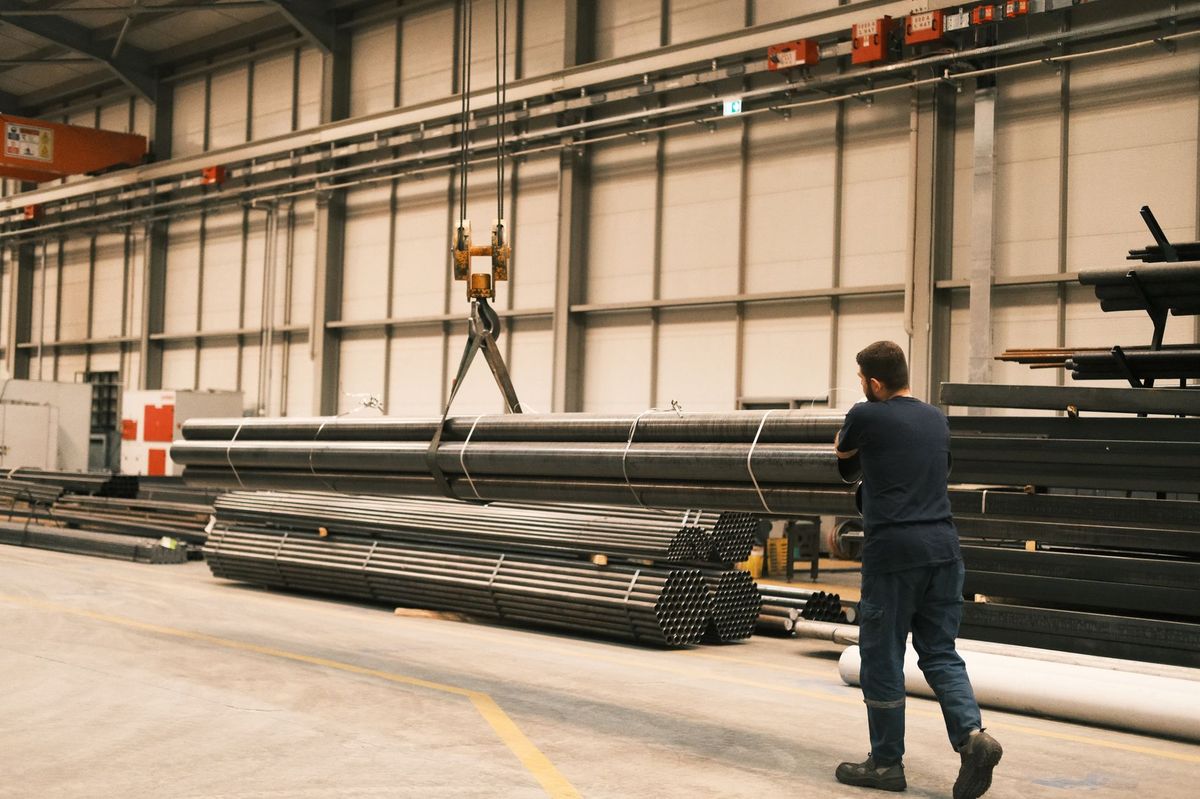
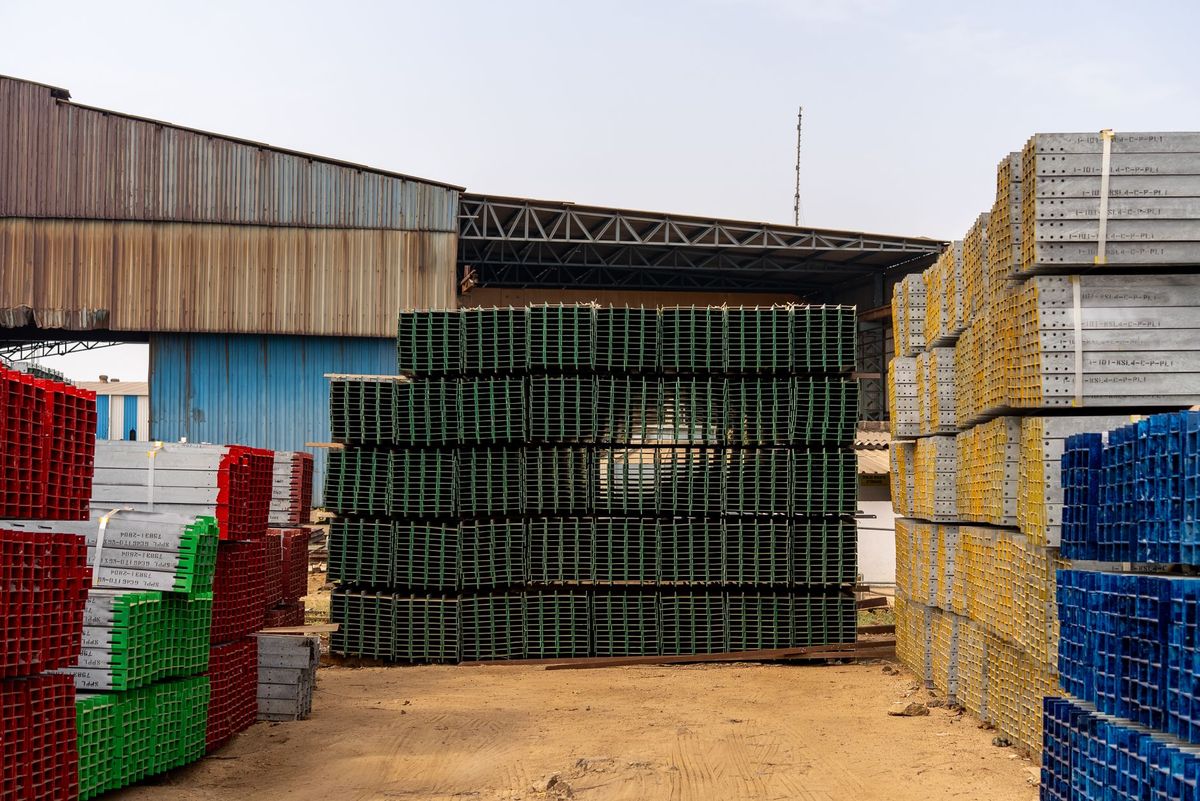
Flat and structural products: Structural steel (W-beam) at $985/ton, -4.8% YoY. Sheet steel -6.3% YoY. Metal studs -5.6% YoY. Global hot-rolled coil prices have softened on reduced Chinese construction demand and European industrial weakness.
Bid strategy: Separate your structural steel budget from your rebar budget in commercial bids. Structural has a favorable trend — push for 90-120 day price holds from fabricators. Rebar is under pressure — include escalation clauses tied to the BLS PPI for steel mill products. Full steel analysis here.
Concrete: The Slow Grind
Ready-mix at $399.62/cy (+2.0% YoY) and cement at $469.18/ton (+3.3% YoY) don't make headlines, but concrete is the foundation of most construction and the cost is cumulative.
The concerning number is CMU block at $2.95/unit, +7.3% YoY — representing a 34% cumulative increase over three years. Masonry contractors who set their CMU allowances based on 2023 pricing are leaving money on the table.
Regional variation is significant: expect $320-$380/cy in competitive rural markets and $550-$650/cy in high-cost metros (New York, San Francisco). National benchmark data doesn't price your local job.
Bid strategy: Lock multi-pour pricing agreements with ready-mix suppliers for volume projects. Include ready-mix escalation for commercial jobs lasting 12+ months. Update CMU cost models — $2.95/unit and rising is the new baseline. Full concrete analysis here.
Electrical: The Sleeper Category
Electrical materials are the biggest story for contractors that's not being widely discussed. The full picture:
- Copper wire 12 AWG THHN: $298/1,000ft, +18.5% YoY
- Romex 14/2: $82/roll, +15.5% YoY
- Load centers 200A: $285/unit, +12.2% YoY
- PVC conduit: $68.50/100ft, +9.6% YoY
- LED troffers: $38.50/unit, -8.5% YoY
The driver is copper at $6.01/lb, up 31% YoY. Copper is 75-90% of the cost of wire and cable. When copper moves, wire follows.
The hidden risk: distribution transformers have 50-70 week lead times, driven by copper/steel scarcity and competition from utility grid hardening projects. For commercial electrical contractors, this is a schedule risk that must be addressed at pre-construction.
Bid strategy: Buy wire for permitted jobs immediately. Bid wire separately from labor on commercial jobs. Include copper-indexed escalation for bids with 45+ day purchase windows. Start transformer procurement at pre-con. Full electrical analysis here.
Plumbing: Copper vs. PEX Economics
Plumbing materials are bifurcated by the copper story:
- Copper pipe 3/4" Type L: $4.85/lft, +16.8% YoY (copper-driven)
- PEX Type A 1/2": $198/500ft coil = $0.40/lft, +4.8% YoY
The economics of PEX substitution have never been more compelling. At a 10:1 price ratio for raw material, the labor and fitting cost differential is the remaining calculus — and PEX installs faster with fewer joints.
For residential plumbing contractors with design flexibility: running the numbers on PEX vs. copper supply lines is worth doing at current prices. The copper prices article covers the full PEX math. Bottom line: for residential supply lines, PEX has won the economic argument at $6/lb copper.
Roofing and Exterior
Asphalt shingles at $128/sq, +8.5% YoY, reflect both petroleum feedstock cost increases and ongoing supply tightness following above-normal storm seasons in 2024-2025 that consumed significant roofing inventory.
The asphalt shingle supply chain runs through a small number of manufacturers (Owens Corning, GAF, CertainTeed). Post-storm regional price spikes can exceed 20-30% when demand concentrates. Roofing contractors in storm corridors should maintain supplier relationships that give them preferred allocation access when regional supply tightens.
Drywall: +11.3% Is Underappreciated
Drywall at $14.80 per 4x8 sheet, up 11.3% year-over-year, is running well above general inflation and above the overall construction materials PPI.
The drywall industry is highly concentrated (USG, National Gypsum, CertainTeed Gypsum). Natural gas is a direct input for drywall manufacturing — drying gypsum board requires significant heat energy. Natural gas price volatility flows through to wallboard pricing.
For residential contractors and GC drywall estimates: a 2,400 sq ft home requires approximately 130-160 sheets of drywall. At $14.80 vs. $13.30 a year ago, that's an additional $195-$240 per house in drywall material. For production builders running 50 starts per year: $9,750-$12,000 in additional annual drywall cost.
Building a Bid Escalation Framework
Across all categories, the pattern for protecting margins in a volatile material environment is the same:
1. Separate materials from labor in your bids: When you bundle everything into a blended rate, you can't escalate materials without repricing the whole number. Separating them lets you manage each independently.
2. Identify your high-volatility line items: Copper-intensive products (wire, copper pipe), rebar on concrete-heavy work, drywall on large residential packages — these are the items worth documenting with market data.
3. Use objective escalation indexes: Tie escalation clauses to BLS PPI series codes, CME commodity prices, or Random Lengths indexes. These are publicly verifiable and defensible.
4. Set escalation thresholds that reflect actual volatility: A 5% threshold makes sense for lumber (moving 5% in a quarter is modest). A 5% threshold on copper means you're triggering escalation every few weeks. Use 10% for copper/electrical, 8% for rebar, 5% for lumber.
Sample escalation clause language:
"Material pricing in this proposal is based on commodity market prices as of [date], as reflected in the BLS Producer Price Index for [category]. If any of the following indexed prices change by more than the stated threshold prior to material purchase, the contract price will be adjusted on a dollar-for-dollar basis for the affected materials, with supporting documentation provided:
- Copper wire and cable: >10% change in CME copper futures
- Rebar: >8% change in BLS PPI Steel Mill Products
- Lumber framing: >10% change in Random Lengths Framing Composite
- Drywall: >8% change in BLS PPI Gypsum Products"
This language is increasingly standard in commercial subcontractor agreements. Residential contractors have been slower to adopt it — which means more margin compression from material cost volatility.
What to Watch in H2 2026
The copper tariff decision: A 15% tariff on refined copper imports is under consideration for announcement in Q2-Q3 2026. If announced, expect copper to spike 10-15% within days as distributors scramble to price-in post-tariff cost. Downstream effect on wire, cable, plumbing pipe, and electrical equipment would follow within weeks.
Canadian softwood lumber tariff renegotiation: The current 8% countervailing duty is under active review. Rate changes would directly impact 25-30% of US lumber supply and push framing lumber above $500/MBF.
Transformer lead times: 50-70 week lead times on distribution transformers represent a supply crisis for commercial construction. This is not expected to resolve before late 2026 or 2027 as manufacturing capacity additions lag demand.
Concrete and cement pricing: Expect continued 2-4% annual increases. Cement producers have pricing power their market structure supports. The trend is grinding, not explosive, but it compounds.
Want project-specific numbers? Our free cost estimator and markup margin calculator do the math in a couple of minutes.
FAQ
What is the overall construction material cost increase in 2026? The BLS Producer Price Index for construction materials is up 5.1% year-over-year. However, this average conceals wide variation: copper wire is up 18.5%, LED fixtures are down 8.5%, and framing lumber is down 8.4%. Your actual cost change depends on your specific material mix.
Which construction materials went up the most in 2026? Copper-intensive products lead: copper wire (+18.5%), Romex (+15.5%), copper pipe (+16.8%). Rebar is up 13.8%. Drywall is up 11.3%. Load centers are up 12.2%. All of these significantly exceed the overall 5.1% PPI benchmark.
Which construction materials got cheaper in 2026? LED troffers are down 8.5%. Framing lumber is down 8.4%. Metal studs are down 5.6%. Structural steel (W-beam) is down 4.8%. OSB plywood is down 5.1%. These represent real opportunities for contractors in lighting, wood-frame, and steel-frame commercial work.
Should contractors include material escalation clauses in 2026 bids? Yes, particularly for bids on jobs starting more than 45-60 days out. With copper capable of moving 10-15% in weeks around tariff announcements, and rebar up 14% year-over-year, fixed-price material commitments expose contractors to significant one-way risk.
How does the copper tariff affect construction costs? A potential 15% tariff on refined copper imports — under consideration for 2026 — would increase the cost of copper wire, cable, plumbing pipe, and electrical equipment proportionally. Copper wire (already up 18.5% YoY) could see an additional 10-15% price spike at tariff announcement. Buy wire for permitted jobs before the tariff decision.
Where can I find the BLS PPI data for construction materials? The Bureau of Labor Statistics Producer Price Index (PPI) is available at bls.gov/ppi. Key series codes: steel mill products (PCU331110331110), softwood lumber (WPU0811), gypsum products (WPU1321), and ready-mix concrete (PCU327320327320).