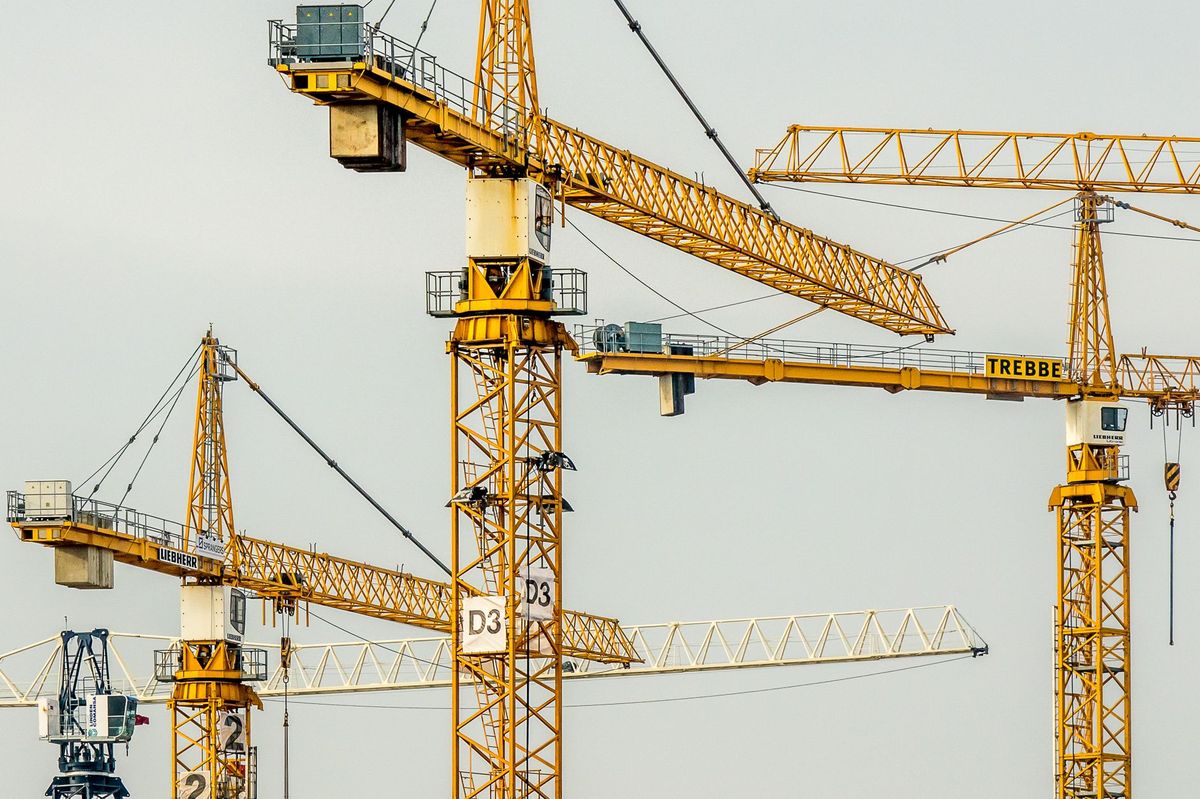
A downtown Toronto high-rise condominium now costs roughly C$390 per square foot in hard construction costs alone — about US$285 at the mid-2026 rate of C$1 = US$0.73 — which lands within 10% of Chicago's US$310/SF for a comparable concrete tower. Read the currency the other direction and the story inverts: a US developer who sees "C$390/SF" and mentally prices it at par overstates the real cost by 37%. The entire Canada-versus-US comparison hinges on that exchange rate, and in 2026 the weak loonie is doing most of the heavy lifting.
I track cross-border construction economics because the two countries share steel mills, lumber mills, equipment fleets, and frequently the same general contractors — yet they price the identical building through different currencies, tax regimes, and trade rules. What follows is the metro-by-metro comparison done properly, with Statistics Canada, Altus Group, and Turner & Townsend figures cited where I use them, and every Canadian number shown in both Canadian and US dollars so nobody double-counts the exchange rate.
The Headline Numbers: Toronto, Vancouver, Calgary vs US Metros
Canadian cost consultants quote hard costs per square foot much the way US estimators do, which makes the comparison cleaner than the metric-versus-imperial mess that plagues US-versus-Europe analysis. All Canadian figures below use C$1 = US$0.73 (equivalently US$1 = C$1.37), the approximate mid-2026 rate. These ranges track Altus Group's Canadian Cost Guide and Turner & Townsend's International Construction Market Survey, which has consistently ranked Vancouver and Toronto among the more expensive construction markets in North America.
| Building type | Toronto | Vancouver | Calgary | US (Chicago) | US (Dallas) |
|---|---|---|---|---|---|
| Class A office | C$450/SF (US$329) | C$470/SF (US$343) | C$350/SF (US$256) | US$330-360/SF | US$250-280/SF |
| High-rise condo (concrete) | C$390/SF (US$285) | C$430/SF (US$314) | C$310/SF (US$226) | US$290-320/SF | US$200-230/SF |
| Warehouse / industrial | C$180/SF (US$131) | C$205/SF (US$150) | C$150/SF (US$110) | US$130-150/SF | US$85-110/SF |
| Low-rise wood-frame housing | C$260/SF (US$190) | C$295/SF (US$215) | C$210/SF (US$153) | US$175-200/SF | US$140-165/SF |
Two patterns matter here. First, once you convert to US dollars, Vancouver is genuinely expensive — its US$343/SF office cost tops Chicago and approaches coastal-US pricing, driven by land scarcity on a mountain-and-ocean-constrained peninsula and by seismic detailing that adds 4-8% to structural budgets. Second, Calgary is the value play of major Canadian metros: at US$256/SF for office it undercuts Chicago by roughly 25% and sits closer to the US Sunbelt, a legacy of Alberta's flatter land economics and a trades pool built during the oil-sands boom.
The Currency Effect Is the Whole Story
Between 2021 and 2026 the Canadian dollar slid from roughly US$0.82 to US$0.73 — an 11% depreciation that, all else equal, made Canadian construction 11% cheaper to a US buyer without a single input price changing. That is why a Toronto tower that "felt" 20% cheaper than a US coastal build five years ago now feels closer to 30% cheaper in US-dollar terms even as Canadian input costs rose. For a US firm sourcing a Canadian modular plant or a Canadian owner importing US equipment, the exchange rate swamps most line-item differences. I model every cross-border scenario at three rates — a strong loonie, the spot rate, and a weak loonie — because a 10-cent move in the exchange rate outweighs the entire labor-productivity gap between the two countries.
Reading These Numbers in Square Meters
Canadian public tenders and international consultants increasingly quote per square meter, so keep the conversion handy: multiply any $/SF figure by 10.764. Toronto's C$390/SF condo cost becomes C$4,198/m² (US$3,065/m²); Vancouver's C$470/SF office becomes C$5,059/m² (US$3,693/m²). Those per-meter figures let you set Canadian metros directly against European ones — and Toronto at roughly US$3,065/m² for residential sits below London but above Berlin, a comparison I unpack in the US vs UK vs Germany construction cost breakdown.
Why Canadian and US Costs Diverge
Strip out the exchange rate and three structural forces explain the residual gap: labor organization, materials logistics, and the tax layered onto every Canadian invoice.
Labor: Higher Union Density, Comparable Wages
Canadian construction runs at roughly 30% union density versus about 11% in the US private sector, per each country's labor statistics agencies, and that shows up in wage floors rather than in dramatically higher rates. A journeyperson electrician in the Greater Toronto Area earns roughly C$45-52/hour (US$33-38) in base wage, plus a benefit and pension package that pushes the fully burdened cost to C$70-85/hour (US$51-62). A Chicago union electrician runs US$70-90/hour fully burdened, so the Toronto tradesperson is actually cheaper in US-dollar terms — again, the currency. Calgary trades sit below Toronto at roughly C$40-46/hour base (US$29-34), a hangover from the post-2015 oil downturn that loosened Alberta's labor market.
Where Canada strains is supply. Statistics Canada and BuildForce Canada have flagged that roughly 20% of the construction workforce is nearing retirement age, and the sector needs to recruit well over 300,000 workers this decade just to replace departures and meet housing targets. Canada's response leans on immigration — the Express Entry system added construction-trade categories, and provincial nominee programs fast-track trades — whereas US firms lean on the existing domestic and undocumented labor pool now under E-Verify pressure. Different policy levers, same underlying shortage.
Materials and the Lumber Paradox
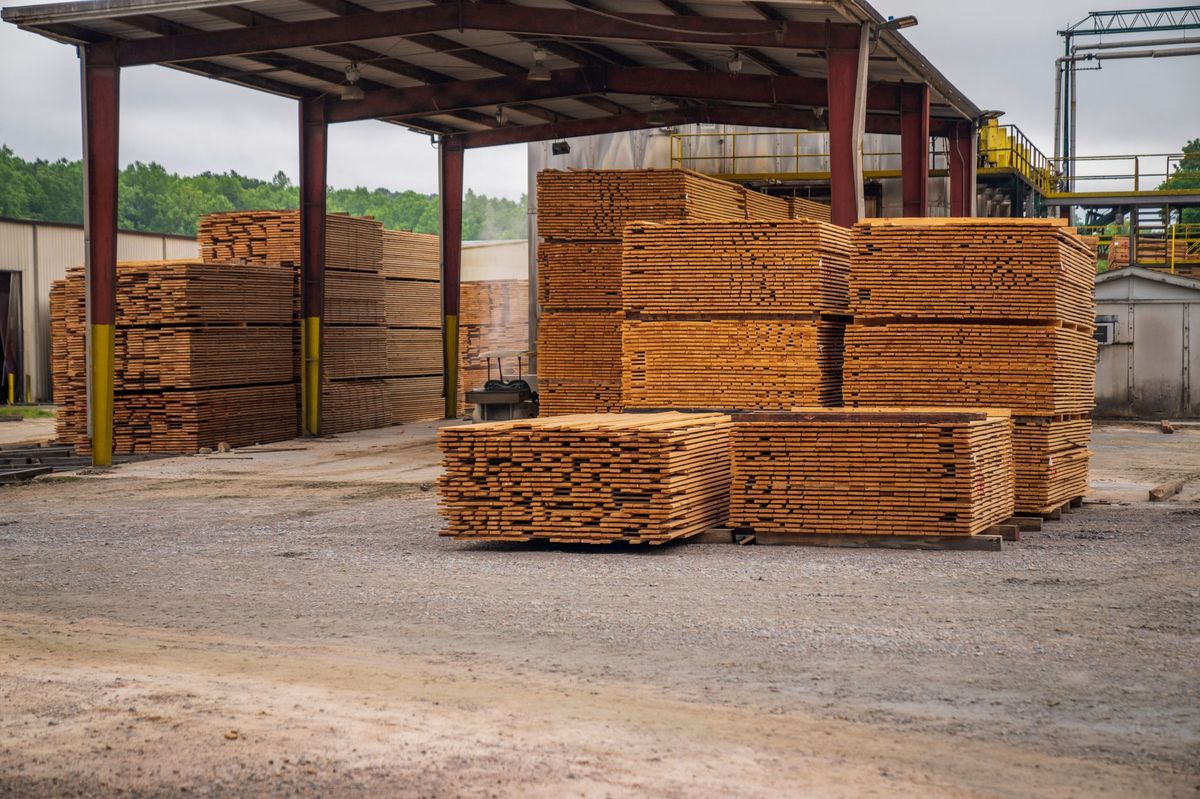
Here is the irony that defines cross-border construction: Canada is the largest foreign supplier of softwood lumber to the United States, yet a Canadian homebuilder does not automatically get cheaper lumber than an American one. Canadian framing lumber tracks the same North American commodity index — roughly US$480/MBF (thousand board feet) in 2026 — because it is one integrated market. What differs is everything downstream of the mill. Concrete and cement price similarly across the border (Canadian ready-mix runs C$200-260/m³, or US$146-190). Structural steel trades within 10-15% of US pricing, though Canadian fabricators sit closer to primary steel from Hamilton and Sault Ste. Marie mills.
Gypsum, glass, and mechanical equipment carry a modest Canadian premium — often 5-12% — because of thinner domestic manufacturing and longer haul distances to a population strung along the US border. For a data point on how material intensity drives total cost, the copper-and-steel content in advanced facilities is running well ahead of general inflation, which our construction cost index report tracks across categories.
Tax: GST, HST, and the Silent Load
Canadian construction carries the Goods and Services Tax at 5% federally, and in most provinces a Harmonized Sales Tax that combines federal and provincial rates — 13% in Ontario, 15% in the Atlantic provinces. British Columbia and Alberta sit lower (BC uses a 7% PST on many materials; Alberta has no provincial sales tax at all, part of why Calgary prices well). Registered builders recover GST/HST on commercial work through input tax credits, but on new residential construction the tax largely sticks to the end buyer, softened by partial rebates. A US comparison carries state sales tax of 0-9.5% on materials only, with labor generally untaxed. The upshot: an Ontario homebuyer's all-in price embeds 13% HST where a Texas buyer's embeds perhaps 3-4% material tax — a gap that has nothing to do with the cost of building and everything to do with the cost of buying.
The Cross-Border Tariff and Trade Angle
No Canada-US construction comparison is honest without the trade file, because it moves real money on real jobs.
Softwood Lumber: A 40-Year Dispute Still Running
The US Department of Commerce maintains combined antidumping and countervailing duties on Canadian softwood lumber — rates that have sat in the mid-teens percent for years and that administrative reviews have periodically pushed toward and past 30%. The mechanism matters: duties are collected at the US border, so they raise costs for US homebuilders buying Canadian lumber, not for Canadian builders using it domestically. The National Association of Home Builders has repeatedly estimated that lumber-price volatility, tariffs included, adds several thousand dollars to the cost of a typical US single-family home. For a Canadian mill, the duty compresses export margins; for a US framer, it is a line-item tax on a material with no easy domestic substitute at scale.
Steel, Aluminum, and Buy America
Section 232 tariffs on steel (25%) and aluminum (10%) have flickered on and off for Canadian metal since 2018, with exemptions negotiated, withdrawn, and renegotiated under CUSMA (the Canada-United States-Mexico Agreement, Canada's name for USMCA). When the tariffs are live, they raise the delivered cost of Canadian structural steel and architectural aluminum into US projects and invite retaliatory Canadian duties on US-origin materials. Layered on top, the Buy America provisions attached to the US Infrastructure Investment and Jobs Act require domestic content on federally funded projects, which quietly excludes Canadian steel and iron from a large slice of US public work. A Canadian fabricator that competed freely for Buffalo or Detroit infrastructure jobs a decade ago now faces a domestic-content wall on anything federally funded.
What This Means If You Build Across the Border
For a US contractor eyeing Canadian work, the margin math shifts in your favor on currency but against you on tax administration and union coordination — Canadian gross margins on commercial work run a healthy 6-10%, comparable to strong US shops, but the compliance overhead of GST/HST filing and provincial trade certification is real. For a Canadian firm bidding US work, the weak loonie is a competitive weapon on labor and design services, but Buy America and Section 232 can erase that edge on any material-heavy federal job. Price both scenarios in our cost estimator at multiple exchange rates before you commit, and stress-test your markup against local norms with the markup and margin calculator, because a margin that works in Calgary can be underwater in Chicago once tax and duty stack up.
Frequently Asked Questions
Is it cheaper to build in Canada or the US?
In US-dollar terms, most Canadian metros are cheaper than comparable US coastal cities and roughly on par with or slightly above the US Midwest, largely because the Canadian dollar traded near US$0.73 in 2026. Calgary is the cheapest major Canadian market (about US$256/SF for office); Vancouver is the most expensive (about US$343/SF). The US Sunbelt, such as Dallas, remains cheaper than any of them.
How much does it cost to build a house in Toronto vs the US?
Low-rise wood-frame housing in Toronto runs roughly C$260/SF (US$190) in hard costs, above the US average of US$140-200/SF. Toronto costs more per foot mainly because of land, development charges that can exceed C$100,000 per unit, and 13% HST — the sticks-and-bricks are priced similarly since both markets buy the same North American lumber at about US$480/MBF.
Why is Vancouver construction so expensive?
Three stacked factors: severe land constraint on a peninsula hemmed by mountains and ocean, seismic design requirements that add 4-8% to structural cost, and among the highest municipal development fees in North America. At about US$343/SF for Class A office, Vancouver rivals US coastal markets despite the weaker Canadian dollar.
How do US lumber tariffs affect Canadian builders?
Directly, very little — the US antidumping and countervailing duties are collected at the US border, so they raise costs for American buyers of Canadian lumber, not for Canadian builders using it at home. Indirectly, sustained duties compress Canadian mill export margins and can shift production, which feeds back into the shared North American lumber price both countries pay.
What exchange rate should I use for a cross-border estimate?
Use the spot rate for a firm number, but model a range. A 10-cent move in the Canadian dollar shifts the US-dollar cost of a Canadian project by roughly 13-14% — larger than the labor-productivity or materials gap between the two countries — so any single-rate estimate is fragile. Run strong-loonie, spot, and weak-loonie cases.
Do Canadian contractors earn better margins than US contractors?
Roughly comparable. Established Canadian commercial general contractors target 6-10% gross margins, similar to strong US shops. Canada's higher union density sets firmer wage floors but does not by itself widen or narrow margins; the bigger swing factors are the exchange rate and provincial tax administration.
Your Action Item for This Week
Take your most recent completed or bid project and run it through one honest cross-border test. Convert its cost into both C$/SF and US$/SF at today's rate, then set it against the metro table above. If you build in the US and a Canadian competitor is underbidding you, check whether the gap is real productivity or just a weak loonie — because the currency can reverse. If you build in Canada and eye US federal work, confirm whether Buy America and Section 232 apply before you bank on your exchange-rate advantage. Then load the numbers into the cost estimator at three exchange rates and see which line items are structurally different versus merely currency-flattered.