The Bureau of Labor Statistics Producer Price Index for construction inputs dropped 3.2% year-over-year in the most recent release — marking the first decline in construction input costs since early 2022 and the largest single-period decrease since the post-2008 correction. For an industry that has absorbed four consecutive years of cost inflation that added an estimated $148 billion in cumulative project costs, this decline is a genuine inflection point.
The math: on a $10 million commercial project, a 3.2% input cost reduction translates to approximately $192,000 in savings — potentially the difference between a profitable job and a break-even one in an industry where average profit margins hover around 6%.
Bottom line: the cost relief is real, but it is not uniform. Some materials are dropping fast, others are holding firm, and labor costs continue to climb. Contractors who understand which inputs are declining — and which are not — can price work more accurately and capture margin improvements that their less-informed competitors will miss.
The PPI Data: What's Dropping and What Isn't
BLS Producer Price Index data for construction inputs (PPI for Inputs to Construction Industries, Series ID WPUIP2300000) breaks the decline into component categories:
Inputs showing price declines (year-over-year):
| Input Category | Change YoY | Current Index | Impact |
|---|---|---|---|
| Softwood lumber | -14.2% | 118.4 | Major — lumber is 8-12% of residential cost |
| Steel mill products | -8.6% | 142.8 | Significant — structural steel drives commercial costs |
| Aluminum mill shapes | -6.4% | 168.2 | Moderate — cladding and window framing |
| Flat glass | -8.1% | 134.6 | Moderate — curtain wall and window systems |
| Copper wire and cable | +2.8% | 224.6 | Still rising — counter to overall trend |
| Concrete products | -1.8% | 186.4 | Modest decline from elevated levels |
| Gypsum products | -4.2% | 162.8 | Meaningful for interior finishing |
| Asphalt paving | -5.6% | 148.2 | Significant for infrastructure |
| Diesel fuel | -8.4% | 134.6 | Helps equipment and hauling costs |
| PVC pipe and fittings | -3.8% | 152.4 | Moderate — plumbing and underground |
Inputs showing price increases:
| Input Category | Change YoY | Current Index | Driver |
|---|---|---|---|
| Copper and brass | +6.2% | 248.6 | Global demand, supply constraints |
| Ready-mix concrete | +2.4% | 192.8 | Cement production costs, demand |
| Electrical equipment | +4.8% | 178.4 | Component shortages, technology content |
| HVAC equipment | +3.6% | 172.6 | Refrigerant costs, efficiency mandates |
| Labor (BLS ECI) | +4.3% | 168.4 | Persistent shortage, wage competition |
The pattern: raw materials and commodities that were subject to pandemic-era supply chain disruptions and post-pandemic speculative pricing are correcting. Manufactured goods with technology content (electrical equipment, HVAC) continue to rise as do materials with concentrated production (ready-mix concrete, copper).
Business tip: The uneven nature of this decline creates a strategic opportunity. Contractors who adjust their estimating databases to reflect current material prices — rather than using lagging historical averages — can bid more aggressively on projects heavy in declining materials (structural steel, lumber, glass) while maintaining conservative pricing on projects heavy in rising materials (electrical, mechanical). The math isn't complicated: update your unit costs monthly, not quarterly.
What Caused the Decline
The 3.2% decline reflects the convergence of four factors:
1. Supply Chain Normalization
The pandemic-era supply chain disruptions that caused material shortages and speculative hoarding have largely resolved:
- Lumber mill operating rates have recovered to 92% of capacity, up from the 68% trough during the pandemic. Canadian lumber exports to the U.S. have increased 18% year-over-year.
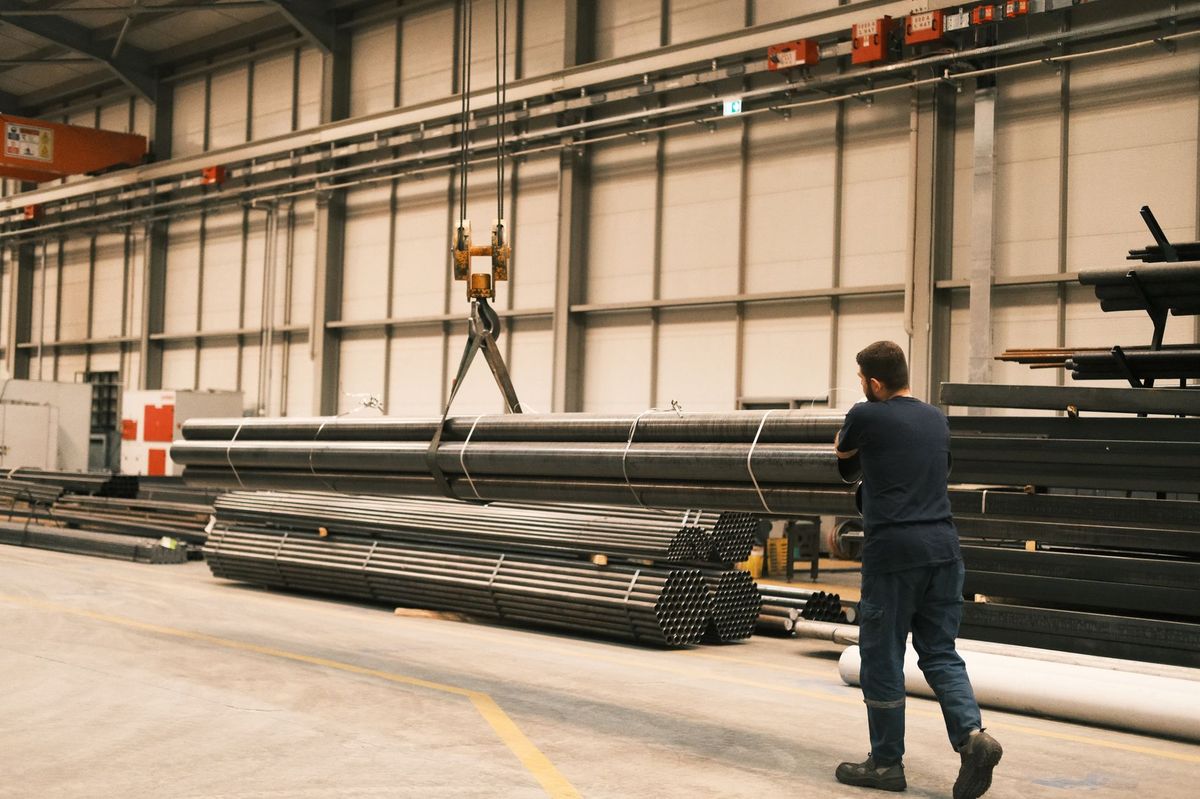
- Steel import volumes have normalized as anti-dumping tariff exemptions and expanded domestic production increased supply. Domestic steel mill capacity utilization reached 78%, adequate to meet current demand.
- Glass manufacturing capacity expanded with three new float glass plants coming online in the past two years, breaking the supply bottleneck that had driven prices up 40%.
2. Demand Moderation
Construction activity, while still strong, has moderated from the frenetic pace of 2023-2024:
- Housing starts have stabilized at approximately 1.38 million annualized — down from the 1.58 million peak
- Commercial construction has slowed in some categories (office, retail) even as others remain strong (data centers, healthcare)
- The bid pipeline has shifted from "everything is urgent" to more typical scheduling, reducing the demand pressure that allowed suppliers to maintain elevated pricing
3. Energy Cost Reduction
Diesel fuel prices declining 8.4% directly impact construction costs through:
- Equipment operation: Fuel is 15-22% of heavy equipment operating cost
- Material transportation: Trucking costs are fuel-sensitive, and construction materials are heavy/bulky
- Asphalt production: Petroleum-based, directly tied to crude oil and diesel prices
- Overall impact: BLS estimates that a 10% decline in diesel prices reduces total construction input costs by approximately 0.6-0.8%
4. Tariff Adjustments
Recent tariff modifications have provided selective cost relief:
- Canadian lumber tariff rates reduced for several major producers following WTO dispute resolution
- Selected steel tariff exclusions renewed for construction-specific grades
- However, new tariffs on Chinese construction equipment and components partially offset these savings
Business tip: Energy costs are the most volatile component of construction input costs. Lock in fuel contracts for 6-12 months when diesel prices decline — the protection against upward spikes is worth the modest premium over spot pricing. The math: a fleet of 20 pieces of heavy equipment consumes approximately 1,200 gallons of diesel per day. A $0.30/gallon price spike costs $360/day or $7,200 over a 20-day work month. Fuel hedging costs approximately $0.04-$0.08/gallon.
Material-by-Material Deep Dive
Lumber: Down 14.2% — The Biggest Mover
Random Lengths composite lumber pricing has dropped to approximately $380 per thousand board feet (MBF) from a peak of $650 MBF and a pandemic high of $1,500+ MBF. Current pricing is approaching pre-pandemic norms of $350-$400 MBF.
What's driving it:
- Canadian production recovery and increased U.S. southern yellow pine output
- Housing starts moderation reducing demand
- Lumber futures indicating market expects further modest declines
- Reduced export competition from China (slowed construction activity)
Impact on residential construction:
- Lumber typically represents $28,000-$42,000 of material cost in a standard 2,400 sq ft home
- 14.2% reduction saves approximately $4,000-$6,000 per home
- For a builder constructing 50 homes per year: $200,000-$300,000 in annual savings
Steel: Down 8.6% — Commercial Construction Relief
Hot-rolled coil (HRC) steel prices have declined to approximately $720/ton from peaks above $900/ton. Structural steel shapes (wide flange beams, channels) have seen comparable declines.
Impact on commercial construction:
- Structural steel is typically $12-$18 per square foot installed in commercial buildings
- 8.6% reduction saves $1.03-$1.55/sf
- On a 100,000 sq ft office building: $103,000-$155,000 in structural steel savings
Rebar divergence: Notably, reinforcing steel (rebar) prices have not declined proportionally — rebar is down only 3.2% vs. 8.6% for structural shapes. This reflects continued strong demand from infrastructure projects (bridges, highways, water treatment) that consume large quantities of reinforcing steel.
Gypsum/Drywall: Down 4.2% — Interior Cost Relief
Drywall prices have stabilized at approximately $14.50 per 4×8 sheet after peaking above $18 during the pandemic. This is still 42% above pre-pandemic pricing of approximately $10.20 per sheet, indicating that the market has found a new equilibrium rather than returning to historical norms.
Impact on interior finishing:
- A typical 2,400 sq ft home uses approximately 400 sheets of drywall
- At $14.50/sheet: $5,800 — down from $7,200 at peak pricing
- 4.2% further decline: approximately $243 savings per home
Flat Glass: Down 8.1% — Window and Curtain Wall Relief
Glass prices have declined as new manufacturing capacity comes online and commercial construction demand moderates. Insulated glass units (IGUs) for commercial curtain wall applications have dropped approximately 10% from peak levels.
Impact:
- Curtain wall glass represents $35-$55/sf of facade cost on commercial high-rises
- 8% reduction: $2.80-$4.40/sf savings
- On a 200,000 sf curtain wall project: $560,000-$880,000 in glass savings
What This Means for Contractor Margins
The 3.2% input cost decline, if captured in project execution, would theoretically add 3.2 percentage points to contractor margins on cost-plus work and improve competitiveness on fixed-price bids. But the reality is more nuanced:
Cost-plus contracts:
- Owners benefit directly from material cost reductions
- Contractors benefit if their fee percentage remains constant (3.2% reduction in costs × typical 5% fee = minimal fee impact)
- GMP (Guaranteed Maximum Price) contracts may allow owners to capture savings below the GMP
Fixed-price/lump-sum contracts:
- Contractors who bid during the cost decline period can price projects with current lower costs
- Risk: if costs rise again before procurement, the contractor absorbs the increase
- Opportunity: projects bid during declining cost periods often generate higher margins if costs continue to decline or stabilize during execution
Estimating implications:
- Update material pricing databases monthly during periods of significant price movement
- Use current supplier quotes rather than historical cost data for bids
- Consider material price escalation clauses in contracts longer than 12 months
- Lock in pricing through early procurement on projects with fixed budgets
Business tip: The 3.2% decline in input costs is a tailwind, but labor costs — the largest single input at 40-50% of project cost — are still rising at 4.3%. The net effect: total project costs are approximately flat to slightly declining when materials and labor are combined. Don't assume declining material costs translate to declining total project costs. Bottom line: the math requires looking at all inputs together, and labor is still the wild card.
The Outlook: Temporary Relief or New Normal?
Industry forecasts from multiple sources suggest the input cost decline is partially temporary:
Factors supporting continued cost relief:
- Supply chain normalization has structural momentum
- Housing starts unlikely to surge in 2026 (interest rates remain elevated)
- New manufacturing capacity for glass, gypsum, and steel increasing domestic supply
- Energy price stability expected through 2026
Factors threatening cost reversal:
- Tariff uncertainty — proposed tariff expansions on Canadian lumber, Chinese steel, and other construction materials could reverse price declines rapidly
- Infrastructure spending acceleration — as IIJA funding disburses and projects enter the construction phase, demand for concrete, steel, and aggregates will increase
- Natural disaster reconstruction — a major hurricane season could spike lumber, roofing, and building material demand overnight
- Copper supply constraints — copper is already rising, and electrification trends (EVs, data centers, renewable energy) are increasing long-term demand
Consensus forecast: Most industry economists expect construction input costs to remain flat to modestly declining (-1% to -2%) through the remainder of 2026, followed by modest increases of 2-3% in 2027 as infrastructure projects ramp up and housing recovers.
Bottom line: the 3.2% decline gives contractors a window — probably 6-12 months — of favorable material pricing. Smart contractors will use this window to lock in material costs on upcoming projects, rebuild margins that were compressed during the inflationary period, and invest in operational improvements that reduce their sensitivity to the next cost cycle. Because the next cycle will come — it always does. The math doesn't lie, and neither does history.
Contractor Action Items for the Cost Decline Environment
The 3.2% input cost decline creates specific opportunities that contractors should act on now:
1. Update estimating databases immediately. If your estimating system still reflects pricing from 6-12 months ago, you are overpricing bids and losing competitive opportunities. Assign a team member to update material unit costs monthly during this period of price movement.
2. Review contracts with escalation clauses. If you have active contracts with material escalation clauses that trigger on price decreases (symmetric escalation), you may owe credits to owners. Review these obligations proactively — owners will eventually identify them, and addressing them first demonstrates integrity and preserves the relationship.
3. Accelerate procurement on favorable materials. Materials showing the largest declines (lumber, steel, glass) may not continue declining indefinitely. For projects with approved budgets, procuring these materials now locks in favorable pricing and protects against reversal.
4. Renegotiate supplier agreements. In a declining market, suppliers are more willing to negotiate pricing, extend credit terms, and provide value-added services. Use the competitive environment to improve your supply chain terms — even 1-2% improvements compound across your annual material spend.
5. Communicate with clients. Owners and developers who follow cost trends will expect to see the input cost decline reflected in your pricing. Proactively communicating that you have updated your cost basis builds credibility and reduces the risk of losing bids to competitors who are more aggressively pricing the decline.
Bottom line: a 3.2% input cost decline in an industry with 6.2% average profit margins is significant — it represents more than half the average profit margin in potential cost improvement. The contractors who capture this improvement through active estimating, strategic procurement, and client communication will see their margins expand. Those who continue using stale pricing data will either lose bids to more informed competitors or leave money on the table when they win. The math favors attention and action.
Want project-specific numbers? Our free cost estimator and markup margin calculator do the math in a couple of minutes.
Frequently Asked Questions
How does construction input costs decline affect construction costs?
Industry analysts tracking construction input costs decline report that 2026 has brought measurable shifts. With data showing 3.2%, the trend line suggests continued movement through the remainder of the year. Builders should factor this into both current bids and forward-looking project estimates.
What is the forecast for construction input costs decline in 2026?
The geographic landscape for construction input costs decline is shifting in 2026. Data indicating $148 billion underscores the importance of market selection for contractors seeking growth. Western and southeastern states continue to attract disproportionate investment relative to their population share.
How are contractors responding to construction input costs decline?
The trajectory for construction input costs decline tells an important story when viewed against historical benchmarks. With the latest data showing $10 million, the trend has clear implications for project feasibility, bidding accuracy, and resource allocation across the construction sector.