The View From the Trailer
By Mike Callahan, Construction Operations Correspondent
I have spent the better part of 25 years building commercial projects — offices, hospitals, universities, mixed-use towers — and I have managed projects ranging from $10 million tenant improvements to $400 million hospital wings. Nothing prepared me for data center construction.
That is not false modesty or hype. Data center construction is a fundamentally different animal from any other type of commercial building work, and the hyperscale segment — the million-square-foot, 100-plus-megawatt, billion-dollar campuses built for the Microsofts and Googles and Amazons of the world — occupies its own category within that already specialized field.
This article is an attempt to convey what it is actually like to manage these projects, from the perspective of someone who has lived it. Not the press releases, not the analyst reports, not the architectural renderings — but the daily reality of managing 2,000 to 5,000 construction workers, coordinating 40-plus subcontractors, and delivering facilities where a single electrical error can cause millions of dollars in damage.
If you are a GC thinking about entering the data center market, an owner evaluating construction partners, or a tradesperson considering whether data center work is right for you, this is the unvarnished version.
The Scale Is Disorienting
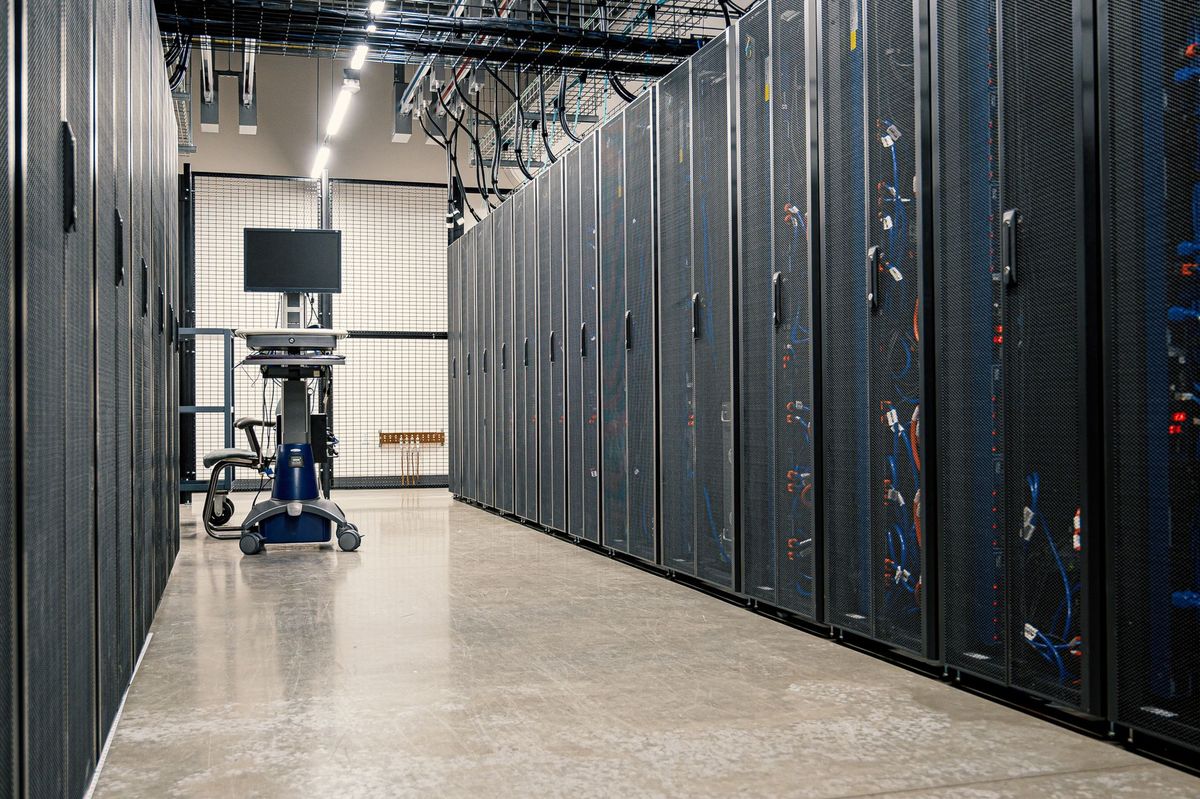
The first thing that hits you when you step onto a hyperscale data center construction site is the scale. A typical hyperscale data hall — one building on a campus that might contain four to eight buildings — is 200,000 to 400,000 square feet. That is the size of a large warehouse. But unlike a warehouse, every square foot is filled with complex mechanical and electrical systems that make a hospital look like a residential renovation.
A campus of four to six data halls, plus associated support buildings (central utility plants, administration buildings, generator yards, parking), can easily cover 100 to 200 acres and encompass 1 million to 2 million square feet of enclosed space. The construction cost for a campus of this scale typically ranges from $1 billion to $3 billion, making these among the most expensive private construction projects in the country.
Crew Size
At peak construction, a hyperscale data center campus will have 2,000 to 5,000 workers on site simultaneously. Managing a workforce of this size requires a level of site logistics, safety management, and coordination that few other project types demand.
The morning truck line at a large data center site can stretch for a mile or more. Worker parking requires acres of land. Toilet facilities alone require dozens of portable units, serviced daily. Tool and material laydown areas cover multiple acres. First aid stations must be staffed with multiple medical professionals.
At any given time, you might have 800 electricians pulling cable and terminating panels in Building A, 400 pipefitters hanging chilled water piping in Building B, 200 concrete workers pouring foundations for Building C, and 300 steel workers erecting the frame for Building D — all while 100 IT equipment installers are racking servers in a completed building across the campus, 50 commissioning agents are testing systems in another, and a civil crew is grading for the generator yard.
Coordinating this many workers across this many concurrent activities is the central challenge of hyperscale data center construction management.
The 40-Plus Subcontractor Problem
A hyperscale data center project typically involves 40 to 60 subcontractors, covering disciplines from site clearing and earthwork to IT equipment installation and security system commissioning. Managing this many subs on a single project — many of whom are working simultaneously in close proximity — requires a project management infrastructure that is more akin to a small corporation than a typical construction management team.
The Critical Trades
Not all subcontractors are created equal on a data center project. A handful of trades carry disproportionate risk and disproportionate impact on the schedule.
Electrical. The electrical subcontractor (or, more commonly, multiple electrical subcontractors working on different systems) is the single most important trade on a data center project. Electrical work drives the schedule, represents the largest single subcontract, and carries the highest consequence of error. A miswired bus connection or a poorly terminated medium-voltage cable can cause a cascade failure that damages millions of dollars in equipment and delays the project by months.
On a typical hyperscale project, the electrical subcontract represents 30 to 40 percent of total construction cost and involves 300 to 500 electricians at peak. The electrical scope includes medium-voltage utility switchgear, transformers, UPS systems, generators, paralleling switchgear, power distribution units, busway, branch circuit panelboards, and literally hundreds of miles of cable and conduit.
Mechanical / HVAC. The mechanical subcontract typically represents 20 to 30 percent of total construction cost and involves 200 to 400 pipefitters, sheet metal workers, and controls technicians at peak. The scope includes central chiller plants, cooling towers, chilled water distribution piping, computer room air handlers or in-row cooling units, and the controls systems that manage it all.
Concrete. Data center foundations are massive — 12 to 18 inches thick with dense rebar mats — and the concrete subcontract, while a smaller percentage of total cost (5 to 10 percent), is absolutely schedule-critical because everything else depends on having slab to work on.
Fire protection. Data center fire protection systems are more complex than typical commercial systems, involving pre-action sprinkler systems, clean agent suppression in critical spaces, and VESDA (Very Early Smoke Detection Apparatus) systems. The fire protection subcontract is relatively small in dollar terms but carries enormous consequences if done incorrectly.
Controls and BMS. The building management system integrates all mechanical and electrical systems and provides the monitoring and control capability that allows the data center to operate. Controls integration is one of the final activities on the schedule but requires early and continuous coordination with every other trade.
Coordination Intensity
The coordination requirements among 40-plus subcontractors are intense and unforgiving. In a typical data center, the ceiling plenum above the data hall contains electrical conduit, chilled water piping, fire protection piping, cable tray, and BMS conduit — all in a space that might be only 3 to 4 feet deep. Every one of these systems must be precisely positioned to avoid conflicts with the others, and the tolerance for error is measured in inches.
BIM (Building Information Modeling) coordination is essential on hyperscale data center projects. The coordination model is typically maintained by a dedicated BIM team and updated weekly (or more frequently during peak installation periods). Despite this investment, field conflicts are inevitable and must be resolved quickly to avoid cascading schedule impacts.
The Schedule — Compressed and Unforgiving
Hyperscale operators want their data centers built fast. The typical timeline for a single data hall — from permit issuance to ready for IT equipment installation — is 12 to 18 months. For a multi-building campus, the overall program might span 3 to 7 years, but individual buildings are expected on aggressive timelines.
This schedule pressure creates a construction environment that is significantly more intense than most commercial projects. Key schedule dynamics include:
Concurrent construction. Multiple buildings are under construction simultaneously, each at a different stage. While one building is in earthwork, another is in structural steel, a third is in MEP rough-in, and a fourth is in commissioning. This concurrent approach maximizes campus throughput but creates enormous demands on project management, logistics, and labor.
Commissioning duration. Unlike most commercial projects, where commissioning is a relatively brief process at the end of construction, data center commissioning takes 8 to 12 weeks and involves systematic testing of every system under simulated load conditions. This commissioning period is fixed and cannot be compressed, which means any construction delay compresses an already tight schedule.
Weather impacts. Data center construction is heavily weather-dependent, particularly for concrete work, steel erection, and roofing. A week of rain can have cascading schedule impacts that take months to recover from.
Change management. Hyperscale operators frequently modify their requirements during construction, driven by changes in IT equipment specifications, cooling technologies, or power density requirements. Managing these changes while maintaining schedule is one of the most challenging aspects of data center project management.
Safety — Zero Tolerance
Hyperscale operators maintain rigorous safety standards on their construction sites, and the consequences of safety failures are severe. Most hyperscale owners require general contractors to maintain total recordable incident rates (TRIR) below 1.0, and some require rates below 0.5 — significantly more demanding than the construction industry average of approximately 2.5.
Meeting these standards with a workforce of 2,000 to 5,000 workers requires a substantial safety management infrastructure. A typical hyperscale project employs 10 to 20 full-time safety professionals, conducts daily safety briefings for every crew, performs regular safety audits, and maintains incident investigation and reporting systems that would be considered overkill on most commercial projects.
The safety focus is genuine, not performative. The risks on a data center construction site are real and include electrical hazards (medium-voltage systems carry lethal potential), fall hazards (data halls are typically 35 to 50 feet tall), heavy lift hazards (major equipment pieces weigh 30,000 to 50,000 pounds), and confined space hazards (underfloor plenums and mechanical chases). A robust safety program is essential for protecting workers and for protecting the general contractor's ability to continue working for hyperscale clients.
Quality — Building to a Higher Standard
The quality standards on hyperscale data center projects exceed those of almost any other construction type except semiconductor fabrication facilities. The reason is simple: the computing equipment that will eventually occupy these buildings is extraordinarily sensitive and extraordinarily expensive. A construction defect that introduces dust into the data hall, causes a water leak near computing equipment, or creates an electrical fault can result in millions of dollars in damage and weeks of downtime.
Clean Build Protocols
Most hyperscale projects implement clean build protocols that restrict certain activities in or near completed computing spaces and require ongoing environmental monitoring during construction. These protocols typically include:
- Prohibition of cutting, grinding, and welding in completed data hall spaces
- Requirement for boot covers or dedicated footwear in data hall areas
- HEPA filtration of construction air handling units
- Daily sweeping and mopping of completed spaces
- Particle count monitoring to ensure air quality meets specifications
Inspection Intensity
Quality inspections on data center projects are more frequent and more rigorous than on typical commercial projects. Electrical connections are individually inspected and torqued to specification. Pipe welds are pressure-tested and in some cases X-rayed. Concrete placements are closely monitored for proper curing. The documentation required for each inspection is substantial, creating a paper trail that can be reviewed by the owner, commissioning agent, and, in some cases, insurance underwriters.
What GCs Need to Know
For general contractors considering entering the hyperscale data center market, here is my honest assessment of what it takes.
You need experienced people. You cannot learn data center construction from a book or a seminar. You need project managers, superintendents, and MEP coordinators who have done it before. The most reliable way to acquire this expertise is to hire people from established data center GCs — which is exactly what every firm entering the market tries to do, making experienced data center construction professionals among the most recruited people in the industry.
You need financial strength. Hyperscale projects require significant bonding capacity and working capital. The subcontract packages are large (the electrical sub alone might be $100 million to $200 million), the mobilization costs are substantial, and the payment terms, while generally fair, require carrying significant costs before invoicing.
You need a safety track record. Hyperscale operators will not consider a GC with a poor safety record. If your TRIR is above 1.5, you are probably not competitive for this work. If it is above 2.0, do not bother bidding.
You need patience. Building relationships with hyperscale operators takes years, not months. The procurement process is rigorous, the qualification requirements are extensive, and operators tend to be conservative about adding new GCs to their approved lists. Starting with smaller colocation projects or subcontractor roles on hyperscale projects is a more realistic entry strategy than pursuing a lead role on a billion-dollar campus.
For context on how the data center construction market fits into the broader industry, see our 2026 construction spending forecast, which shows data centers as one of the fastest-growing segments of commercial construction.
The Reward
Despite all of the challenges — and there are many — hyperscale data center construction is among the most rewarding work in the construction industry. The projects are technically challenging, the budgets are large, the clients are sophisticated, and the work is consistent. Once you are established in the hyperscale market, the pipeline of opportunities is deep and sustained, with multi-year backlog that provides the kind of revenue visibility that most GCs can only dream of.
There is also a certain satisfaction in building the physical infrastructure of the digital world. Every email sent, every video streamed, every AI query answered passes through buildings that construction workers built. In an industry where the value of what we build is sometimes hard to articulate, data centers make the connection between construction and daily life remarkably tangible.
The work is hard, the standards are demanding, and the learning curve is steep. But for GCs and trade contractors willing to invest in building genuine hyperscale data center capabilities, the market offers some of the best opportunities in commercial construction today — and for the foreseeable future.
FAQ
Q: You mention 2,000 to 5,000 workers at peak on a hyperscale campus — how many full-time safety professionals does that actually require? A: A typical hyperscale project employs 10 to 20 full-time safety professionals to manage a workforce that size. The industry standard requires TRIR below 1.0 — compared to the construction industry average of approximately 2.5 — and meeting that standard with thousands of concurrent workers requires daily safety briefings, regular audits, and an incident management system more sophisticated than most commercial projects ever see.
Q: The article says the electrical subcontract alone can run $100M to $200M on a single project — what bonding and financial capacity does a GC need to take the lead role? A: The bonding and working capital requirements are substantial enough that only well-capitalized firms are competitive. Mobilization costs are large, payment terms require carrying significant costs before invoicing, and sub packages at that scale require a net worth sufficient to cover the contract value. This is why the hyperscale market is dominated by a handful of established national firms rather than regional contractors.
Q: How compressed are the construction schedules — what's a realistic timeline from permit issuance to IT equipment installation for a single data hall? A: The typical timeline is 12 to 18 months per data hall. After construction, commissioning takes an additional 8 to 12 weeks and cannot be compressed. Any construction delay eats directly into an already tight schedule because the commissioning window is fixed.
Q: The concrete subcontract is described as 5 to 10 percent of total cost but absolutely schedule-critical — what makes data center foundations different from standard commercial slab work? A: Data center foundations are 12 to 18 inches thick with dense rebar mats, significantly heavier than typical commercial slabs. Every other trade depends on having slab to work on, so concrete delays cascade through the entire building program. On a multi-building campus with concurrent construction, a pour delay in one building can affect crew sequencing across the whole site.
READ NEXT: Liquid Cooling Is Changing How Data Centers Are Built