The self-storage construction market has defied every prediction of saturation, correction, and slowdown that analysts have made over the past decade. The numbers tell a different story than the "overbuilt" narrative — self-storage construction starts totaled $6.8 billion in 2025 and are projected to reach $7.2 billion in 2026, according to data from Yardi Matrix and the Self Storage Association. The United States now has approximately 63,000 self-storage facilities containing roughly 3.2 billion square feet of rentable space — and new facilities continue to lease up at rates that justify continued development.
For general contractors and design-build firms that specialize in commercial construction, self-storage represents one of the most accessible and profitable building types in the market. The construction is relatively straightforward compared to office, retail, or healthcare buildings. The development timelines are compressed. The repeat-client dynamic is strong, as successful self-storage developers build multiple facilities per year. And the geographic reach is universal — self-storage is built in every market from dense urban cores to rural communities.
Market Fundamentals: Why It Keeps Growing
Understanding why self-storage construction continues at record levels requires examining the demand drivers that sustain the market.
Demographic tailwinds. The United States has approximately 133 million households, and approximately 11% rent a self-storage unit at any given time — roughly 14.6 million households. This penetration rate has increased from approximately 8.5% in 2010, driven by several structural trends: shrinking average home sizes in new construction (the median new single-family home peaked at 2,427 square feet in 2015 and has declined to approximately 2,150 square feet), increasing urbanization with smaller dwelling units, aging baby boomers downsizing but retaining possessions, and millennial household formation patterns that favor renting (both housing and storage) over ownership.
E-commerce and small business demand. Commercial and business storage — which now accounts for approximately 25 to 30% of self-storage revenue — has grown faster than residential demand. Small businesses, e-commerce sellers, contractors, and service companies use self-storage for inventory, equipment, and operational needs. The pandemic-era surge in home-based businesses created a permanent shift in commercial storage demand that continues to drive lease-up at new facilities.
Supply-demand dynamics vary by submarket. While national aggregate supply growth of approximately 4 to 5% per year might suggest oversupply, self-storage demand is intensely local. A facility's competitive market is typically a 3 to 5-mile radius in urban/suburban areas and a 10 to 15-mile radius in rural markets. Markets with strong population growth, limited existing supply per capita, and robust household formation continue to support new development, while select submarkets with concentrated recent deliveries experience temporary competitive pressure that moderates rents and delays lease-up but historically self-corrects within 18 to 24 months.
Institutional capital has transformed the sector. Self-storage has attracted unprecedented institutional investment over the past decade, with Real Estate Investment Trusts (REITs) including Public Storage, Extra Space Storage (now merged with Life Storage), CubeSmart, and National Storage Affiliates controlling approximately 30% of the market and driving professional development standards. Private equity firms and institutional investors have entered the development pipeline, bringing capital resources that sustain construction activity even when smaller developers pull back.
Types of Self-Storage Construction
Self-storage construction falls into several distinct categories, each with different construction characteristics, costs, and contractor requirements.
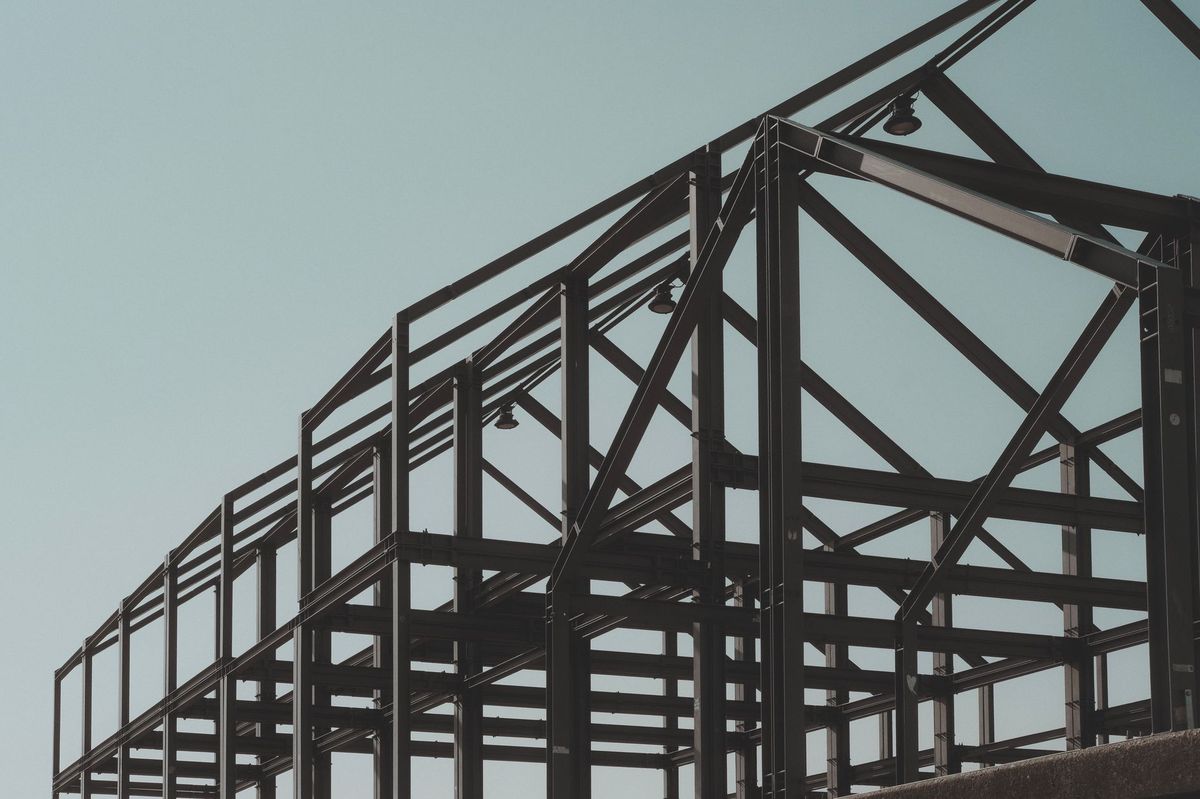
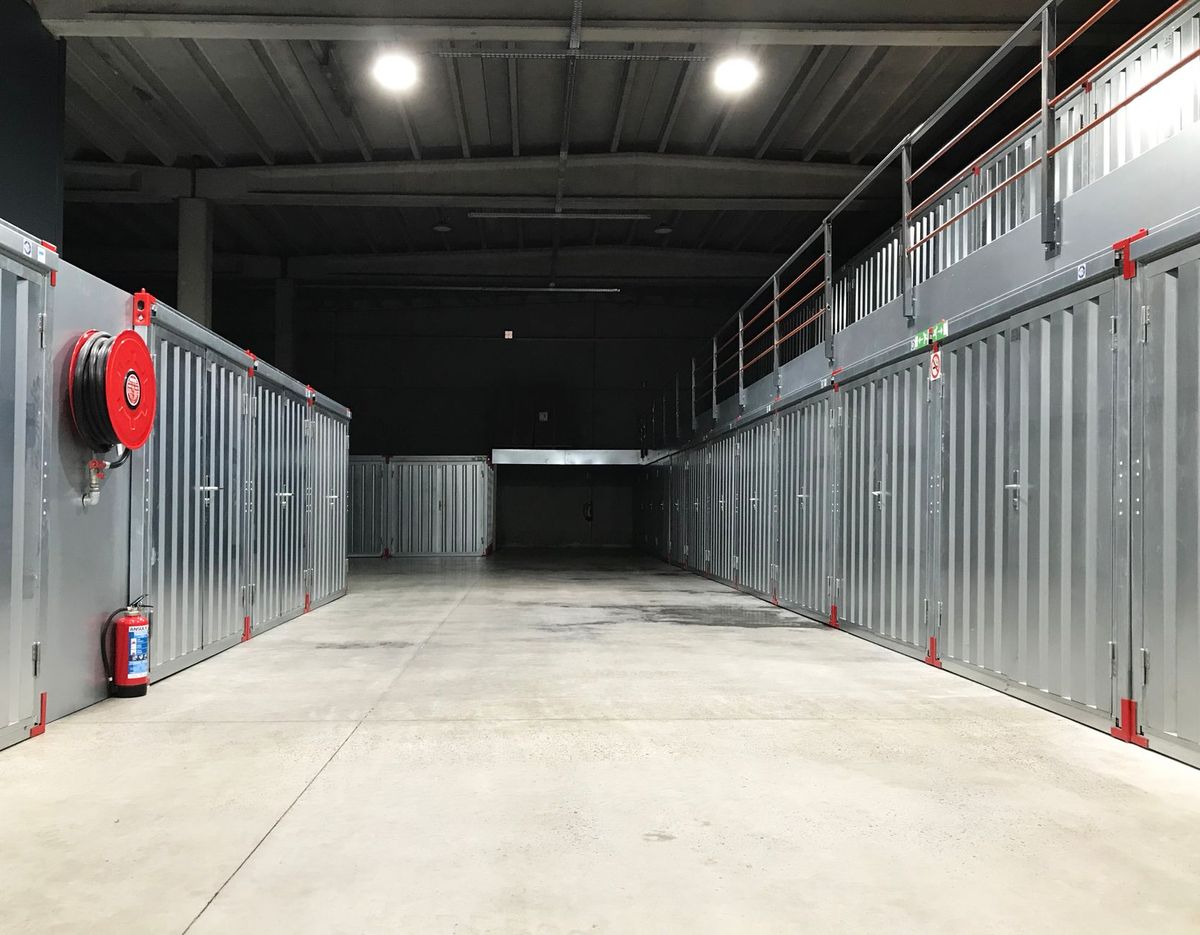
Single-story drive-up facilities — the traditional self-storage format — consist of metal building systems (pre-engineered steel buildings) arranged in parallel rows with drive aisles between buildings. Construction is straightforward: site grading and paving, concrete slab-on-grade foundation, pre-engineered metal building erection, roll-up door installation, and interior partition walls creating individual units. Single-story construction costs range from $45 to $75 per square foot of rentable area (excluding land), with total project costs for a 50,000 to 80,000-square-foot facility ranging from $3 to $6 million.
Multi-story climate-controlled facilities — the dominant new construction format in urban and suburban markets — are typically three to five-story buildings with elevator access, interior corridors, and HVAC systems maintaining temperature and humidity control. Construction involves structural steel or concrete framing, exterior cladding (brick, architectural metal panels, or fiber cement — increasingly driven by municipal design standards that reject the utilitarian aesthetic of older storage buildings), interior partition systems, HVAC and fire protection throughout, and elevator installation. Multi-story climate-controlled construction costs range from $85 to $150 per square foot of rentable area, with total project costs for a 75,000 to 120,000-square-foot facility ranging from $8 to $18 million.
Mixed-use self-storage — an emerging format that combines storage with retail, office, or residential space — is gaining traction in urban markets where zoning and community opposition to standalone storage facilities push developers toward mixed-use designs. These projects involve more complex construction, with ground-floor commercial space requiring different structural, mechanical, and finish specifications than the upper-floor storage areas. Mixed-use storage construction costs range from $120 to $200 per square foot and are typically executed by general contractors rather than storage-specialist design-build firms.
Conversion projects — converting existing commercial, industrial, or retail buildings to self-storage use — represent approximately 15 to 20% of new self-storage supply. Common conversion candidates include vacated big-box retail stores (Kmart, Sears, etc.), industrial and warehouse buildings, office buildings in declining markets, and abandoned shopping centers. Conversion construction costs range from $35 to $85 per square foot depending on the extent of modifications required, and the adaptive reuse approach can accelerate time-to-market since the building shell already exists.
Construction Process and Timeline
Self-storage construction benefits from a relatively streamlined and predictable construction process compared to more complex building types.
Pre-development (6 to 12 months): Site selection, zoning entitlement, civil engineering, and architectural design. Self-storage zoning has become more challenging in many municipalities, with communities implementing moratoriums, special use permit requirements, and design standards that restrict or complicate new storage development. The entitlement process is often the most time-consuming and uncertain phase of a self-storage project.
Site construction (2 to 4 months): Mass grading, utility installation (water, sewer, storm drainage, electric, telecommunications), paving and curbing, and landscaping. Self-storage sites typically require large areas of paving for drive aisles and customer vehicle access, making asphalt paving a significant cost component.
Building construction (4 to 8 months for single-story; 8 to 14 months for multi-story): Foundation, structural framing, building envelope, interior partitions, mechanical/electrical/plumbing systems, elevator installation (multi-story), fire suppression, security systems, and interior finishes. Self-storage construction benefits from high repetition — the same unit types are built dozens or hundreds of times within a single facility, enabling efficient crew deployment and material procurement.
Total project timeline from construction start to certificate of occupancy is typically 6 to 10 months for single-story drive-up facilities and 10 to 16 months for multi-story climate-controlled buildings. Including pre-development, the total timeline from site acquisition to opening is typically 18 to 30 months.
Construction Cost Analysis
Self-storage construction costs have increased 22 to 28% since 2020, driven by steel price escalation (the primary structural material), labor cost increases, and municipal design standard requirements that push facilities toward higher-quality exterior finishes.
A detailed cost breakdown for a 75,000-square-foot, three-story climate-controlled facility in a suburban market illustrates the construction budget allocation: site work and utilities at $800,000 to $1.5 million (8 to 12% of total), structural frame and building envelope at $2.5 to $4 million (25 to 30%), interior partitions and doors at $1.5 to $2.5 million (15 to 20%), HVAC and fire protection at $1.2 to $2 million (12 to 15%), electrical and security at $800,000 to $1.5 million (8 to 12%), elevator installation at $250,000 to $400,000 (3 to 4%), finishes, signage, and landscaping at $500,000 to $1 million (5 to 8%), and soft costs, permits, and contingency at $1.5 to $2.5 million (15 to 20%). Total construction cost: $9 to $15.5 million.
Design-Build Delivery
Approximately 70 to 75% of self-storage construction is delivered through design-build contracts, a significantly higher rate than the construction industry average of approximately 45%. The design-build model is well-suited to self-storage because the building type is well-understood and repeatable, developers want single-point accountability for schedule and cost, and the design-build firms that specialize in self-storage (including Development Group, ARCO/Murray, Mako Steel, and others) have developed standardized systems that reduce design time and construction cost.
For general contractors considering the self-storage market, the design-build delivery model means that competing effectively requires either developing in-house design capability or establishing teaming arrangements with self-storage architects and engineers. The specialized design-build firms have significant competitive advantages in pricing and speed, making it challenging for generalist contractors to compete on standard self-storage projects. However, mixed-use self-storage, urban infill projects, and complex conversion projects often fall outside the capability of the specialized storage builders and present opportunities for general contractors with commercial construction experience.
What This Means for Your Crew
Self-storage construction is one of the most accessible commercial building types for contractors seeking to enter a growing market. The construction is repetitive and efficiently buildable, the projects are modest in scale ($3 to $18 million), and the development pipeline is deep. Key considerations for your crew include the following.
Metal building expertise is the most important capability for single-story self-storage construction. Pre-engineered metal building systems from manufacturers like Butler, BlueScope, Nucor, and ATAS constitute the primary structural and envelope system. Contractors with metal building erection experience have a natural entry point.
Concrete and structural steel capabilities are needed for multi-story facilities. The structural systems — typically structural steel framing with concrete floor slabs — are straightforward but require competent execution with attention to floor flatness (critical for partition wall installation) and fire-resistance ratings.
Repeat client relationships drive the self-storage construction business. Successful developers build 3 to 10+ facilities per year and work with contractors who deliver reliable quality on predictable schedules. Landing the first project with a prolific developer can lead to years of sustained work.
The self-storage market operates somewhat independently of the broader infrastructure construction cycle — the construction spending trends at $2.1 trillion include self-storage within commercial construction, but storage development is driven by demographic and real estate fundamentals rather than government spending programs.
Frequently Asked Questions
How much does it cost to build a self-storage facility?
Construction costs vary significantly by format and location. Single-story drive-up facilities cost approximately $45 to $75 per square foot of rentable area, with total project costs of $3 to $6 million for a typical 50,000 to 80,000-square-foot facility. Multi-story climate-controlled facilities cost $85 to $150 per square foot, with total project costs of $8 to $18 million for a 75,000 to 120,000-square-foot building. Conversion projects (adapting existing buildings to storage use) cost $35 to $85 per square foot depending on the extent of modifications. All figures exclude land acquisition costs, which vary dramatically by market.
Is the self-storage market oversaturated?
National statistics show approximately 7.3 square feet of self-storage space per capita, which some analysts cite as evidence of saturation. However, the numbers tell a different story when examined at the submarket level. Self-storage demand is hyperlocal — each facility draws from a 3 to 5-mile radius. Markets with strong population growth, limited per-capita supply, and robust household formation continue to absorb new supply at healthy rent levels. Select submarkets with concentrated recent deliveries do experience temporary competitive pressure, but historical data shows these submarkets typically stabilize within 18 to 24 months as population growth absorbs new supply. National occupancy rates remain above 92%, indicating overall market health.
What zoning challenges affect self-storage construction?
Self-storage faces increasing zoning restrictions in many municipalities. Common challenges include outright zoning prohibitions in commercial districts where storage was previously permitted, moratoriums on new self-storage development pending comprehensive plan updates, conditional use or special exception requirements adding 3 to 12 months to the entitlement timeline, stringent design standards requiring upgraded exterior materials (masonry, architectural metal), enhanced landscaping, and design features that disguise the storage use, and height and density restrictions that limit multi-story development. Navigating these zoning challenges requires experienced land use counsel and willingness to invest in community engagement.
How long does it take to lease up a new self-storage facility?
New self-storage facilities typically reach stabilized occupancy (90 to 93%) within 24 to 36 months of opening, though lease-up velocity varies significantly by market. Facilities in supply-constrained markets with strong demand can reach stabilization in 18 to 24 months, while facilities in competitive markets may take 30 to 42 months. The lease-up period directly affects developer economics and financing structures — faster lease-up improves returns and reduces interest carry on construction loans.
What to Watch
Self-storage construction will continue at elevated levels through at least 2028, but watch for three market signals. First, interest rates and cap rates — self-storage development economics are sensitive to the spread between development yields and acquisition cap rates. If interest rates rise and compress development spreads, new construction starts will decline even if fundamentals remain strong. Second, watch municipal zoning trends — the accelerating adoption of storage-restrictive zoning is gradually reducing the available development pipeline, which could slow construction starts but actually supports existing facility values by limiting new competition. Third, monitor steel prices — as the primary structural material for self-storage, steel price movements directly affect construction costs and project feasibility. The broader materials cost environment tracked in the construction spending forecast is a useful indicator of self-storage construction cost trends.