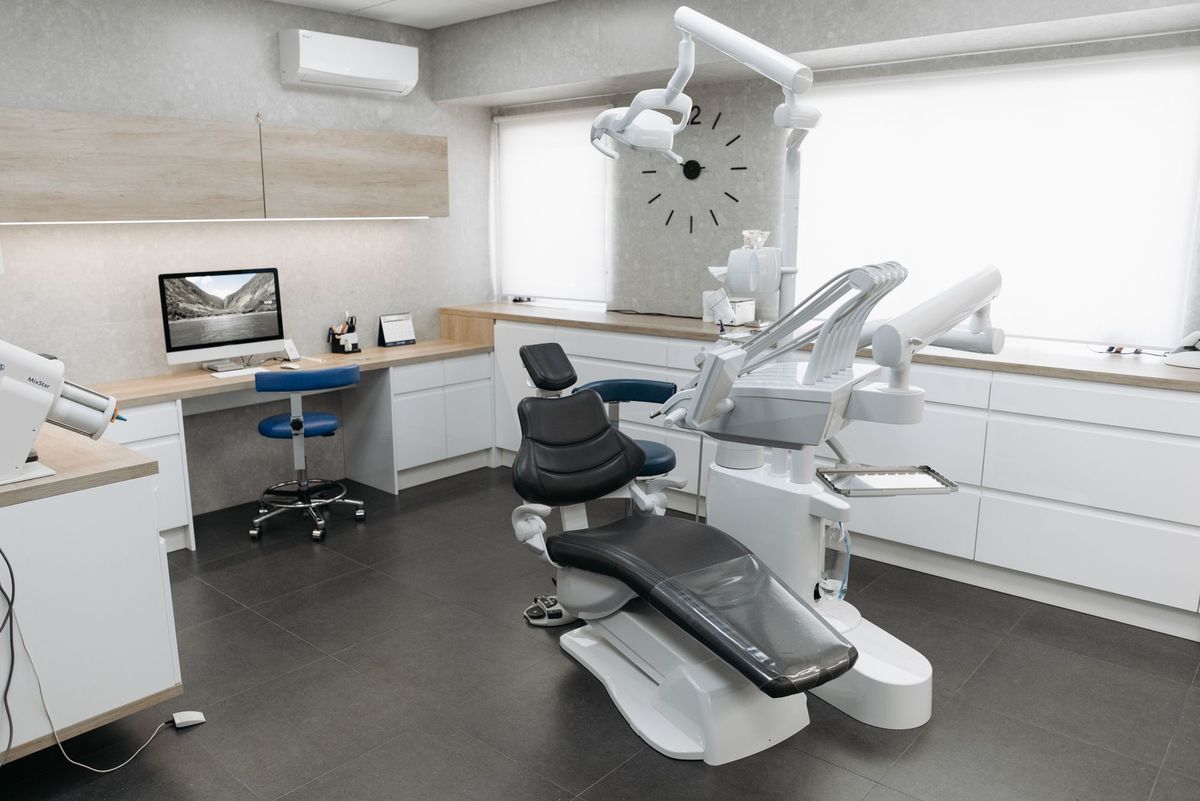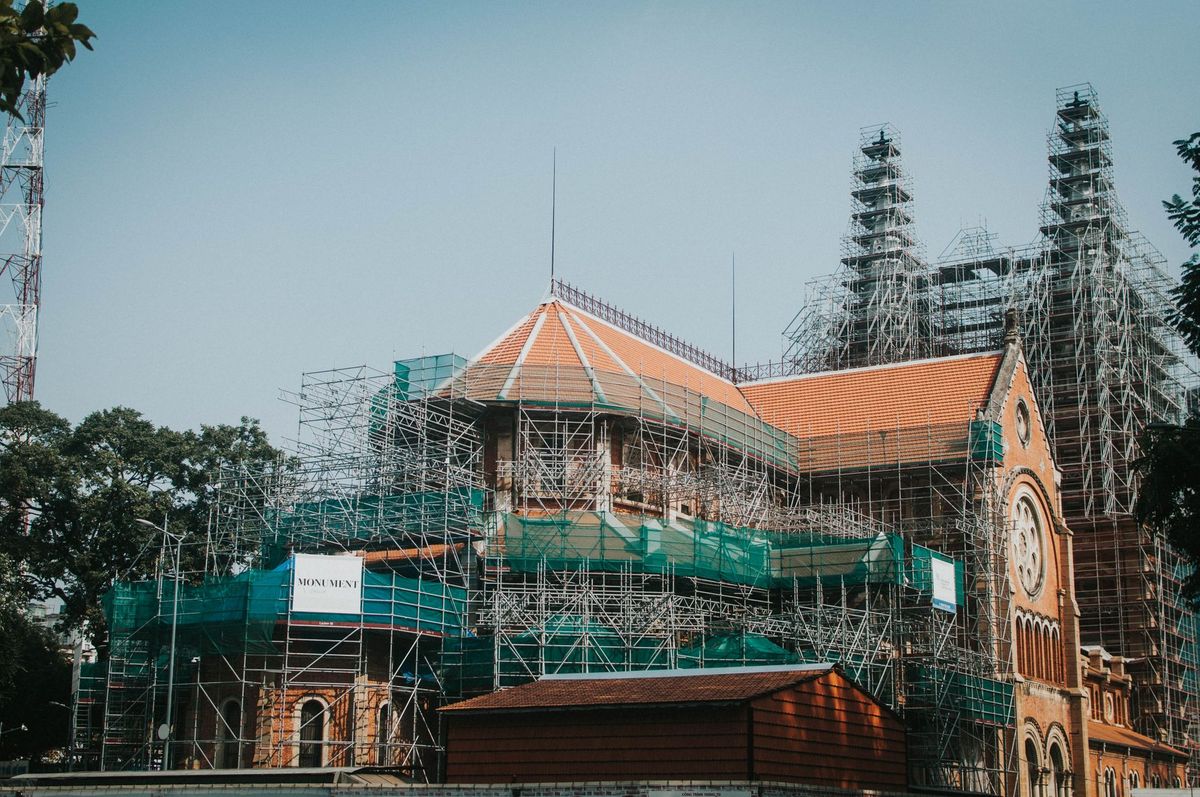
At $220 per square foot, a 10,000 to 15,000 square foot worship facility is running $2.2M to $3.3M in hard construction cost in 2026, and I want to talk about why that number is higher than the commodity retail space next door and why church committees need to stop expecting residential-grade pricing for commercial-grade requirements.
I've built three church expansions and two complete new buildings in my region since 2021. Every single one came in over budget on the sound system, over budget on the lighting, and over budget on the fellowship hall kitchen because the building committees underestimated what it costs to make a space function for both Sunday worship and weekday community events.
The Sanctuary Is the Whole Project
You can't value-engineer a worship space the way you value-engineer an office building. The sanctuary is not auxiliary. It's the primary tenant driver. If the space doesn't feel right, the congregation doesn't fill it.
Acoustics Drive a Massive Amount of Cost
This is where churches consistently get blindsided.
A 3,000 to 4,000 SF sanctuary with 500+ seats needs acoustic control that's completely different from the office space I build in the commercial district. The hard surfaces — tile floor, drywall ceiling, glass, masonry — create reverberation that kills clarity. A pastor preaching without a clear, controlled acoustic environment will blow the attendance curve within three months because people can't understand the sermon.
An acoustic consultant runs $3,000 to $5,000 for a site survey and recommended treatment plan. Don't skip this. The consultant will recommend some combination of suspended ceiling with acoustic tile, fabric wall panels, sound-absorbing foam, or architectural acoustic paneling behind the stage area.
A proper acoustic specification for a sanctuary adds 12% to 18% to the finish cost. Suspended ceilings with acoustic tile in a 3,500 SF sanctuary run $35,000 to $55,000 installed. Add wall panels behind the pulpit and choir area, and you're at $65,000 to $95,000 total for acoustic treatment. This is non-negotiable if you want a functional worship space.
The kicker: acoustic work is not glamorous. Building committees see the price, squint at it, and ask if you can "just paint the drywall." You can. You'll also end up with a worship space that sounds like a parking garage, and the pastor will be running a sound system at 85+ decibels to compensate.
Don't let the committee skip acoustics. Make it clear: acoustic treatment or acoustic failure. Those are the options.
Lighting for Worship Is Not the Same as Office Lighting
A worship space needs directional lighting that highlights the pastoral area and creates visual hierarchy. A fellowship hall needs bright, even general illumination. An office space — you flood it with light and move on.
Most sanctuaries need 40-60 foot-candles of general ambient light plus 100-150 foot-candles of accent lighting over the pulpit, altar area, and choir seating. That asymmetric lighting load requires multiple circuits, dimmer control, and careful layout of fixtures.
I've seen committees spec $18,000 to $22,000 for lighting thinking that'll cover a sanctuary. Realistic cost is $35,000 to $52,000 for a 3,500 SF space with adequate controls, accent fixtures, and exit lighting. Add a sound system with integrated lighting control, and you're adding $8,000 to $15,000 more for the integration and programming.
Specify the lighting and the sound system simultaneously. They're not separate cost centers anymore.
The Sound System Is Infrastructure, Not Furniture
Here's a conversation I have with every church building committee: the sound system is not a $3,000 Bose speaker in the corner. It's a $25,000 to $45,000 installed infrastructure project that needs conduit routing, speaker placement, amp placement, cable management, and commissioning.
The cost breaks down like this:
- Main speaker array for the sanctuary: $8,000–15,000
- Distributed ceiling or in-wall speakers for overflow areas: $3,000–6,000
- Microphones (pastoral, choir, guest): $2,000–4,000
- Mixing console and amplifiers: $6,000–12,000
- Installation labor and cable management: $4,000–8,000
- Commissioning and training: $2,000–3,000
If the sanctuary isn't pre-wired during construction with conduit and rough-in outlet boxes, you're retrofitting the system later at 30% higher labor cost. Get the audio engineer involved during construction planning, not after framing is complete.
Cost Breakdown by Building Component
Here's where the $220/SF lands across a 12,000 SF new church facility with a 4,000 SF sanctuary, 5,000 SF fellowship hall, 2,000 SF office/nursery, and 1,000 SF restroom/mechanical:
| Component | $ per SF | Total 12,000 SF | Notes |
|---|---|---|---|
| Sitework & Parking | $22–28 | $264K–336K | Parking for 150 cars (18 SF per space + circulation) |
| Foundation & Structure | $48–62 | $576K–744K | Concrete slab, foundation, framing (steel or wood) |
| Exterior Walls, Roof, Doors | $42–56 | $504K–672K | Masonry or composite, commercial roof, entry doors |
| HVAC | $38–48 | $456K–576K | 30-ton system, zones for sanctuary/fellowship |
| Plumbing | $18–24 | $216K–288K | Restrooms, kitchen prep sink, floor drains |
| Electrical | $28–36 | $336K–432K | 400-amp service, lighting, sound system rough-in |
| Interior Finishes (non-sanctuary) | $20–26 | $240K–312K | Drywall, paint, flooring in offices/restrooms |
| Sanctuary Finishes | $32–44 | $128K–176K | Acoustic treatment, special lighting, finishes |
| Flooring (Fellowship Hall) | $14–18 | $70K–90K | Polished concrete or vinyl composite |
| Kitchen & Servery | $8–12 | $40K–60K | Serving line, dish room, walk-in cooler |
| Sound & AV Systems | $6–8 | $72K–96K | Speakers, console, cabling, integration |
| Contingency (10%) | $27–34 | $324K–408K | Existing conditions, permit delays, material escalation |
| GC Overhead & Markup (16%) | $35–45 | $420K–540K | Insurance, bonds, supervision, profit margin |
| TOTAL | $340–421 | $2.64M–3.4M | Blended cost for mixed-use facility |
The $220/SF I mentioned is the low-to-mid range. New construction on a clean site can hit it. Urban infill with soil remediation or aggressive acoustic specs will push to $250+/SF.
The Parking Lot Is Often Underbudgeted
A worship facility for 400 people needs parking for roughly 150 cars. At 18 SF per space (9' × 18') plus circulation aisles, that's 2,700 to 3,200 SF of pavement.
Asphalt base, binder, and wearing course runs $8 to $12 per SF. Concrete runs $16 to $22 per SF. For a 3,000 SF lot in asphalt, budget $24,000 to $36,000. Concrete costs $48,000 to $66,000.
Add parking-lot striping, lighting (especially if evening services), and stormwater management, and the lot cost is $35,000 to $65,000 — a line item that's not visible when you walk through the finished sanctuary but is absolutely real on the balance sheet.
Many churches discover this late in the design phase and start trying to reduce parking or cut corners on the lot. That's a mistake that haunts operations for 20 years.
Fellowship Hall Kitchen and Servery
The fellowship hall kitchen is the single most-used space in most churches outside of Sunday service. It hosts pancake breakfasts, wedding receptions, funeral dinners, and community events. It needs to be overbuilt for its footprint because it's in constant, heavy use.
A 1,500 SF fellowship hall needs a 400–600 SF servery and kitchen area. A proper specification includes:
- 20-foot serving line with hot and cold food stations: $18K–28K
- Commercial range and oven: $8K–15K
- Walk-in cooler (800–1,000 SF): $18K–28K
- Commercial dishwashing station: $6K–12K
- Prep tables, storage, hand sinks: $8K–12K
Total kitchen cost: $58K–95K for a full food-service setup. Many churches try to build a partial kitchen expecting to expand later. That's a false economy — you'll retrofit the walk-in cooler at 40% higher cost and lower quality.
The Schedule Pressure Is Real
Churches have a strong incentive to open by a specific date: the start of a fiscal year, a planned capital campaign completion, or a membership milestone. That time pressure gets translated to the GC as aggressive scheduling.
Most churches want construction compressed to 10–14 months for a new 12,000 SF building. That's tight but doable if the permit process doesn't blow out. The real issue is that acoustic design, sound system integration, and kitchen commissioning can't be paralleled effectively. You need the shell and mechanical systems done before acoustic paneling and sound equipment can be installed.
Build that constraint into the schedule explicitly. Don't hide it in a contingency and then surprise the pastor with a six-week delay in month 9 because the acoustician needed samples or the sound system integrator was overbooked.
Working with Church Building Committees
Most building committees have a strong volunteer chair, 3-5 committed members, and a rotating cast of people who show up for exciting decisions and disappear when the boring cost conversations happen.
The best decision I've made on church projects is requiring committee approval of all major specification decisions in writing. When the committee votes to defer acoustic treatment to save $40K, I get that vote documented. When they realize in month 7 that the sanctuary reverb is unusable, I have evidence that they made an informed choice.
This is not political. It's project protection. Churches are often financed through capital campaigns, and capital campaigns create political dynamics inside congregations. Protect the construction process by documenting decisions clearly.
Internal Links & Resources
Use the cost estimator to model out your specific square footage and mix of spaces. Grab the latest lumber and structural pricing if you're doing wood-frame construction — that's typically the least expensive structural option for churches.
Frequently Asked Questions
What's the minimum sanctuary size to make sense acoustically?
About 2,500 SF. Below that, you're in such tight quarters that acoustic design is simpler and cheaper. A small sanctuary under 2,500 SF can often get away with painted drywall and minimal acoustic treatment because the space is naturally dampened by people and seating. Over 3,000 SF, you absolutely need acoustic design.
Can we build a fellowship hall and add the sanctuary later?
Technically yes, but it's a more expensive path. If you're planning a future sanctuary addition, the fellowship hall needs to be built with connection points for mechanical, electrical, and structural tie-ins. That pre-planning adds 8-12% to the initial fellowship hall cost but saves 25-30% on the eventual sanctuary addition. Don't build the fellowship hall as a standalone if you have ANY plan to add worship space later.
Do we need a commercial kitchen if we're just serving coffee and cookies?
You need a permitted kitchen that meets health department code. The question is the size and equipment level, not whether you need one at all. A minimal setup is a 300 SF kitchenette with a 3-compartment sink, a small warming oven, and a commercial dishwasher: $15K–22K. A full community-use kitchen is $58K–95K. Size the kitchen to the actual use case, not to 10 years from now.
What's the lead time on a custom sound system?
6–10 weeks from order to delivery for a church-scale system. The speaker components have manufacturer lead times, and the mixing console is often custom-configured. Start the sound system procurement in the permit phase, not in the construction phase. If you wait to order until framing is complete, you're eating 6-8 weeks of delay and potentially pushing the construction timeline by a full quarter.
Should we outfit the fellowship hall with a serving line or just a kitchen?
Serve both use cases. A serving line is an extra $12K–18K but multiplies the usability of the space. Pancake breakfast? Serving line. Funeral reception? Serving line with catering backup. Without the serving line, every event needs a caterer or volunteer army in the kitchen. With it, the space is flexible.
How much does parking-lot lighting add?
A parking lot for 150 vehicles with LED pole lights (4 poles, 150W each) and associated electrical rough-in runs $15K–22K. Stormwater detention for the lot (often required by municipalities) adds another $12K–20K depending on lot size and soil conditions. These are not glamorous items, but they're real costs.
Your Action Item for This Week
If you're on a church building committee, get three priorities locked in writing: the acoustic specification for the sanctuary, the sound system scope and budget, and the kitchen scope and budget. Don't let these defer to later phases. They're built-in costs, and deferring them creates more expensive retrofit projects down the line.
If you're a contractor quoting church work, sit the building committee down and walk them through the sanctuary acoustic cost and the sound system infrastructure cost. Show them what a properly acoustic sanctuary sounds like versus a hard-surfaced space. You'll educate them, and you'll eliminate late-stage cost shock.