Home electrical fires kill roughly 500 Americans every year and cause $1.3 billion in property damage — and that number stays stubbornly high because code adoption lags, inspection training lags further, and contractors continue working from habits formed on codes that are two cycles old. The 2026 NEC is on the books in 14 states as of Q1 2026. If you're pulling residential permits in one of those states and you haven't updated your practices, you're exposed.
This article covers the major changes in NFPA 70-2026 that affect residential construction — AFCI expansion, GFCI new locations, EV charging outlet requirements under Section 210.17, solar-ready conduit mandates, battery storage rules under NFPA 855, and outdoor receptacle requirements. I'll also address which states are on which code cycle and what you need to do if your local AHJ is still on 2020 or 2023 NEC.
AFCI Expansion: All Branch Circuits, Not Just Bedrooms
The single biggest change in the 2026 NEC for residential work is the expansion of arc-fault circuit interrupter protection. Arc-fault protection has been required in bedrooms since the 1999 NEC, and the scope has expanded with each subsequent cycle — family rooms, dining rooms, living rooms, hallways, and kitchens were added in 2014 and 2017. The 2026 NEC completes that expansion: AFCI protection is now required on all branch circuits serving dwelling units, with no exceptions for areas that were previously excluded.
What This Means at the Panel
The practical implication is that every 15-amp and 20-amp general-purpose circuit in a new residence requires either an AFCI circuit breaker or a combination AFCI/GFCI device. Previously, dedicated circuits for appliances like dishwashers, refrigerators, and garbage disposals in kitchens were often installed as standard breakers. Under the 2026 NEC, those circuits need AFCI protection too.
The added materials cost is $180 to $340 per panel depending on the panel size and the brand of AFCI breakers specified. AFCI breakers from Leviton, Square D, and Eaton run $35 to $55 each versus $8 to $12 for a standard breaker. On a 200-amp panel with 30 circuits, upgrading to all-AFCI adds $800 to $1,300 in breaker cost alone, plus additional labor for installation and testing.
The payoff is real: arc-fault protection addresses the leading cause of residential electrical fires. ESFI data shows 7,700 arc flash incidents reported annually, and the actual incidence of arc faults in residential wiring that cause smoldering fires inside walls — undetected until they've spread — is substantially higher. AFCI protection is not a box-check exercise.
AFCI Testing at Inspection
One practical note for contractors in 2026 NEC jurisdictions: inspectors are increasingly using AFCI test devices to verify that combination AFCI/GFCI breakers are actually functioning as arc-fault protective devices, not just as GFCI devices. The test button on the face of the breaker tests only the GFCI function. Inspectors with AFCI test devices (like the Southwire AFCI-Tester or similar) apply a simulated arc signature to verify the arc-fault trip response. Only 62% of local AHJs have updated inspector training for 2026 NEC compliance as of an IAEI survey conducted in early 2026, so you may encounter inspectors who aren't doing this test — but you should be verifying it yourself before calling for inspection.
GFCI Changes: Indoor Sinks Now Covered
GFCI protection has expanded again in 2026. The most significant change: GFCI protection is now required within 6 feet of all indoor sinks in dwelling units, not just bathroom and kitchen sinks. This captures laundry room sinks, utility sinks in basements and garages, and wet bar sinks that were not always GFCI-protected under previous code cycles.
The code requirement is clear on measurement: within 6 feet of the outside edge of the sink bowl, measured along the countertop or wall surface to the outlet. If there's an outlet in a laundry room 5 feet from the utility sink, it needs GFCI protection. If it's 8 feet away, it does not — though extending GFCI to all laundry room outlets is good practice.
Bathrooms, kitchens, garages, crawl spaces, unfinished basements, and outdoor receptacles continue to require GFCI under the same provisions that existed in previous NEC cycles. The 2026 update adds indoor sinks as a new covered location; it doesn't change the existing bathroom or kitchen requirements.
The remodeling market at $427 billion means huge volumes of older homes are getting electrical work. In a home built before 1990, there may be zero GFCI protection on laundry room or utility sink outlets. When you're pulling a permit for any electrical work on an older home in a 2026 NEC jurisdiction, the plan check will flag those locations — budget for bringing the GFCI coverage up to current code, even if the primary scope of work doesn't touch those circuits directly.
Section 210.17: EV-Ready Outlet Required in New Homes
Section 210.17 of the 2026 NEC requires that all new one- and two-family dwellings include an EV-ready outlet in the garage or a designated parking area. The requirement is for a 240-volt, NEMA 14-50 outlet or equivalent EV-ready receptacle, installed on a dedicated 50-amp circuit with the capacity to support Level 2 EV charging.
This is a significant change for residential electricians, not because the work is complicated — a 50-amp 240V circuit is straightforward — but because it changes the standard electrical package for every new single-family home. Where a standard residential package might have included 2 to 4 circuit breakers for the garage area (lighting, outlets, door opener), the 2026 NEC adds a dedicated 50-amp breaker and a NEMA 14-50 outlet in the EV-ready location.
Cost Implications
The EV outlet rough-in adds $280 to $450 to new home electrical depending on the distance from the panel to the garage parking location. This includes the 50-amp breaker, 6-gauge wire (required for 50-amp circuits), conduit where required, and the outlet box and receptacle. In homes where the panel is on the opposite side of the house from the garage, the wire run can push the cost toward the upper end of that range.
For electrical contractors, this is a revenue addition, not just a compliance burden. If you're pricing new home electrical packages in 2026 NEC states, add a line item for EV-ready installation rather than burying it in the panel package. Homebuilders will ask about it, and having a clear, separately priced line item for EV-ready compliance ($380 is a reasonable mid-market number) looks more professional than adjusting your base price upward without explanation.
Homeowners who add EV charging after move-in typically pay $600 to $1,200 for a Level 2 charger installation, much of which is the dedicated circuit work that the 2026 NEC now requires at construction. Doing it at rough-in is cheaper for everyone and avoids the coordination and patch work that comes with post-occupancy installation.
Solar-Ready Requirements: Conduit Pathway Mandate
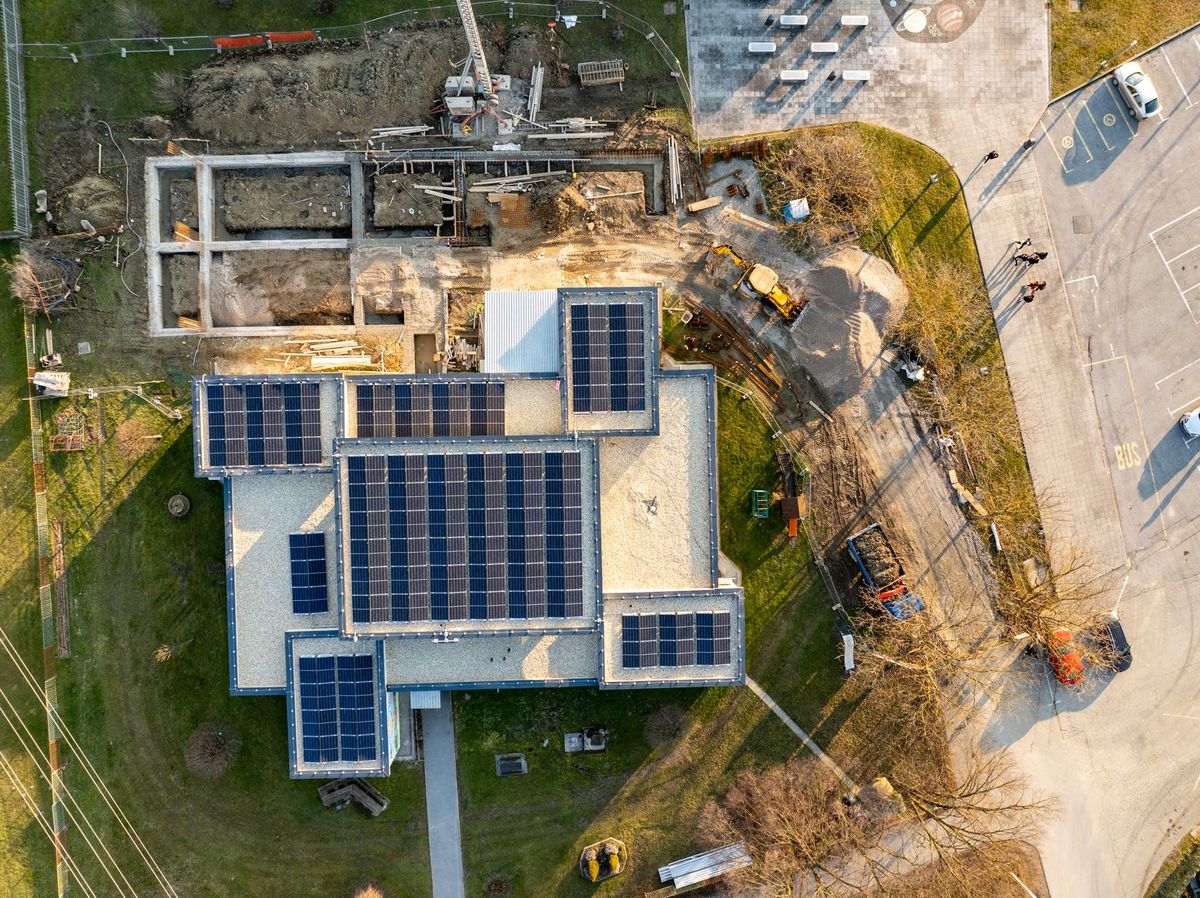
Fourteen states that have adopted 2026 NEC (or state-specific solar-ready provisions that mirror it) now require a conduit pathway for future PV system installation in new single-family homes. This comes from Section 690.11 of the NEC and related solar-ready provisions in state energy codes.
The solar-ready conduit requirement is a future-proofing measure: at construction, the electrician installs an empty conduit from a designated roof location (typically a north-facing attic penetration point) to the electrical panel location, with a pull string, capped ends, and a dedicated breaker space in the panel for a future PV interconnection. The conduit itself costs $80 to $180 in materials; the labor to install it at rough-in is 2 to 4 hours. Adding it after the drywall is up can run $800 to $2,500 depending on the home's framing and attic configuration.
For electricians, solar-ready compliance is worth understanding even if you don't do solar installation. Inspectors in jurisdictions with solar-ready requirements are checking for the conduit pathway at final inspection, and it's common for the requirement to be missed entirely on spec homes where the builder's electrical contractor wasn't aware of it. If you're doing residential electrical in a solar-required state, solar-ready conduit is part of your standard package.
NFPA 855: Battery Storage Location and Clearance Rules
As battery storage systems become more common in new residential construction — primarily as part of solar-plus-storage installations — NFPA 855 (Standard for the Installation of Stationary Energy Storage Systems) is increasingly referenced in residential code enforcement. The 2026 NEC specifically invokes NFPA 855 for battery systems exceeding 2 kWh.
The practical requirements for residential battery storage under NFPA 855 include:
Location restrictions. Battery systems greater than 2 kWh cannot be installed in sleeping rooms or in spaces directly adjacent to a means of egress without fire-rated separation. This means garage installations, utility rooms, and basement mechanical spaces — with appropriate clearances — are acceptable; installing a 13.5 kWh battery next to the front door or in a bedroom closet is not.
Clearance requirements. A minimum 3-foot clearance in front of the battery system is required for access and emergency response. Wall-mounted systems need 36 inches of clearance to the floor. These requirements affect rough-in planning significantly in smaller homes where utility space is limited.
Ventilation. Lithium-ion battery systems require ventilation provisions. The specific requirements depend on the battery chemistry and total system capacity. Electricians doing battery installation should be familiar with the manufacturer's installation instructions, which must be followed alongside the code requirements.
The construction wage increases we've seen across trades mean electricians who can competently install battery storage systems — a specialty skill requiring code knowledge, commissioning ability, and manufacturer certification in some cases — can command premium rates. Solar-plus-storage installation is growing at 18% year-over-year, and the pool of qualified residential electricians who know NFPA 855 cold is still small.
Outdoor Receptacle Requirements
The 2026 NEC maintains the outdoor receptacle requirement at a minimum of two weatherproof receptacles per dwelling — one at the front and one at the rear of the structure. These have been required since the 2002 NEC, so this is not a new requirement. However, the 2026 NEC adds clarity on weatherproof cover requirements: outdoor outlets must be protected by in-use covers (sometimes called "bubble covers") that maintain weatherproof integrity whether a cord is plugged in or not. Standard flip-cover boxes that only protect the receptacle when nothing is plugged in do not meet the in-use cover requirement.
This catches residential electricians off guard on renovation work where the existing outdoor outlets have the older flip-cover style boxes. When you're doing electrical permit work on a 2026 NEC jurisdiction home and you touch the outdoor circuits, the in-use cover standard applies to the outlets you're connecting or modifying.
Which States Are on Which Code Cycle
As of Q1 2026, 14 states have formally adopted the 2026 NEC. Adoption is a legislative or regulatory action at the state level, and it typically lags the publication of the NEC by 12 to 30 months. The remaining states are split between the 2020 NEC (approximately 18 states) and the 2023 NEC (approximately 19 states).
The NEC is published by the NFPA on a three-year cycle. The 2023 edition is the most recent prior to 2026. States on 2023 NEC include Florida, Texas, Illinois, and several Southeastern states. States on 2020 NEC include New York and several Northeast states that have historically lagged in adoption. California, as it often does, operates on a modified version of the NEC integrated into the California Electrical Code.
The practical implication: always check the code cycle in effect at your local AHJ before starting a project. The state adoption date and the local adoption date can differ — some municipalities adopt ahead of the state, and some adopt later based on local ordinance. The IAEI (International Association of Electrical Inspectors) maintains an updated state adoption map at iaei.org that is the best single reference for current adoption status.
Do not assume your county is on 2026 NEC just because your state has adopted it. Call your building department.
If a code change forces a service upgrade or new circuits, size the work with our free electrical load calculator and price the job with the construction cost estimator.
Frequently Asked Questions
Do I need to retrofit existing homes to comply with the 2026 NEC expansion of AFCI requirements? No — the 2026 NEC applies to new construction and alterations requiring a permit. Existing homes are not required to be brought up to current code unless you are performing permitted electrical work that triggers compliance requirements for the scope of work involved. However, many AHJs require that any circuit that is extended, modified, or added in an alteration project must meet current code at the point of modification. If you're adding a circuit in a 2026 NEC jurisdiction, that circuit needs AFCI protection even in an existing home.
What does "EV-ready" actually mean under Section 210.17 — does the homeowner need to install a charger? No. Section 210.17 requires the electrical infrastructure — the dedicated 50-amp circuit, the wiring, and the NEMA 14-50 outlet in the parking area — to be installed at construction. The EV charging equipment (the Level 2 EVSE unit, typically wall-mounted) is separate and is not required by the NEC. The homeowner can install an EV charger at their discretion using the rough-in provided. This approach eliminates the most expensive part of post-occupancy EV charger installation, which is the electrical rough-in work.
My state is still on 2020 NEC. Do I need to worry about 2026 NEC requirements at all? Not for code compliance purposes — you're building to whatever cycle your AHJ has adopted. However, there are two reasons to understand the 2026 NEC even if your state hasn't adopted it yet: First, your state will likely adopt it within 18 to 36 months, and the changes to AFCI, GFCI, and EV-ready requirements will become mandatory. Installing to the higher 2026 standard now avoids future rework. Second, some buyers and builders are requesting 2026 NEC compliance as a specification even in states where it isn't required — particularly on higher-end and luxury residential where future-proofing has market value.
What's the biggest inspection failure point electricians are encountering under 2026 NEC? Based on feedback from IAEI inspector training programs, the most common 2026 NEC residential inspection failures are: missing AFCI protection on circuits that were added to the expanded scope (dedicated appliance circuits in kitchens and utility areas), missing in-use weatherproof covers on outdoor outlets during renovations, and missing EV-ready conduit stub-out in new construction. The EV-ready failure is particularly common on projects where the builder's project manager didn't communicate the requirement to the electrical sub. Make sure Section 210.17 is in your pre-construction scope review on every new single-family permit in a 2026 NEC jurisdiction.
How do I handle the solar-ready conduit requirement if the homeowner says they'll never install solar? You install it anyway. The solar-ready conduit provision is a code requirement, not a homeowner option. The requirement exists because retrofitting conduit through finished construction is expensive and disruptive, and public policy at the state level has determined that the $100 to $200 upfront cost of conduit at rough-in is worth it to enable future solar adoption. If a homeowner or builder objects, explain that it's a code-required installation, document the conversation, and install per code. If they instruct you in writing not to install it, you need to decline the work — installing a home that fails final inspection for missing solar-ready conduit is your professional and legal liability, not theirs.
Your Action Item for This Week
Download the current NEC adoption map from iaei.org and confirm which code cycle your primary local AHJ is enforcing. If they're on 2026 NEC, pull your standard materials list for a typical new home package and identify every line item that needs to be updated: AFCI breakers for all branch circuits, in-use weatherproof covers for outdoor outlets, EV-ready 50-amp circuit, and solar-ready conduit if required in your state. Update your template scope and materials list this week so the next new home you bid includes all 2026 NEC requirements from the start. If you bid those items separately with clear line item descriptions, you'll win more work — builders and homeowners appreciate knowing exactly what they're paying for and why.