The math: approximately 2,100 rural water systems in the United States serve fewer than 500 people each, and the vast majority of these tiny systems face critical construction needs — aging treatment equipment, deteriorating distribution piping, and inadequate source water capacity. The cumulative construction backlog for these small systems exceeds $4.2 billion, with individual system needs ranging from $200,000 for basic equipment replacement to $10 million or more for full system reconstruction.
Bottom line: rural water system construction is a niche market characterized by small individual project sizes but high aggregate volume, distributed across thousands of communities in every state. For small to mid-size water and utility contractors, these projects offer steady work with federal and state funding backing, manageable bonding requirements, and limited competition from larger firms who overlook projects under $5 million.
The Small System Challenge
Small water systems — defined by the EPA as systems serving 3,300 or fewer people — account for 91% of all public water systems in the United States but serve only 19% of the population. The 2,100 smallest systems (under 500 people) face particular challenges because they lack the ratepayer base to generate revenue sufficient for capital improvements, they often rely on a single water source (one well or spring) with no backup, their treatment technology is often 30 to 50 years old and no longer meets current EPA standards, and they may lack certified operators, with part-time or volunteer operators managing the system.
The construction needs of these systems span source water development (new wells, spring improvements, surface water intakes) at $500,000 to $3 million, water treatment (disinfection systems, filtration for turbidity or contaminant removal, arsenic or nitrate treatment) at $200,000 to $2 million, storage (replacement of deteriorated steel or concrete storage tanks, typically 50,000 to 500,000 gallons) at $300,000 to $1.5 million, and distribution system replacement (aging PVC, asbestos-cement, or galvanized steel mains) at $80 to $200 per linear foot.
Funding Sources for Small Systems
Small rural water systems have access to several dedicated funding programs. The USDA Rural Development Water and Environmental Program provides grants and low-interest loans specifically for rural water system construction, with approximately $1.5 billion available annually. Grant funding can cover up to 75% of project costs for the most disadvantaged communities. The EPA Drinking Water State Revolving Fund (DWSRF) provides loans at below-market interest rates, with disadvantaged community provisions offering principal forgiveness of up to 100% for the smallest systems. The Indian Health Service (IHS) Sanitation Facilities Construction Program provides 100% grant funding for water system construction serving tribal communities. The Appalachian Regional Commission (ARC) provides supplemental grants for water projects in the 13-state Appalachian region. And state rural water programs provide additional technical assistance and construction funding.
Construction Approach
Rural water system construction requires a different approach than urban utility construction. Contractors must be self-sufficient — these projects are often in remote locations without nearby suppliers, subcontractors, or specialty equipment rental. Crew travel and lodging costs can represent 10 to 15% of total project cost for projects in the most remote areas.
Typical construction crews for small water system projects include 4 to 8 workers handling all aspects of construction — excavation, pipe installation, concrete work, mechanical equipment installation, and electrical connections. Multiskilled crews that can handle both underground utility construction and above-ground building construction (pump houses, treatment buildings) are most efficient for these projects.
Business tip: The rural water market is significantly influenced by state rural water associations — nonprofit technical assistance organizations that help small systems identify needs, apply for funding, and manage construction projects. Developing relationships with your state rural water association is one of the most effective marketing strategies for contractors seeking rural water construction work.
Market Outlook
The rural water construction market is sustained by the ongoing deterioration of aging systems, new EPA regulatory requirements (PFAS treatment, lead service line replacement, revised disinfection rules), and dedicated federal funding programs that provide a reliable construction financing stream. The $4.2 billion backlog will take decades to address at current funding levels, ensuring sustained construction demand for contractors positioned in this market.
Bottom line: rural water system construction is a small-project, high-volume market that rewards self-sufficient contractors with broad construction skills, patience for public funding procurement processes, and willingness to work in remote communities. The federal funding backing and regulatory drivers make this one of the most durable construction niches available.
Small System Treatment Technology
Rural water systems serving under 500 people face unique treatment challenges because conventional treatment technologies designed for larger systems are often too complex and expensive for small communities to operate and maintain.
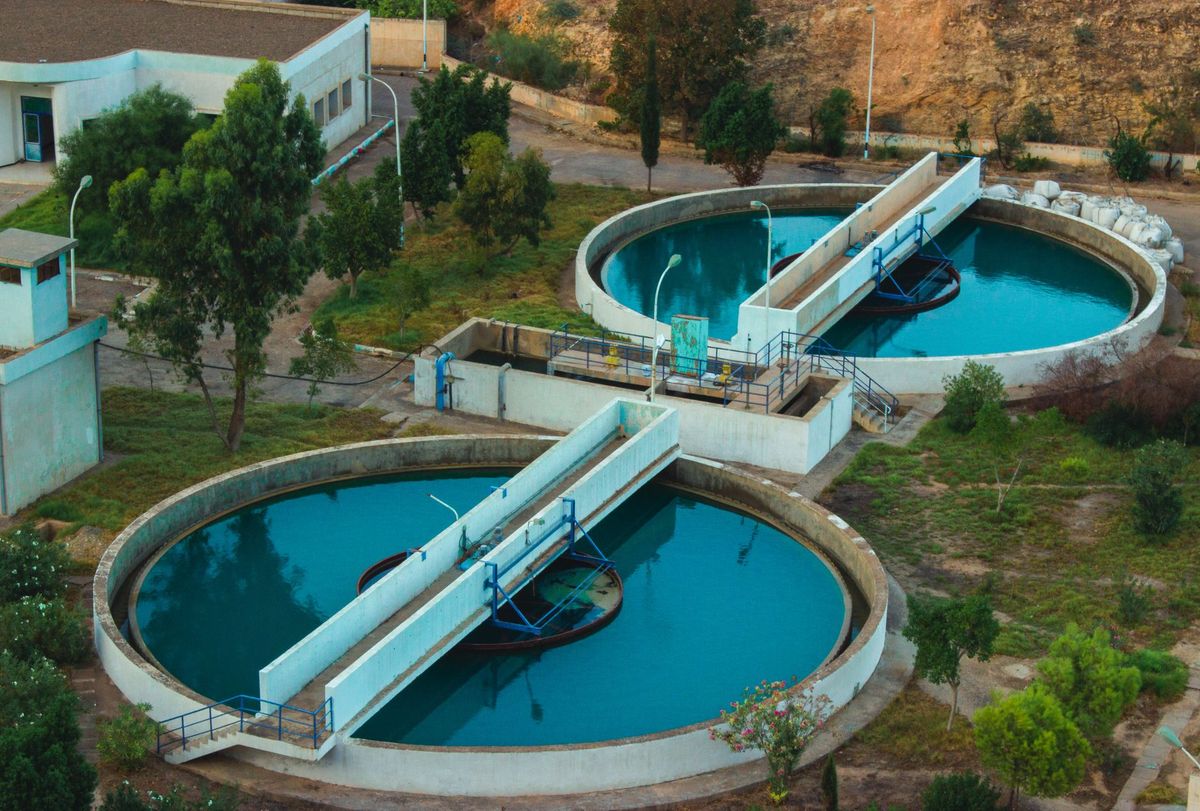
Package Water Treatment Plants are pre-engineered, factory-built treatment systems that arrive at the site as complete, integrated units ready for connection to the raw water source and distribution system. Package plants typically include coagulation and flocculation in compact mixing chambers, sedimentation or dissolved air flotation for solids removal, multimedia filtration (sand, anthracite, garnet), and chemical disinfection (sodium hypochlorite or UV). Package plant costs range from $200,000 to $1.5 million depending on treatment capacity (typically 10 to 200 GPM for small communities).
Construction scope for a package plant installation includes a concrete foundation pad (typically 20 x 30 to 30 x 60 feet), a prefabricated metal or concrete block building to house the treatment equipment, raw water and treated water piping connections, chemical storage and feed systems, and electrical service and controls.
Point-of-Entry (POE) Treatment is an alternative approach for very small systems (under 25 connections) where centralized treatment is not cost-effective. POE treatment installs individual treatment units at each customer's water entry point, similar to residential water softener installations. Construction involves installing treatment units (typically activated alumina, ion exchange, or reverse osmosis systems) at each served building, constructing a central monitoring and chemical supply facility, and installing telemetry systems for remote monitoring of treatment unit performance.
Distribution System Construction
Small rural water system distribution construction differs from urban water main construction in several important ways. Long service lines are common in rural areas — the distance from the water main to individual homes may be 500 to 2,000+ feet compared to 30 to 60 feet in urban settings. These long service lines require larger diameter pipe (1 to 2 inches rather than 3/4 inch) to maintain adequate pressure, deeper burial (below the frost line, which exceeds 4 feet in northern states), and individual pressure-reducing valves where the system pressure exceeds safe residential levels.
Material choices for rural distribution systems increasingly favor HDPE pipe over PVC for main lines because of HDPE's flexibility (accommodating ground movement and frost heave), its fusion-welded joints (leak-free connections with 100+ year service life), and its availability in long coils that reduce the number of joints required.
Construction equipment for rural distribution projects includes mini-excavators and track hoes for trench excavation, vibratory plows for direct burial of small-diameter service lines, HDPE fusion machines for pipe joining, and GPS survey equipment for as-built mapping.
Business tip: The most successful rural water contractors maintain close relationships with their state rural water association and USDA Rural Development office. These organizations manage the funding pipeline that drives rural water construction, and their recommendations carry significant weight with community leaders making contractor selection decisions.
Consolidation and Regionalization
Many state and federal agencies are encouraging consolidation of the smallest water systems — merging multiple systems serving under 500 people into larger regional systems that achieve economies of scale in treatment, operations, and maintenance. Regionalization construction involves extending transmission mains to connect previously isolated communities, constructing regional treatment facilities sized for the combined demand of multiple communities, installing master meter and interconnection facilities at system boundaries, and upgrading distribution systems in connected communities to handle changed pressure zones and flow patterns.
Regionalization construction projects are typically larger than individual small system improvements ($5 to $30 million versus $200,000 to $3 million), making them accessible to a wider range of contractors. USDA Rural Development and EPA SRF programs provide favorable financing for regionalization projects because the combined system is more sustainable and better positioned to maintain regulatory compliance than the individual systems it replaces.
Emergency Water Supply Construction
Many rural water systems lack redundancy — a single well failure, pump failure, or main break can leave the entire community without water. Emergency water supply construction addresses this vulnerability through backup well construction (a second well drilled and equipped to serve as the primary source during emergencies), emergency interconnections with neighboring water systems (valve and pipe infrastructure allowing water transfer between systems during emergencies), above-ground storage tanks providing 24 to 72 hours of emergency supply independent of the source, and portable treatment and pumping equipment that can be deployed during system failures.
Emergency preparedness construction is increasingly funded through FEMA and state emergency management agencies in addition to traditional water infrastructure funding sources, reflecting the recognition that water system failures are a significant emergency management concern in rural communities.
Operator Training and System Operation
A unique aspect of rural water system construction is the need to design and build systems that can be operated and maintained by operators with limited technical training and time. Many small systems are operated by part-time or volunteer operators who may have only basic water treatment certification.
This operational reality affects construction decisions including selection of treatment technology (simpler systems with fewer operator-adjustable parameters are preferred), automation and remote monitoring (allowing operators to monitor system performance from mobile devices without visiting the treatment plant daily), alarm systems that notify operators of equipment failures, water quality excursions, or security breaches, and design documentation that includes clear, non-technical operations manuals with illustrated procedures.
Business tip: Contractors who provide comprehensive operator training during project closeout — including hands-on instruction with installed equipment, written operating procedures, and contact information for ongoing technical support — build strong relationships with rural water system operators and the state rural water associations that advise them. These relationships generate referrals and repeat business in a market where word-of-mouth recommendations are the primary contractor selection mechanism.
Compliance Construction: Meeting EPA Standards
Many rural water system construction projects are driven by EPA regulatory compliance requirements rather than capacity expansion. Common compliance-driven construction projects include disinfection system installation or upgrade (required for all surface water systems and for groundwater systems with detected microbiological contamination), arsenic treatment (systems exceeding the 10 ppb MCL for arsenic must install treatment, typically adsorptive media or ion exchange), nitrate treatment (systems exceeding the 10 mg/L MCL for nitrate, common in agricultural areas, require ion exchange or blending with lower-nitrate sources), and disinfection byproduct reduction (systems using chlorination that produce excessive trihalomethanes or haloacetic acids must modify treatment to reduce DBP formation).
Compliance construction often occurs under enforcement timelines — the EPA or state regulatory agency issues a compliance order with a deadline for completing the required improvements. These enforcement-driven timelines can compress the normal design-bid-build process, favoring contractors who can mobilize quickly and complete construction within regulatory deadlines.
Water System Mapping and Asset Management
A prerequisite for effective rural water system construction is accurate system mapping and asset management. Many small systems have incomplete or inaccurate records of their distribution system — the locations of mains, valves, hydrants, and service connections may not be documented, or documentation may be outdated or inaccurate.
Modern water system construction projects increasingly include GPS mapping of all system components as part of the construction scope. As new mains, valves, and services are installed, their locations are recorded using survey-grade GPS equipment and entered into a geographic information system (GIS) database. This mapping scope adds 2 to 5% to construction costs but provides the system operator with accurate infrastructure records essential for efficient operations, maintenance, and future expansion planning.
Some states now require GIS mapping as a condition of construction funding — USDA Rural Development and several state SRF programs require as-built GIS data for all funded construction projects. Contractors who develop in-house GPS mapping capability gain competitive advantages in these markets.
Rural water system construction represents a uniquely rewarding niche for contractors who value community impact alongside business success. The systems being built and repaired serve some of the most underserved communities in the country, providing the most fundamental public service, clean drinking water, to families and businesses that depend on their local water system for health, safety, and economic viability. For construction firms willing to work in remote locations with small budgets and community-scale projects, the rural water market offers steady demand, federal funding security, and the satisfaction of building infrastructure that directly improves the lives of the people it serves.
Frequently Asked Questions
How are rural water system construction projects funded?
Industry analysts tracking rural water system construction report that 2026 has brought measurable shifts. With data showing 2,100, the trend line suggests continued movement through the remainder of the year. Builders should factor this into both current bids and forward-looking project estimates.
What is the average cost of rural water system construction?
Market research on rural water system construction shows that geographic concentration matters significantly. With figures reaching $4.2 billion in key markets, the opportunities are substantial but location-dependent. States with strong population growth and infrastructure investment tend to see the highest activity levels.
Which states are investing the most in rural water system construction?
The trajectory for rural water system construction tells an important story when viewed against historical benchmarks. With the latest data showing $200,000, the trend has clear implications for project feasibility, bidding accuracy, and resource allocation across the construction sector.