The math: public pool and aquatic center construction has reached $1.8 billion in active projects across the United States, a figure that has nearly doubled since the pre-COVID period. The surge reflects a wave of pool replacements (aging 1960s and 1970s-era municipal pools reaching end of life), new aquatic center construction incorporating water parks, lap pools, therapy pools, and splash pads into comprehensive community facilities, and post-COVID recognition that outdoor recreation and aquatic fitness infrastructure are essential community health assets.
Bottom line: aquatic center construction is among the most technically demanding categories of municipal construction, combining the structural challenges of water containment, the mechanical complexity of aquatic systems (filtration, chemical treatment, heating), the architectural demands of public recreation facilities, and the safety requirements of an inherently hazardous environment. This technical complexity creates meaningful barriers to entry that limit competition and support premium pricing for experienced aquatic contractors.
What's Being Built
Municipal aquatic construction falls into several categories:
Comprehensive Indoor/Outdoor Aquatic Centers ($30 to $80 million). The most complex aquatic facility type combines a competition pool (50-meter or 25-yard, 8 to 10 lanes), a recreation pool with water play features (slides, splash pads, lazy river, zero-depth entry), a warm-water therapy/instruction pool (88 to 92°F), a diving well (separate or combined with competition pool), spectator seating (500 to 2,000 seats for competition events), locker rooms and support spaces, and a fitness center and meeting rooms. These facilities range from 60,000 to 120,000 SF and cost $500 to $700 per SF, reflecting the premium for water containment structures, aquatic mechanical systems, and the corrosion-resistant materials required in natatorium environments.
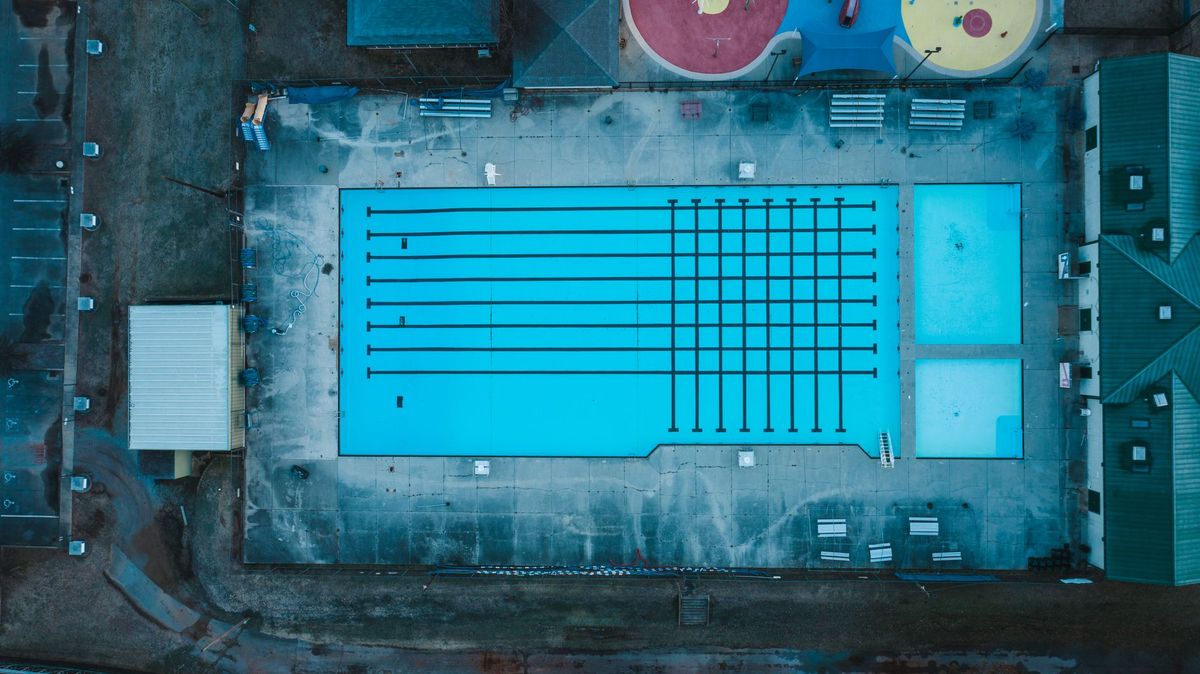
Outdoor Pool Replacement ($5 to $20 million). Replacing aging outdoor pools with modern aquatic facilities that include updated pool shells with gutter systems and ADA-compliant access, water play features and splash pads, shade structures and site amenities, modern filtration and chemical treatment systems, and energy-efficient pool heating. The pool shell alone costs $80 to $150 per SF of water surface area, with total project costs including site work, building construction, and mechanical systems ranging from $5 to $20 million.
Community Splash Pads ($500,000 to $2 million). Zero-depth water play areas providing safe aquatic recreation without the staffing requirements of traditional pools. Splash pad construction includes reinforced concrete pad with anti-slip surface finish, recirculating water treatment system with UV disinfection, spray features (jets, dumping buckets, spray arches) using commercial-grade components rated for continuous public use, and site amenities including shade, seating, and restroom facilities.
Aquatic Construction: Technical Challenges
Pool and natatorium construction involves several technical disciplines that distinguish it from standard building construction. Pool Shell Construction requires reinforced concrete designed for water containment (typically 10 to 14-inch walls with waterstops at all construction joints, structural reinforcing at 6 to 8-inch spacing, and low-permeability concrete mix designs). Pool shells must be designed for both full and empty conditions — the hydrostatic uplift pressure from groundwater on an empty pool can float the shell if adequate drainage or structural resistance is not provided.
Natatorium Building Envelope construction must manage the high humidity environment (typically 50 to 60% RH at 80 to 84°F air temperature) that causes condensation on cold surfaces. The building envelope requires vapor barriers on the warm side of insulation, thermal break systems at structural penetrations, corrosion-resistant materials for all structural steel, framing, and fasteners (stainless steel, aluminum, or epoxy-coated components), and specialized glazing systems with warm-edge spacers and low-E coatings to prevent condensation on glass surfaces. Failures in natatorium envelope design or construction lead to corrosion, mold, and structural deterioration that can require premature building replacement — a costly lesson learned by many municipalities.
Aquatic Mechanical Systems represent 25 to 35% of total aquatic center construction cost. Systems include filtration (sand, diatomaceous earth, or regenerative media filters sized for the pool volume turnover rate required by health codes — typically 6 to 8 hours for competition pools), chemical treatment (sodium hypochlorite or calcium hypochlorite disinfection, CO2 or muriatic acid pH control, UV or ozone supplemental treatment), heating (pool water heating using natural gas boilers, heat pumps, or solar thermal systems — a 50-meter competition pool requires 2 to 4 million BTU/hr of heating capacity), and dehumidification (natatorium air handling units with heat recovery dehumidification systems costing $200,000 to $600,000 per unit).
Business tip: Aquatic construction is one of the few municipal building types where the mechanical contractor's scope exceeds the structural contractor's scope in both cost and complexity. Mechanical contractors with aquatic systems experience are in high demand and can command premium pricing.
Funding and Market Outlook
Aquatic center construction is funded through municipal bond measures (the primary source), state recreation and parks grants, federal CDBG and LWCF (Land and Water Conservation Fund) grants, and private philanthropy and naming rights. The market is projected to remain strong through 2030 as the large inventory of 1960s and 1970s-era municipal pools reaches end of life and communities invest in replacement facilities that serve broader populations with diverse aquatic programming.
Bottom line: aquatic construction is a technically demanding, well-funded niche within municipal construction. Contractors who develop aquatic-specific capabilities — pool shell construction, natatorium envelope systems, and aquatic mechanical expertise — will find a durable market with limited competition and premium pricing that reflects the genuine complexity of building and maintaining these essential community facilities.
Mechanical Systems: The Heart of Aquatic Construction
Aquatic mechanical systems deserve deeper examination because they represent the largest single construction cost category and the most technically demanding aspect of pool and aquatic center construction.
Filtration System Construction. Pool filtration systems must treat the entire pool volume within the turnover period specified by state health codes — typically 6 hours for competition pools, 4 hours for recreation pools, and 1.5 to 2 hours for wading pools. For a 50-meter competition pool containing approximately 660,000 gallons, a 6-hour turnover requires a filtration system processing 1,833 GPM — roughly equivalent to the water demand of a 500-unit apartment building.
Filtration equipment options include high-rate sand filters (the most common, requiring 20 to 40 SF of filter area per filter vessel, with multiple vessels in parallel), regenerative media filters (using perlite or diatomaceous earth, providing finer filtration but requiring more operator attention), and vacuum sand filters (gravity-driven systems used in large competition facilities).
Filtration system construction involves large-diameter PVC or stainless steel piping (8 to 16-inch diameter for main circulation lines), flow meters and pressure gauges for system monitoring, automated backwash systems for filter cleaning, and chemical injection points for disinfection and pH control downstream of filtration.
Pool Heating Construction. Maintaining pool water at the desired temperature requires substantial heating capacity. A 50-meter competition pool at 79°F air temperature requires approximately 2 to 4 million BTU/hr of heating capacity to maintain water temperature and compensate for evaporative heat loss. Heating options include natural gas boilers (the most common, using copper or titanium heat exchangers rated for pool water chemistry), air-source or water-source heat pumps (increasingly favored for energy efficiency, though higher initial cost), solar thermal panels (effective as a supplementary heat source in sunny climates, requiring 50 to 100% of pool surface area in collector area), and combined heat and power (CHP) systems for large aquatic centers where simultaneous heating and electrical demands justify the investment.
Water Chemistry Management. Maintaining safe water chemistry is a continuous process supported by automated chemical feed and monitoring systems. Construction scope includes chemical storage rooms with spill containment, ventilation, and safety shower/eyewash stations, chemical feed pumps and controllers (typically sodium hypochlorite for disinfection and CO2 or muriatic acid for pH adjustment), automated chemical monitoring systems measuring chlorine residual, pH, ORP, and temperature at multiple points in the circulation system, and chemical delivery infrastructure (bulk chemical storage tanks with delivery access for tanker trucks).
Splash Pad and Interactive Water Feature Construction
Splash pads (also called spray parks or interactive water features) have become one of the most popular new categories of aquatic construction, offering communities a lower-cost alternative to traditional pools with significantly reduced operating costs and staffing requirements.
Splash pad construction involves a reinforced concrete pad (typically 6-inch thick, with non-slip broom finish or rubberized surface coating), a recirculating water treatment system sized for the feature's total flow rate (typically 200 to 600 GPM), spray features including ground-level jets, dumping buckets, spray arches, and themed play elements (custom features can cost $5,000 to $50,000 each), underground vault containing pumps, filters, UV disinfection, and chemical treatment equipment, and site amenities including shade structures, benches, restroom facilities, and fencing.
Total splash pad construction costs range from $500,000 for a basic 2,000 SF spray area to $3 million+ for a major themed splash park with custom features and extensive site amenities. Operating costs are typically 40 to 60% lower than traditional pools because splash pads require no lifeguards (no standing water), reduced chemical treatment costs (smaller water volume), and simplified mechanical systems.
Competition Pool Construction Standards
Competition pools for high school, collegiate, and community competition have specific dimensional and performance requirements that affect construction:
Dimensional Standards. USA Swimming and FINA (now World Aquatics) specify pool dimensions for sanctioned competition. A standard 50-meter competition pool is 50 meters long (within 3cm tolerance at all points), 25 meters wide (10 lanes at 2.5 meters each), and 2 meters minimum depth throughout (deeper for diving areas). A 25-yard (short course) pool is 25 yards long, 60 feet wide (8 lanes at 7.5 feet), and 4 feet minimum depth. These dimensional requirements demand construction tolerances tighter than typical concrete construction — pool walls must be plumb within 1/4 inch over the full depth, and the pool floor must be level within 1/2 inch across the full length.
Timing System Integration. Competition pools require integrated electronic timing systems including touchpads at each end of the pool (embedded in or mounted on the pool wall at water surface level), timing cables routed through conduit from the pool edge to the timing console location, display scoreboards (LED displays visible to spectators and swimmers), and starting block foundations (reinforced concrete pedestals at each lane, designed for the dynamic load of a competitive start).
Gutter System Construction. Competition pools use recirculating gutter systems — continuous troughs along the pool perimeter that capture water displaced by swimmers and return it to the filtration system. Gutter construction involves forming concrete channels with precise dimensions and slopes along the entire pool perimeter, with stainless steel or fiberglass gutter grating, and connection to the recirculation piping system through multiple drain points.
Indoor Air Quality in Natatoriums
The natatorium (indoor pool enclosure) environment presents unique indoor air quality challenges that directly affect construction decisions. Chloramine compounds — formed by the reaction of chlorine disinfectant with organic matter from swimmers — accumulate in the air above the pool surface, creating health risks for swimmers, staff, and spectators if not properly managed.
Natatorium ventilation systems must maintain negative or neutral pressure relative to adjacent building spaces (preventing chloramine migration to non-pool areas), provide 4 to 6 air changes per hour minimum to dilute chloramine concentrations, distribute supply air across the pool surface to sweep contaminants toward exhaust intakes, and recover energy from the warm, humid exhaust air to reduce heating costs.
Dehumidification systems for natatoriums — specialized air handling units that remove moisture from the air while recovering heat — are among the most expensive single mechanical components in aquatic center construction. A dehumidification unit for a competition pool natatorium costs $200,000 to $600,000 depending on capacity and energy recovery features. Leading manufacturers include Seresco, Desert Aire, and Dectron, with equipment typically specified during design and procured early in construction to accommodate 12 to 16-week manufacturing lead times.
Water Park and Interactive Water Feature Trends
The line between traditional municipal swimming pools and commercial water parks has blurred significantly, with many new public aquatic centers incorporating water park-style features that increase construction complexity and cost but also increase attendance and revenue.
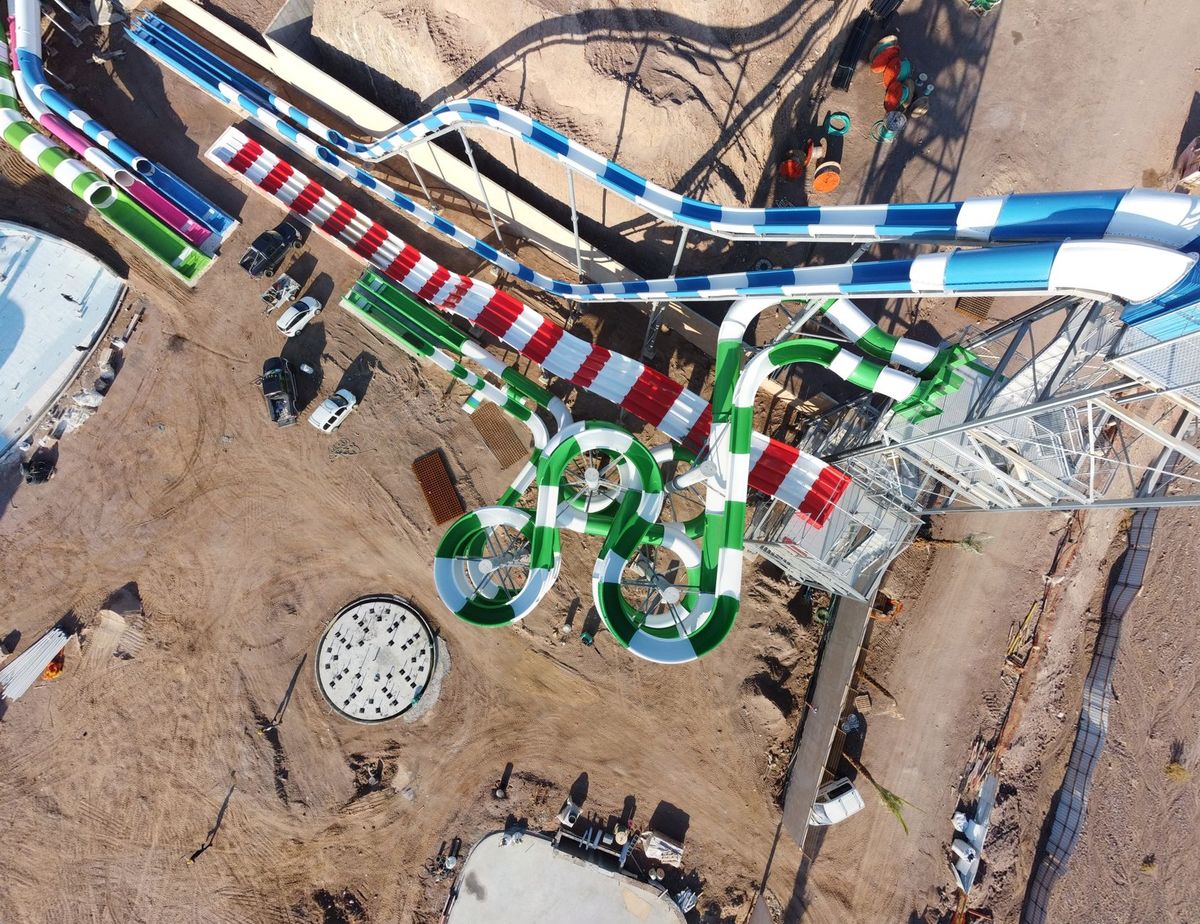
Popular water park features in municipal aquatic centers include water slides ranging from simple body slides ($50,000 to $150,000 installed) to complex multi-story tube slides with enclosed sections ($300,000 to $1 million each), lazy rivers (circulating current channels) costing $500,000 to $2 million for 500 to 1,000 linear feet of channel, wave pools using pneumatic or mechanical wave generation systems at $1 to $3 million, interactive spray grounds and splash pads with themed play elements, and current channels and vortex pools for aquatic fitness programming.
These features increase the mechanical system complexity significantly. Each water feature has independent pump, filter, and chemical treatment systems, and the aggregate mechanical scope for a full-featured aquatic center can include 15 to 25 separate water treatment systems. Coordinating the construction and commissioning of these multiple independent systems is one of the most challenging aspects of aquatic center construction.
Business tip: The aquatic center construction market is highly specialized, with a small number of contractors nationally who have genuine expertise in pool shell construction, natatorium building envelope design, and aquatic mechanical systems. Contractors entering this market should partner with experienced aquatic mechanical subcontractors and pool construction firms on their first projects, building expertise through collaboration before bidding as prime contractor on major aquatic center construction.
Frequently Asked Questions
How are public pool construction spending projects funded?
Federal and state data confirm that public pool construction spending continues to be a major factor in 2026 construction planning. The latest available figure of $1.8 billion provides a useful baseline, though actual costs vary by region, project scope, and market conditions. Contractors should request updated quotes from suppliers and subcontractors before finalizing bids.
What is the average cost of public pool construction spending?
The geographic landscape for public pool construction spending is shifting in 2026. Data indicating $30 underscores the importance of market selection for contractors seeking growth. Western and southeastern states continue to attract disproportionate investment relative to their population share.
Which states are investing the most in public pool construction spending?
Compared to prior periods, public pool construction spending has moved significantly. Current data showing $80 million indicates the direction of the market, and contractors who adjust their strategies accordingly will be better positioned for profitability. Monitoring monthly updates from BLS and Census Bureau data releases is recommended.