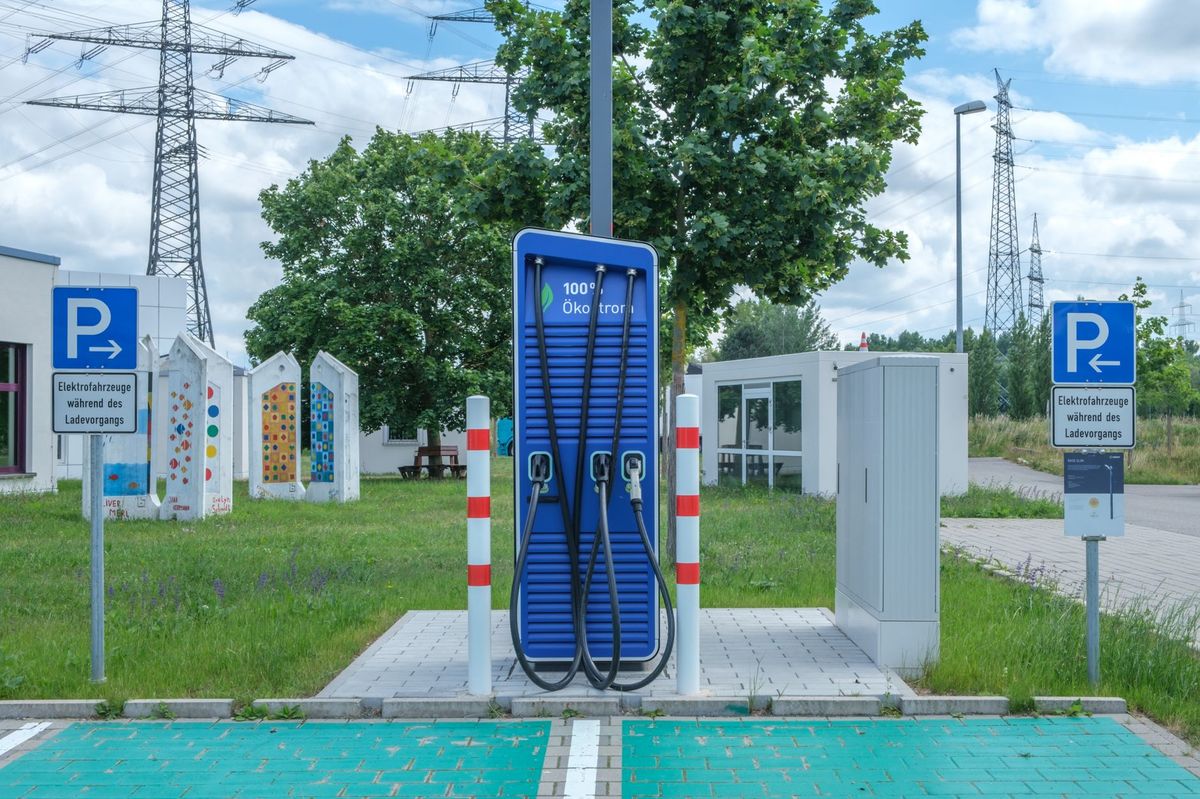
The math: public EV charging station construction is being funded through a complex split between federal programs (primarily NEVI at $7.5 billion), state programs (approximately $3.2 billion combined), and private investment (approximately $8 billion committed by major charging networks and automakers). The total construction market for EV charging infrastructure has reached $4.8 billion annually and is projected to grow to $8 billion by 2028 as deployment accelerates toward the national goal of 500,000 public charging ports by 2030.
Bottom line: EV charging station construction is primarily an electrical construction market, but the scope extends beyond simple charger installation to include significant civil work (site preparation, paving, drainage), structural work (canopy construction, equipment pads), and utility infrastructure (transformer installation, switchgear, conduit). For electrical contractors, the EV charging boom represents a major new revenue stream; for civil contractors, it's a complementary add-on to existing site development capabilities.
Federal vs State Funding
Federal NEVI Program: $7.5 billion. The National Electric Vehicle Infrastructure Formula Program distributes funds to states based on their share of Alternative Fuel Corridor miles. NEVI-funded stations must meet specific requirements including minimum 4 DCFC ports at 150kW each, combined station power output of at least 600kW, CCS connectors, location within 1 mile of Interstate exits, and maximum 50-mile spacing. As of early 2026, approximately $4.2 billion has been obligated to states, with 1,200+ NEVI-funded stations under construction or completed. The average NEVI station construction cost is $750,000 to $1.2 million including equipment, electrical infrastructure, site work, and permitting.
State Programs: $3.2 billion combined. At least 35 states have established their own EV charging incentive and construction programs, supplementing federal NEVI funding. California leads with approximately $1.5 billion committed through the California Energy Commission's Clean Transportation Program. New York ($500 million), New Jersey ($300 million), and Colorado ($200 million) have the next largest state programs. State programs typically cover Level 2 and DCFC installations beyond the Interstate corridors targeted by NEVI, including workplace, multifamily, and destination charging.
Private Investment: $8 billion committed. Major charging networks — Tesla (Supercharger), ChargePoint, EVgo, Electrify America, and BP Pulse — have committed approximately $8 billion in combined capital investment for charging station construction through 2030. Tesla's Supercharger network alone has over 6,000 US stations and continues expanding at 200+ new stations per quarter.
Construction Scope Per Station
A NEVI-compliant DCFC station involves several construction disciplines:
Electrical Infrastructure is the largest cost category at 40 to 55% of total station cost. A 4-port, 150kW station requires 600kW of electrical capacity — equivalent to a mid-size commercial building. Construction scope includes utility service connection (new or upgraded transformer, often pad-mounted 500kVA to 1,000kVA units at $40,000 to $80,000), switchgear and electrical distribution panels ($30,000 to $60,000), conduit and wire from service to chargers (200 to 500 feet at $30 to $80 per foot), DCFC equipment installation and connection ($50,000 to $80,000 per unit including equipment and labor), and grounding and bonding systems.
Civil and Site Work accounts for 20 to 30% of cost. Construction includes site grading and drainage modifications, concrete equipment pads and bollard-protected charger islands, parking lot pavement construction or reconstruction, ADA-accessible charging stall construction, signage, striping, and wayfinding, and landscape and screening requirements.
Canopy Construction (optional but increasingly common, especially for NEVI stations) provides weather protection for charging users and solar generation potential. Steel canopy structures with integrated solar panels cost $80,000 to $200,000 per 4-charger canopy.
Business tip: The single most important factor in EV charging station construction cost and timeline is utility interconnection. Obtaining new or upgraded utility service can take 3 to 12 months depending on the utility and required infrastructure. Contractors should begin utility coordination at the earliest possible stage of project development.
Workforce Requirements
EV charging construction is creating demand for electricians with commercial and industrial experience, particularly those certified in 480V three-phase systems and medium-voltage utility interconnections. The IBEW and NECA have developed EV charging-specific training curricula, and several states require EVITP (Electric Vehicle Infrastructure Training Program) certification for electricians working on publicly funded charging installations.
Total employment in EV charging construction is estimated at 15,000 to 20,000 workers nationally, expected to grow to 35,000+ by 2028. The workforce includes licensed electricians (60% of labor hours), civil/site work crews (25%), and general laborers and equipment operators (15%).
Bottom line: EV charging construction is a rapidly growing market with multiple funding sources, clear federal and state policy support, and construction scope that aligns with the capabilities of electrical and civil contractors. The firms that invest in EVITP training, utility interconnection expertise, and relationships with charging network operators will capture the greatest share of this expanding market.
Utility Coordination: The Critical Path
The single most important factor in EV charging station construction timeline and cost is the utility interconnection process. Obtaining new or upgraded electrical service for a DCFC station can take 3 to 18 months depending on the local utility, required infrastructure upgrades, and available transformer and switchgear capacity.
For a typical NEVI-compliant 4-port, 600kW station, the utility coordination process involves submitting a service request to the local electric utility specifying the required load, capacity analysis by the utility to determine whether existing distribution infrastructure can support the load, design and construction of utility-side infrastructure (new transformer, service lateral, metering) if existing capacity is inadequate, and final inspection and energization.
In areas with adequate existing distribution capacity, the utility interconnection timeline may be 2 to 4 months. In areas requiring upstream infrastructure upgrades — new distribution feeders, substation upgrades, or new transformers — the timeline can extend to 12 to 18 months. In the worst cases (rural areas far from adequate utility infrastructure), the interconnection cost can exceed $500,000 and require utility construction that dwarfs the cost of the charging station itself.
Business tip: Experienced EV charging contractors begin utility coordination at the earliest possible project stage — ideally before site selection is finalized. Some contractors maintain databases of utility capacity by location, allowing them to advise site owners on locations where utility infrastructure is adequate for DCFC installations without costly upgrades. This pre-site-selection utility assessment service adds value that differentiates contractors from competitors who focus only on construction execution.
Demand Charge Mitigation: Battery Storage Integration
A growing construction trend in EV charging is the integration of battery energy storage systems (BESS) to mitigate demand charges from electric utilities. Demand charges — fees based on the peak electrical demand drawn during a billing period, measured in kW — can represent 50 to 70% of the total electricity cost for DCFC stations that experience high peak demand but relatively low average utilization.
Battery storage construction at EV charging stations involves concrete pad construction for battery enclosures (typically pre-engineered cabinets containing lithium-ion battery modules), electrical switchgear integrating battery charge/discharge with utility service and charger loads, battery management system (BMS) installation and commissioning, and fire suppression systems (clean agent or water mist) sized for the specific battery chemistry and enclosure configuration.
Battery storage adds $200,000 to $500,000 to DCFC station construction costs but can reduce demand charges by 40 to 60%, significantly improving station economics. The construction scope — concrete pads, electrical connections, and fire suppression — is straightforward for electrical and civil contractors, making battery integration a natural extension of EV charging construction services.
Make-Ready Infrastructure Programs
Several states and utilities have implemented "make-ready" programs that fund the electrical infrastructure up to the charging equipment connection point, leaving only charger installation and commissioning to the site owner or operator. California's SCE Charge Ready program and ConEdison's PowerReady program are prominent examples.
Make-ready construction scope includes trenching and conduit installation from the transformer to the charger location, electrical panel and service installation, conduit stub-ups and junction boxes at each planned charger location, and site civil work including bollard protection, ADA-compliant paths, and signage. Make-ready programs reduce the site owner's construction cost by 50 to 70%, accelerating deployment. For contractors, make-ready programs create a high-volume, standardized construction scope that can be executed efficiently across many sites.
Site Selection and Design Considerations
Effective EV charging station site selection and design directly affect construction cost, timeline, and the operational success of the completed installation. Key site selection factors that impact construction include proximity to adequate electrical infrastructure (transformer capacity, conductor sizing, voltage level), available space for charger equipment, vehicle stalls, and required accessibility features, traffic patterns and site access for charging vehicles, and compatibility with existing site uses (parking lot operations, retail or food service businesses, fleet operations).
Design considerations that affect construction cost include stall layout (pull-through stalls are preferred for vehicles towing trailers but require more site area than pull-in stalls), ADA accessibility (at least one accessible charging stall per station with proper access aisle width, surface slope, and reach range to charging equipment), cable management systems (overhead or retractable cables that prevent trip hazards while serving vehicles parking on either side of the charger), and wayfinding signage and pavement markings helping drivers locate the charging station from the road and navigate to available stalls.
Operations and Maintenance Infrastructure
EV charging stations require ongoing maintenance infrastructure that should be considered during initial construction. Network connectivity (cellular or fiber) is required for payment processing, remote monitoring, and software updates. Most DCFC stations include cellular modems with backup connectivity options. Remote monitoring systems alert the station operator to equipment faults, allowing rapid response to maintain the 97% uptime requirement for NEVI-funded stations.
Physical maintenance access must be accommodated in station design. Each charger requires rear access for technician service, with adequate clearance for panel removal and component replacement. Equipment pads should include conduit for future charger additions, as station expansion is common as EV adoption increases.
Business tip: The EV charging construction market is evolving rapidly. Charger technology changes every 2 to 3 years, with increasing power levels (from 150kW to 350kW+ per port), new connector standards, and improved user interfaces. Contractors should design electrical infrastructure (conduit, panel capacity, transformer sizing) for future power levels rather than just current equipment specifications. Installing infrastructure for 350kW per port when current equipment operates at 150kW adds minimal incremental cost during initial construction but avoids costly electrical infrastructure upgrades when charger technology advances.
Workforce Training and Certification
The EV charging construction market has created new training and certification requirements for electrical contractors. The Electric Vehicle Infrastructure Training Program (EVITP) has emerged as the de facto industry standard for electrician certification in EV charging installation.
EVITP certification requires 20 hours of classroom and hands-on training covering EV charging technology fundamentals including Level 1, Level 2, and DCFC systems, electrical system design for charging installations including load calculations, conductor sizing, and overcurrent protection, National Electrical Code (NEC) Article 625 requirements specific to EV charging equipment, utility interconnection procedures and coordination, site assessment and installation planning, and commissioning and testing of completed installations.
Several states and federal programs now require EVITP certification or equivalent training for electricians working on publicly funded EV charging installations. California, Illinois, New York, and Oregon have adopted EVITP requirements for state-funded projects, and the NEVI program's emphasis on quality installation has driven many states to require EVITP certification as a condition of NEVI funding.
Business tip: Invest in EVITP certification for your electrical workforce now. As EV charging construction volume grows, EVITP-certified electricians will command premium wages and EVITP-certified contractors will have preferential access to publicly funded projects. The training investment ($500 to $800 per electrician plus time) pays for itself quickly through access to the growing market of publicly funded EV charging construction.
Future Technology and Construction Implications
The EV charging market is evolving rapidly, and construction decisions made today must accommodate future technology developments. Key emerging technologies with construction implications include bidirectional charging (vehicle-to-grid, V2G) that requires enhanced electrical infrastructure to manage power flow in both directions, megawatt-level charging for medium and heavy-duty vehicles (electric trucks and buses) requiring dedicated transformer and switchgear installations comparable to small commercial buildings, wireless (inductive) charging systems that require in-ground charging pad installation during initial site construction, and automated charging systems for autonomous vehicles that require precision vehicle positioning infrastructure and robotic charger deployment mechanisms.
Contractors should design electrical infrastructure with margins for these future technologies — larger conduit, higher-capacity panels, oversized transformer pads — to minimize the cost of future upgrades as charging technology evolves.
Frequently Asked Questions
How are public ev charging construction projects funded?
According to the latest industry data, public ev charging construction is showing notable trends in 2026. Current figures indicate $7.5 billion, which represents a significant benchmark for contractors and developers planning projects this year. Regional variations apply, so checking local market conditions remains essential for accurate budgeting.
What is the average cost of public ev charging construction?
Market research on public ev charging construction shows that geographic concentration matters significantly. With figures reaching $3.2 billion in key markets, the opportunities are substantial but location-dependent. States with strong population growth and infrastructure investment tend to see the highest activity levels.
Which states are investing the most in public ev charging construction?
The trajectory for public ev charging construction tells an important story when viewed against historical benchmarks. With the latest data showing $8 billion, the trend has clear implications for project feasibility, bidding accuracy, and resource allocation across the construction sector.