The math: the National Guard Bureau's Readiness Center Transformation program has $2.4 billion in active construction for armory modernization, replacement, and new construction across all 54 states and territories. The program aims to replace or renovate approximately 1,200 armories over the next decade — roughly 40% of the National Guard's 3,000+ armory inventory.
Bottom line: National Guard armory construction offers a steady, well-funded construction opportunity through the military construction (MILCON) process, with projects typically sized at $15 to $50 million — a sweet spot for mid-size general contractors with federal construction experience. The modernization program is driven by readiness requirements that make armory construction largely recession-proof and politically protected.
The Armory Inventory Challenge
The National Guard operates approximately 3,000 armories and readiness centers across the country. The inventory's age profile tells the story of why modernization is urgent: 45% were built before 1970 (over 55 years old), 25% were built in the 1970s and 1980s, 20% were built in the 1990s and 2000s, and only 10% were built since 2010. Armories built before 1970 were designed for a Cold War-era National Guard focused primarily on infantry training with minimal equipment storage and no accommodation for the heavy equipment, communications systems, and specialized training requirements of today's National Guard, which deploys regularly to combat zones, disaster response operations, and border security missions.
What's Being Built: The Modern Readiness Center
Modern armories — now officially called Readiness Centers — are significantly larger and more complex than their predecessors. A typical new Readiness Center ranges from 40,000 to 80,000 SF and includes drill floor/assembly hall (8,000 to 15,000 SF clear span) for formation and indoor training, vehicle maintenance bays (4 to 8 bays sized for HMMWV, LMTV, and other military vehicles), organizational maintenance shop with vehicle lifts, compressed air, and tool storage, arms vault (reinforced concrete with GSA-approved security hardware and intrusion detection), classroom and training rooms with distance learning capability, administrative offices and unit supply rooms, food preparation area (kitchen capable of feeding 200+ soldiers), physical fitness area (3,000 to 5,000 SF), and locker rooms and shower facilities for both male and female soldiers.
Construction costs for new Readiness Centers average $350 to $550 per SF, placing them in the mid-range of government building construction. Key cost drivers include the clear-span drill floor requiring long-span steel structure, vehicle maintenance areas requiring heavy-duty floor slabs and industrial mechanical systems, arms vault construction requiring reinforced concrete with blast-resistant design, and communications infrastructure including SIPRNET-capable networks requiring physical security features.
Funding and Procurement
Armory construction is funded through two primary mechanisms. Federal MILCON funding provides 75% of construction costs through the annual National Defense Authorization Act. The federal share is managed by the National Guard Bureau and executed through the Army Corps of Engineers or state military construction offices. State matching funds provide the remaining 25% of construction costs, funded through state military department budgets, state capital improvement funds, or state bond programs.
The 75/25 federal-state cost share creates a powerful incentive for states to pursue armory construction — each state dollar of investment leverages three dollars of federal construction funding. This cost-sharing structure has sustained armory construction even during periods of fiscal austerity at the state level.
Business tip: Armory construction contracts are typically awarded through the Army Corps of Engineers (for MILCON projects) or state adjutant general's office (for state-funded projects). Contractors should register with both the Corps of Engineers and their state military department, and maintain SAM (System for Award Management) registration for federal work.
Active Projects and Market Outlook
The $2.4 billion active pipeline includes approximately 60 new Readiness Center construction projects and 100+ renovation and upgrade projects across the states. Project sizes range from $5 million for small renovations to $80 million for large multi-unit Readiness Centers. The pipeline is distributed across all 50 states plus DC, Guam, Puerto Rico, and the US Virgin Islands, creating construction opportunities in every region.
The National Guard Bureau's Facilities Strategy and Master Plan calls for sustained MILCON investment of $2 to $3 billion per year through 2035 to address the readiness center inventory backlog. This provides 10+ years of visible construction demand for contractors positioned in the military construction market.
Bottom line: National Guard armory construction is a well-funded, geographically distributed market offering steady project flow at manageable contract sizes. Contractors with federal construction experience and willingness to navigate military procurement processes can build reliable backlogs in this stable and growing market segment.
Vehicle Storage and Maintenance Facilities
Modern National Guard armories must accommodate a much larger and heavier fleet of military vehicles than their predecessors. Current Guard equipment includes HMMWVs (11,000 lbs), LMTVs (16,000 lbs), FMTVs (30,000+ lbs), engineer equipment (bulldozers, graders, excavators), and in some cases, tracked vehicles including M2 Bradley Fighting Vehicles and M1 Abrams tanks.
Vehicle maintenance facilities within armories require heavy-duty floor slabs (8 to 12 inches reinforced concrete rated for tracked vehicle loads), vehicle lifts with 20 to 30-ton capacity ($25,000 to $50,000 each), overhead bridge cranes for engine and transmission removal ($40,000 to $100,000), compressed air systems sized for pneumatic tools and tire inflation, petroleum/oil/lubricant (POL) storage and dispensing systems with spill containment, vehicle wash facilities with oil-water separators and water recycling systems, and heated vehicle storage bays preventing equipment damage from freezing temperatures in northern states.
Vehicle maintenance and storage facilities typically represent 30 to 40% of total Readiness Center floor area and 35 to 45% of construction cost, reflecting the heavy-duty industrial construction required for military vehicle maintenance operations.
Communications and Information Technology
Modern armories require robust communications infrastructure that supports both garrison operations and rapid mobilization. Construction requirements include SIPRNET-capable network infrastructure with physical security features (dedicated conduit, shielded cabling, TEMPEST-compliant equipment rooms), satellite communications (SATCOM) antenna foundations and equipment shelters, radio communications equipment rooms with antenna farms (multiple VHF, UHF, and HF antennas on mast or tower structures), classified information processing facilities that may require SCIF (Sensitive Compartmented Information Facility) construction standards, and emergency power generation supporting uninterrupted communications during mobilization.
The communications infrastructure for a modern Readiness Center costs $500,000 to $1.5 million, representing a significant increase over the minimal communications provisions in legacy armories. Contractors must understand the specific security construction requirements for classified communications facilities, including detailed GSA and DCSA (Defense Counterintelligence and Security Agency) specifications for SCIF construction if applicable.
Energy Resilience Requirements
The Department of Defense's energy resilience requirements (per 10 USC 2911) mandate that military installations — including National Guard armories — be capable of operating independently of the commercial power grid for a minimum of 14 days. This requirement drives construction of on-site energy generation and storage systems including natural gas or diesel generator systems sized for 100% building load, battery energy storage systems (BESS) providing bridging power during generator startup, solar photovoltaic arrays with islanding capability (the ability to operate independently of the grid), and microgrids with automated load management and generator dispatch.
Energy resilience construction adds $500,000 to $2 million to armory construction costs depending on building size and geographic location, but is now a standard requirement for all new MILCON-funded National Guard facilities. Contractors should factor energy resilience scope into their Readiness Center proposals from the outset.
Readiness Center Design Standards
The National Guard Bureau publishes design standards (NGB Manual 415-5) that specify minimum requirements for Readiness Center construction. These standards are more detailed than typical building program documents and directly affect construction scope and cost.
Key design standard requirements include drill floor minimum clear area of 8,000 SF with 22-foot minimum clear height for formation and indoor training, classroom/training room requirement of minimum 3 rooms with 30-seat capacity each with networked AV equipment, arms vault construction to AR 190-11 standards including reinforced concrete walls, GSA-approved vault door, and dual-technology intrusion detection, locker and latrine facilities sized for 110% of unit strength with separate facilities for male and female soldiers, and organizational storage adequate for unit Table of Organization and Equipment (TO&E) including arms racks, field equipment bins, and communication equipment cages.
These standard requirements establish a baseline construction program that contractors can use for preliminary cost estimation before detailed design begins. A standard 60,000 SF Readiness Center meeting all NGB requirements costs approximately $20 to $33 million at current national average construction costs.
Joint Use and Community Integration
Modern Readiness Centers are increasingly designed for joint use — serving both military readiness and community functions. The drill floor doubles as a community meeting and event space, classrooms serve as adult education facilities during non-drill periods, and physical fitness areas may be available to community members through shared-use agreements.
Joint use design requires construction features that accommodate both military and civilian users including separate entry systems with access control (military personnel can access the full facility while community users are restricted to shared-use areas), movable partitions allowing the drill floor to be configured for community events, commercial kitchen facilities capable of supporting both military dining and community event catering, and parking facilities sized for both drill weekend attendance (150 to 300 vehicles) and community event attendance.
Joint use design adds 5 to 10% to construction costs but significantly improves community support for armory construction and creates ongoing revenue from facility rentals that offset operating costs.
Site Selection and Community Impact
Readiness Center site selection involves military operational requirements, community compatibility, and environmental considerations that affect both construction feasibility and cost.
Military Operational Requirements include proximity to the unit's primary deployment route (typically Interstate highway access within 5 miles), adequate acreage for building footprint, parking, vehicle storage, and outdoor training areas (typically 15 to 30 acres), compatible zoning (industrial or institutional) that permits military vehicle operations, weapons storage, and periodic nighttime and weekend activity, and utility infrastructure capacity (water, sewer, electrical, natural gas, telecommunications) sufficient for the facility's demands.
Community Compatibility considerations include noise impact from vehicle operations and weapons maintenance (generator testing, vehicle engine run-up), traffic impact from drill weekend attendance (150 to 300 vehicles arriving and departing within a 2-hour window), visual impact of military vehicle storage areas and antenna installations, and property value effects on surrounding residential areas. Modern Readiness Center designs address these concerns through landscaped screening of vehicle storage areas, sound-attenuating construction for vehicle maintenance bays, and architectural design that integrates with the surrounding community character rather than presenting a purely utilitarian military appearance.
Environmental Considerations include wetland and waterway setbacks, stormwater management requirements, and potentially contaminated soil or groundwater from prior land uses. Environmental site assessment (Phase I and Phase II ESA) is required before federal construction, and remediation costs can add significantly to project budgets if contamination is discovered.
For contractors, Readiness Center site development often represents a significant share of total project cost — 15 to 25% in cases requiring extensive grading, utility extension, and environmental mitigation. Contractors with both building construction and heavy site development capabilities are well-positioned for armory construction where site conditions are challenging.
Renovation and Adaptive Reuse of Existing Armories
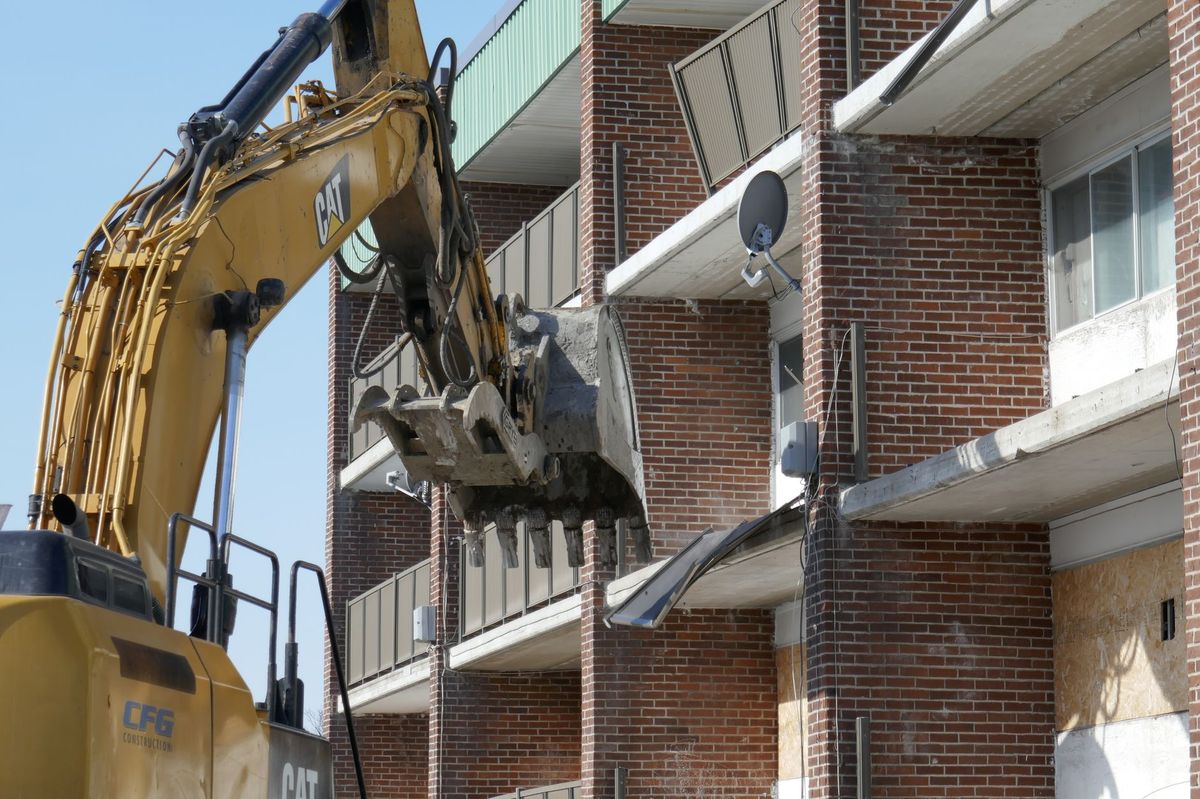
Not all armory construction involves new facilities. Many states are renovating existing armories to meet modern readiness requirements at lower cost than replacement construction. Armory renovation costs typically range from dollar 150 to dollar 350 per SF, compared to dollar 350 to dollar 550 per SF for new construction, but renovation scope is constrained by existing building dimensions, structural capacity, and site limitations.
Common renovation construction elements include structural reinforcement for heavier vehicle loads in maintenance bays, HVAC system replacement with modern energy-efficient equipment, electrical system upgrades to support modern communications and information technology, ADA accessibility improvements including elevator installation, restroom renovation, and door widening, and arms vault construction within the existing building footprint requiring reinforced concrete installation and security system integration.
The decision to renovate versus replace depends on the existing building's structural capacity to accommodate modern equipment loads, the feasibility of meeting current energy code and accessibility requirements within the existing building envelope, and the cost comparison between renovation with its inherent compromises and new construction that can be fully optimized for modern requirements.
States with large inventories of 1950s and 1960s-era armories often pursue a portfolio approach, renovating structurally sound buildings in good locations while replacing the most deteriorated facilities with new Readiness Centers. This portfolio strategy maximizes the construction value obtained from limited MILCON and state matching funds.
Construction Workforce and Regional Contractors
Armory construction is well-suited for regional general contractors with 50 to 200 employees. Project sizes of dollar 15 to dollar 50 million are large enough to sustain dedicated project teams but small enough to be within the bonding and management capacity of mid-size firms. The geographic distribution of armory projects across all 50 states creates opportunities for contractors in markets that may not have the volume of other federal construction types.
Federal construction experience is a significant advantage but not an absolute requirement for armory construction. Many states execute armory projects through their state military construction offices using state procurement rules rather than federal acquisition regulations, providing a more accessible entry point for contractors new to military construction. States including Texas, California, New York, Florida, and Pennsylvania manage substantial armory construction programs through state contracting mechanisms.
Frequently Asked Questions
How are national guard armory construction projects funded?
Industry analysts tracking national guard armory construction report that 2026 has brought measurable shifts. With data showing $2.4 billion, the trend line suggests continued movement through the remainder of the year. Builders should factor this into both current bids and forward-looking project estimates.
What is the average cost of national guard armory construction?
Market research on national guard armory construction shows that geographic concentration matters significantly. With figures reaching 1,200 in key markets, the opportunities are substantial but location-dependent. States with strong population growth and infrastructure investment tend to see the highest activity levels.
Which states are investing the most in national guard armory construction?
Year-over-year comparisons for national guard armory construction show meaningful change. The figure of 40% from current data represents a shift that contractors need to account for in their planning and bidding strategies. Historical trend analysis suggests this trajectory may continue through the end of the year.