$12 Billion in Water Plant Upgrades — And the EPA Is Just Getting Started
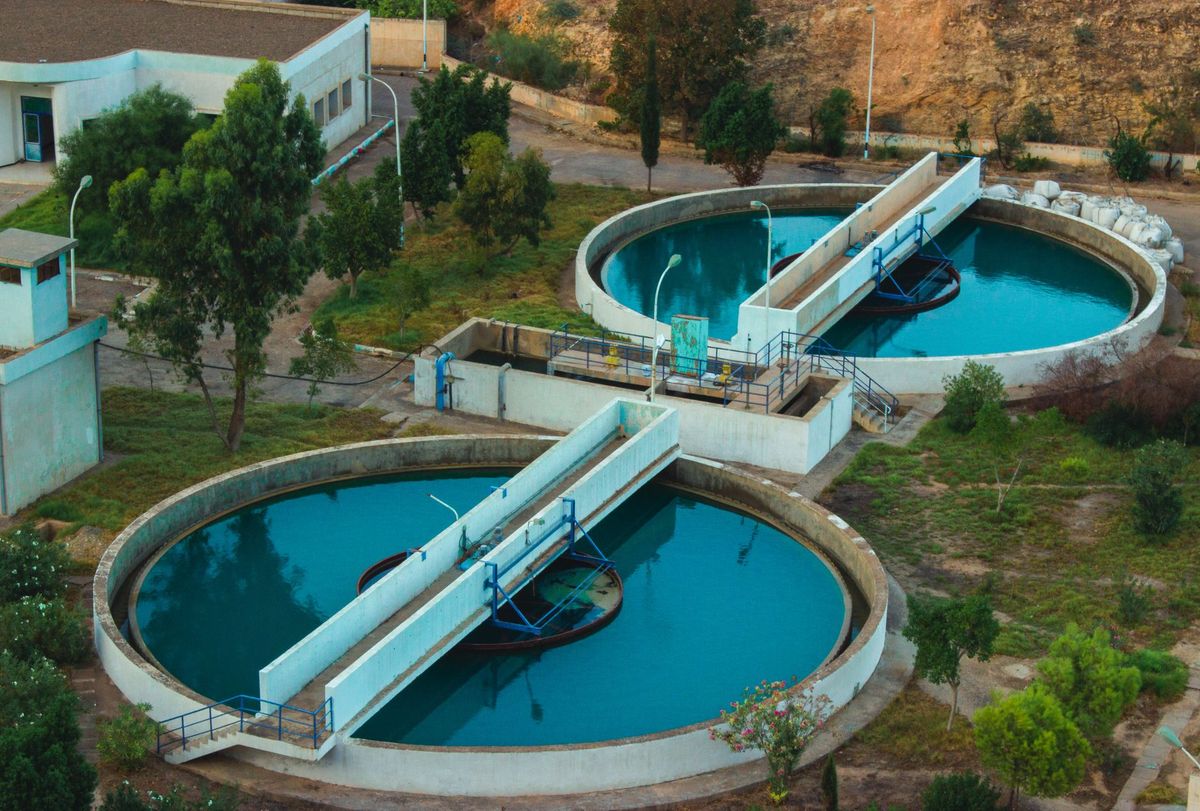
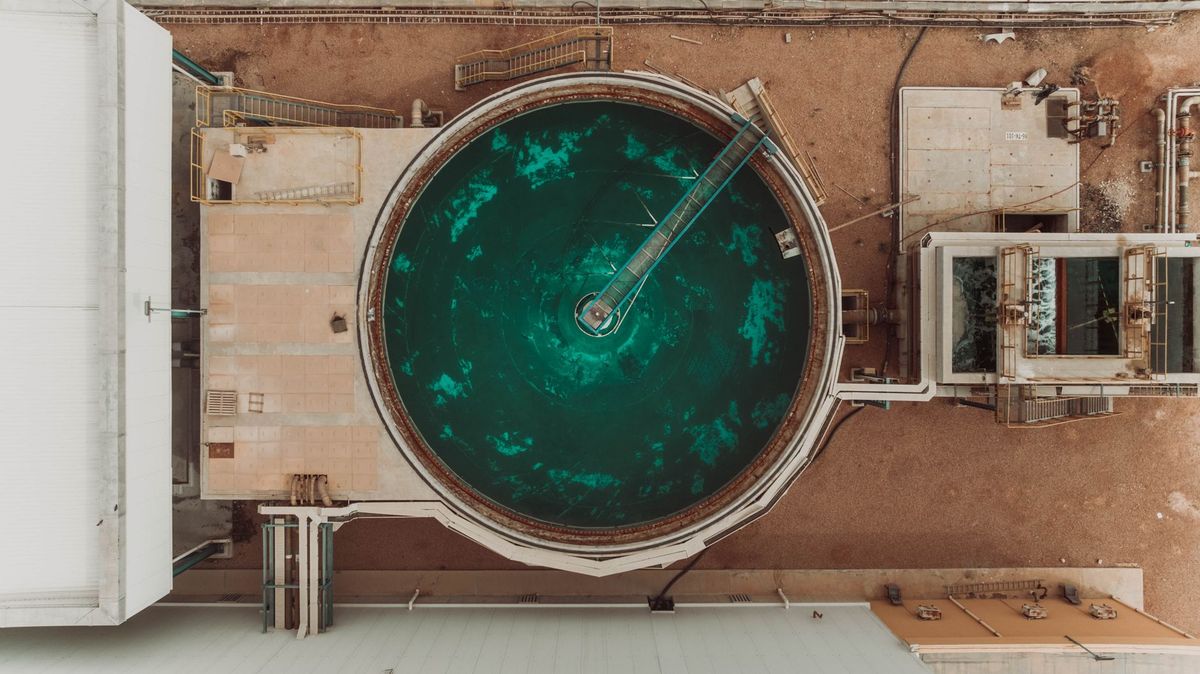
Municipal water treatment plant construction and upgrades will total $12 billion in 2026, according to the Environmental Protection Agency's Clean Water Needs Survey and the American Water Works Association's State of the Water Industry report. That is a 31% increase over 2024 spending and the highest level in two decades.
The driver is simple: the EPA finalized its first-ever national drinking water standard for per- and polyfluoroalkyl substances (PFAS) in April 2024. The rule sets maximum contaminant levels of 4 parts per trillion for PFOA and PFOS — two of the most common PFAS compounds. Compliance deadlines start in 2027, which means utilities must begin construction now.
If you are a mechanical or plumbing contractor who works with municipalities, this is the biggest pipeline of funded water infrastructure work in your career. The math: the EPA estimates 9,000 water systems will need to install new treatment technology to meet the PFAS rule. At an average project cost of $1.3 million for small systems and $50–200 million for large systems, the total compliance cost ranges from $10 billion to $22 billion over the next five years.
Business tip: PFAS treatment projects require specialized equipment — granular activated carbon, ion exchange, or reverse osmosis systems. If your shop can install and pipe these systems, you are entering a market with very few qualified competitors.
What Are the EPA Enforcement Actions Driving This Spending?
The EPA has moved from guidance to enforcement on multiple fronts:
PFAS MCL (Maximum Contaminant Level). The April 2024 rule covers six PFAS compounds. Systems serving more than 10,000 people must comply by 2027. Smaller systems get until 2029. Non-compliance triggers EPA enforcement actions and potential fines of $70,117 per day per violation under the Safe Drinking Water Act.
Lead and Copper Rule Revisions (LCRR). The revised rule, finalized in October 2024, requires all water systems to inventory and replace lead service lines within 10 years. The EPA estimates 9.2 million lead service lines remain in use nationwide. Replacement cost per line averages $4,700, totaling $43 billion nationally.
NPDES permit tightening. The EPA is issuing stricter National Pollutant Discharge Elimination System permits for wastewater treatment plants, requiring lower effluent limits for nitrogen and phosphorus. Meeting these limits often requires constructing new biological nutrient removal systems at a cost of $20–50 million per plant.
The math: PFAS compliance ($10–22 billion), lead service line replacement ($43 billion), and nutrient removal upgrades ($15 billion+) add up to a $70–80 billion pipeline of EPA-driven water infrastructure work through 2035. This is not speculative — these are regulatory mandates with enforceable deadlines.
How Much Does a New Water Treatment Plant Cost?
Construction costs vary enormously based on plant capacity, treatment technology, and location:
- Small system (serving 3,000–10,000 people): $5–15 million for conventional treatment, $8–25 million with PFAS treatment capability.
- Medium system (10,000–100,000 people): $25–75 million for conventional, $50–120 million with advanced treatment.
- Large system (100,000+ people): $100–300 million for a new facility. The City of Dayton, Ohio recently broke ground on a $200 million PFAS treatment facility — one of the largest single municipal water projects in the country.
For renovation and upgrade projects — which account for roughly 70% of the $12 billion market — costs are lower but still substantial:
- Adding GAC (granular activated carbon) treatment: $2–8 million for a medium system.
- Adding ion exchange treatment: $3–12 million for a medium system.
- Membrane filtration upgrade: $10–40 million for a medium system.
- Full plant rehabilitation (process, structural, mechanical, electrical): $15–60 million.
Business tip: Water treatment plant projects have long procurement cycles — 12–24 months from funding approval to construction contract award. Start tracking your regional utility capital improvement plans now so you are ready when bids hit the street in 2027.
Where Is the Funding Coming From?
Water utilities fund capital projects through a patchwork of sources. Here are the big ones:
State Revolving Funds (SRF)
The EPA's Drinking Water State Revolving Fund and Clean Water State Revolving Fund provide below-market-rate loans to utilities. The IIJA added $11.7 billion in additional SRF capitalization for drinking water, with $4 billion specifically earmarked for PFAS and emerging contaminants.
SRF loans typically carry interest rates of 1–3%, compared to 4–5% on the municipal bond market. For a $50 million project, the interest rate difference saves a utility $500,000–$1 million per year in debt service.
WIFIA (Water Infrastructure Finance and Innovation Act)
WIFIA provides direct federal loans for large water infrastructure projects ($20 million+ for large communities, $5 million+ for small communities). The program has $6 billion in lending capacity and has funded over 100 projects since 2018.
WIFIA loans cover up to 49% of project costs, carry interest rates pegged to Treasury rates, and offer repayment terms up to 35 years. For a $100 million water treatment plant, WIFIA can provide $49 million at roughly 4.2% interest — significantly cheaper than most municipal bond issuances.
EPA PFAS-Specific Grants
The IIJA included $9 billion in grants and loans specifically for PFAS treatment in drinking water. This money flows through state SRF programs but is available as grants (not loans) for disadvantaged communities. The EPA estimates that 60% of affected water systems qualify as disadvantaged.
Rate Revenue and Municipal Bonds
The remainder comes from utility rate increases and general obligation bonds. The American Water Works Association reports the average monthly residential water bill reached $72 in 2025, up from $58 in 2020 — a 24% increase driven largely by capital cost recovery.
What Workforce Does Water Treatment Plant Construction Require?
Water treatment plant construction requires specialized trades:
- Pipefitters and plumbers: Process piping in water plants uses stainless steel, HDPE, ductile iron, and PVC in sizes from 2-inch to 72-inch. This is not residential plumbing — it is industrial-grade pipe installation with tight tolerances and extensive testing requirements.
- Electricians: Plants require medium-voltage switchgear (4,160V), motor control centers, variable frequency drives, and SCADA (Supervisory Control and Data Acquisition) systems. Electricians with industrial experience are in short supply.
- Instrumentation and controls technicians: Modern water plants run on sensors, PLCs, and automated valve systems. I&C work is highly specialized and well-paid, with journeyman rates averaging $48/hour in prevailing wage jurisdictions.
- Concrete and structural: Water plant structures must meet ACI 350 (Environmental Engineering Concrete Structures), which requires tighter mix designs and more stringent crack control than standard building concrete.
The Bureau of Labor Statistics reports that water and wastewater treatment plant construction employment is at 28,400 workers nationally — well below the estimated need of 35,000–40,000 to handle the current project pipeline.
Business tip: If you are a plumbing or mechanical shop, cross-training your crew in process piping and industrial pipe installation opens up the water plant market. One OSHA-40 hazwoper certification and ASME process piping training can qualify your best fitters for this work.
How Does the O&M Impact Affect Your Business?
Every water treatment plant built or upgraded needs ongoing operations and maintenance. The O&M contract market is growing alongside capital construction:
- GAC systems require carbon replacement every 12–18 months at a cost of $200,000–$500,000 per replacement for a medium system. Utilities often contract this work to mechanical contractors.
- Membrane systems require membrane replacement every 5–7 years at a cost of $1–3 million per replacement.
- Chemical feed systems need routine maintenance, calibration, and repair. Annual O&M contracts for chemical feed systems run $50,000–$150,000 per plant.
The math: a $50 million water plant generates $1.5–2.5 million per year in O&M work over a 30-year life. That is $45–75 million in follow-on revenue from a single project. This is the annuity business model that builds generational wealth for specialty contractors.
Bottom line: water plant construction is not one-time project work. It is a gateway to decades of O&M contracts.
Which Regions Have the Biggest Pipelines?
PFAS contamination is concentrated near military bases (where AFFF firefighting foam was used), industrial sites, airports, and landfills. The EPA's PFAS contamination map shows the highest density of affected water systems in:
- The Great Lakes states: Michigan alone has 192 water systems with PFAS detections above the new MCL. Ohio has 147. Wisconsin has 89.
- The Mid-Atlantic: New Jersey has been a leader in PFAS regulation, with 134 affected systems and $2.1 billion in planned treatment upgrades.
- The Southeast: North Carolina's Cape Fear River basin has extensive PFAS contamination from the Chemours/Fayetteville Works facility. The state has $800 million in planned treatment projects.
- California: The State Water Resources Control Board has identified 267 water systems with PFAS above the federal MCL. The state's drinking water capital improvement pipeline exceeds $3.5 billion.
For contractors, the strategy is straightforward: check your state's PFAS monitoring data (published by your state drinking water program), identify the utilities with detections above 4 ppt, and contact their engineering staff about upcoming projects.
What Contracting Structures Are Used for Water Plant Projects?
Water treatment plant projects use several delivery methods:
Design-Bid-Build (DBB): Still the most common method for projects under $25 million. The utility hires an engineer, completes design, and competitively bids the construction. Lowest responsible bidder wins. Straightforward for contractors but requires reading plans carefully — errors in water plant design documents are common.
Design-Build (DB): Increasingly used for projects over $25 million, especially those involving proprietary treatment technologies. The DB team provides both engineering and construction under a single contract. If you are a sub, DB projects let you influence the design to match your installation capabilities.
Construction Manager at Risk (CMAR): Used in about 20% of large water plant projects. The CM provides preconstruction services during design, then holds trade subcontracts during construction. For subcontractors, CMAR offers better scope definition and fewer change order disputes.
Business tip: On water plant projects, the mechanical and piping scope is typically 30–40% of total project cost. If you can self-perform process piping, HVAC, and plumbing on a $50 million water plant, you are looking at a $15–20 million subcontract. That is the kind of project that justifies adding specialized crew.
What Is the Lead Service Line Replacement Opportunity?
Beyond treatment plant construction, the EPA's Lead and Copper Rule Revisions create a parallel pipeline of distribution-side work. The rule requires full lead service line replacement — no more partial replacements — within 10 years.
The numbers are staggering. The EPA estimates 9.2 million lead service lines remain in use nationwide. At an average replacement cost of $4,700 per line (including excavation, pipe installation, street and sidewalk restoration), the total market is $43 billion.
Top states by lead service line count: Illinois (680,000), Ohio (650,000), Michigan (460,000), New York (380,000), and Pennsylvania (350,000). Cities like Chicago, Cleveland, Detroit, and Newark face the largest single-utility replacement programs.
For plumbing contractors, this is trench-and-pipe work — excavate the old lead line from the water main to the building, install new copper or HDPE service line, restore the excavation. Crews can complete 3–5 replacements per day once they establish a rhythm. At $4,700 per line and 4 replacements per day, that is $18,800 in daily revenue per crew.
The math: a 10-person crew running 250 working days per year at 4 lines per day generates $4.7 million in annual revenue on lead service line work alone. And the program runs for 10 years.
Business tip: Many water utilities are issuing multi-year lead service line replacement contracts — 3 to 5 years with annual task orders. Win one of these contracts and you have a revenue floor that covers your overhead for years. Check your local utility's procurement page now.
FAQ
How much is being spent on water treatment plant construction in 2026?
Municipal water treatment plant construction and upgrades total approximately $12 billion in 2026, driven primarily by EPA PFAS compliance requirements and aging infrastructure needs. This is a 31% increase over 2024 spending.
What is the EPA PFAS drinking water standard?
The EPA finalized a Maximum Contaminant Level of 4 parts per trillion for PFOA and PFOS in April 2024. Compliance is required by 2027 for large systems and 2029 for small systems. The EPA estimates 9,000 water systems will need new treatment technology.
What funding is available for water treatment plant construction?
Key funding sources include State Revolving Funds (below-market loans), WIFIA (federal loans up to 49% of project cost), EPA PFAS-specific grants ($9 billion from IIJA), and municipal bond issuances. Disadvantaged communities may qualify for grant funding rather than loans.
Call your state's drinking water program office this week and ask for the list of water systems with PFAS detections above the new MCL. That list is your prospect list for the next five years of funded work.