The math: the federal courthouse construction pipeline managed by the General Services Administration (GSA) currently stands at $6.8 billion in active and planned projects, making it one of the most significant single-agency construction programs in the federal government. Federal courthouses are among the most complex and expensive building types in public construction, with costs averaging $800 to $1,200 per SF — comparable to hospital construction.
Bottom line: courthouse construction combines the security requirements of a detention facility, the ceremonial gravitas of a civic monument, the technology demands of a modern office building, and the public access requirements of a community facility. This combination of requirements creates construction projects that are technically challenging, politically visible, and well-funded through the federal judiciary's capital program.
The Federal Courthouse Pipeline
The GSA manages approximately 375 federal courthouses across the country, many of which are 40 to 80+ years old and in need of major renovation or replacement. The current construction pipeline includes new courthouse construction ($4.2 billion) for approximately 15 new facilities in various stages from design to construction, and major renovation and modernization ($2.6 billion) for approximately 25 existing courthouses receiving comprehensive upgrades.
Major active federal courthouse projects include the new US Courthouse in Fort Lauderdale, FL at $290 million (480,000 SF), the Anniston Federal Building and US Courthouse in Anniston, AL at $120 million, the new US Courthouse in Harrisburg, PA at $240 million, the renovation of the Daniel Patrick Moynihan US Courthouse in New York, NY at $550 million (one of the most expensive courthouse renovation projects in history), and the renovation of the Potter Stewart US Courthouse in Cincinnati, OH at $180 million.
Why Courthouses Are So Expensive
Federal courthouse construction costs significantly exceed typical commercial office construction for several compounding reasons:
Security Systems and Circulation. Federal courthouses require three separate circulation systems — public, secure (for judges and court staff), and restricted (for prisoners) — that never intersect. This triple circulation requirement increases gross building area by 25 to 40% compared to a single-circulation building. Security screening checkpoints at all public entrances require magnetometers, X-ray screening equipment, and marshals stations. Courtroom security systems include duress alarms, ballistic barriers, secure witness rooms, and electronic surveillance. Perimeter security includes anti-ram vehicle barriers (bollards or planters rated for 15,000-pound vehicle at 50 mph), blast-resistant window systems (laminated glass with anti-shatter film in reinforced frames), and secure parking for judges and marshals.
Courtroom Construction. Individual courtrooms are among the most expensive single rooms in any building type. A standard district courtroom (2,400 to 3,000 SF) costs $1.5 to $2.5 million to construct and finish, including millwork (judge's bench, jury box, counsel tables, witness stand) crafted from hardwood with custom detailing, acoustic treatment (STC 55+ walls, absorptive ceiling treatments, sound masking systems) ensuring speech privacy between courtrooms and between courtrooms and public corridors, courtroom technology (evidence presentation systems, digital audio recording, video conferencing, CCTV, and AV distribution), lighting systems providing adjustable illumination for different courtroom activities (testimony, evidence review, jury deliberation), and ceiling heights of 14 to 20 feet with architectural finishes appropriate to the dignity of the court.
A typical federal courthouse contains 8 to 20 courtrooms plus judges' chambers, generating $15 to $50 million in courtroom-specific construction costs before accounting for the building structure, envelope, and support spaces that contain them.
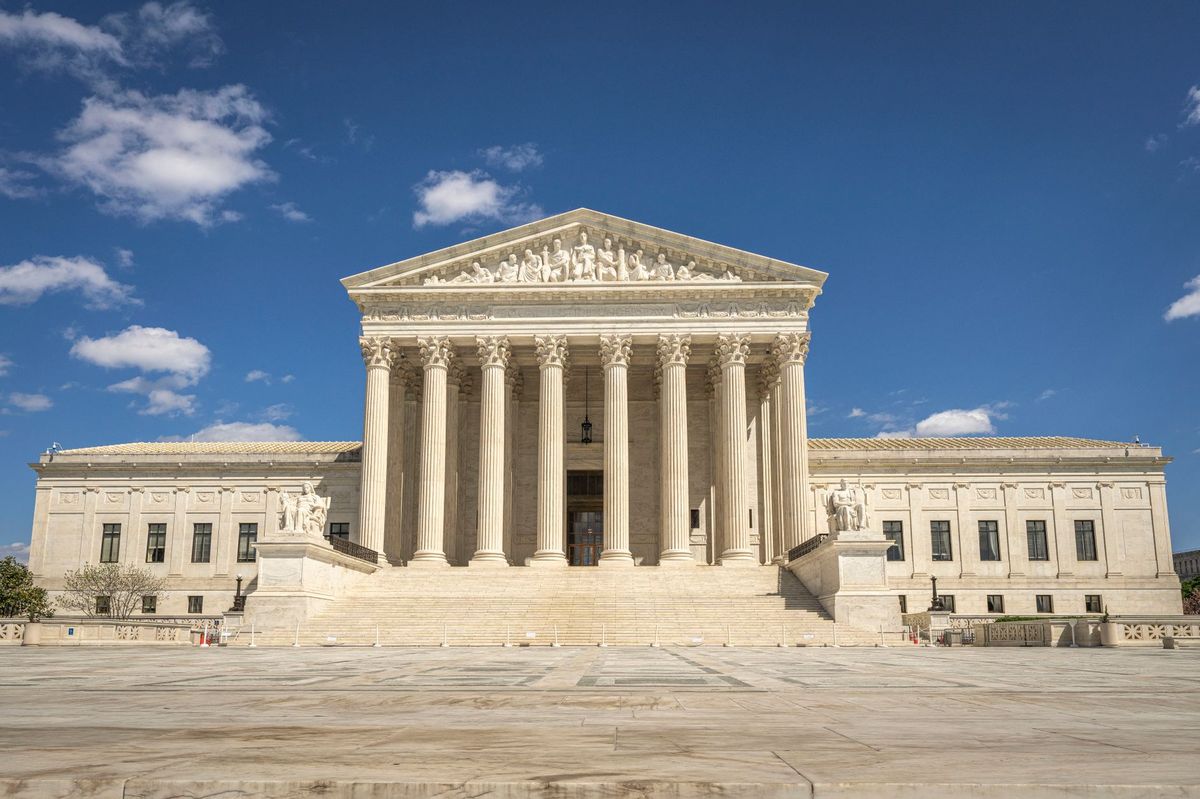
Architectural Quality. GSA's Design Excellence Program, established in 1994, requires that federal courthouses achieve the highest level of architectural quality and civic presence. This program engages nationally recognized architecture firms (past courthouse architects include Richard Meier, Thomas Phifer, Morphosis, and SOM) and demands construction materials, detailing, and craftsmanship that exceed standard commercial construction. Exterior materials typically include stone, precast concrete, and curtain wall systems rather than the less expensive EIFS and metal panel systems common in commercial construction. Interior finishes include natural stone flooring, hardwood millwork, and custom metalwork.
Business tip: Courthouse construction is one of the few public building types where architectural craftsmanship directly affects contractor selection. General contractors with demonstrated capability in high-quality finish work — stone installation, custom millwork, ornamental metalwork — have significant advantages in courthouse procurement. Invest in finish carpentry and stone masonry capabilities if pursuing this market.
State and Local Courthouse Construction
Beyond the federal pipeline, state and county courthouse construction adds approximately $3 to $4 billion in annual construction volume nationwide. State courthouses are typically funded through state judicial capital programs, while county courthouses are funded through local bond measures, county capital improvement programs, and in some cases, state grants.
State and county courthouse construction costs are generally lower than federal courthouses — $500 to $800 per SF — reflecting somewhat less stringent security requirements, simpler circulation systems, and less demanding architectural standards. However, the same fundamental security, acoustic, and technology requirements apply to all courthouses regardless of jurisdiction.
Contractor Requirements
Federal courthouse construction requires contractors with federal construction experience including GSA project familiarity, security clearances for construction workers (all workers on federal courthouse projects must pass background checks), Davis-Bacon prevailing wage compliance, and experience with GSA's commissioning and turnover requirements. The contractor pool for major federal courthouse projects is limited to approximately 15 to 20 large general contractors with the requisite federal experience, bonding capacity, and quality construction track record.
Bottom line: courthouse construction — both federal and state/county — represents a $10+ billion annual market with high barriers to entry, premium pricing driven by security and quality requirements, and the stability of government-funded capital programs. Contractors who invest in the specialized capabilities required for courthouse work — security systems coordination, acoustic construction, high-quality architectural finishes — can build a durable practice in this prestigious and well-funded construction niche.
Courtroom Technology: A Growing Construction Scope
Technology systems in modern courthouses have evolved from simple audio recording to comprehensive digital evidence presentation, video conferencing, and electronic filing systems that collectively represent a significant and growing share of courthouse construction cost.
Evidence Presentation Systems in each courtroom include a document camera at the witness stand for displaying physical evidence, flat-panel displays for the judge, witness, jury, counsel tables, and courtroom gallery (typically 8 to 12 displays per courtroom at $3,000 to $8,000 each), annotation capabilities allowing attorneys to mark and highlight displayed evidence in real-time, video playback systems for deposition and surveillance video presentation, and an integrated control system managed from the courtroom clerk's position.
Digital Audio Recording has largely replaced court stenographers in many jurisdictions, requiring multi-channel audio recording systems with microphones at every participant position (judge, witness, counsel tables, jury), redundant recording to ensure no testimony is lost, and acoustic treatment of the courtroom to minimize background noise and ensure clear recording.
Video Conferencing for remote witness testimony, arraignment proceedings, and multi-jurisdictional hearings requires professional-grade video cameras, displays, and codec systems, high-bandwidth network connectivity, and acoustic isolation to prevent audio feedback between the courtroom and remote participants.
The technology construction scope for a typical 12-courtroom federal courthouse now exceeds $5 to $8 million, or approximately $400,000 to $700,000 per courtroom. This represents a significant increase from the $100,000 to $200,000 per courtroom technology budgets of 20 years ago, reflecting the digital transformation of court proceedings.
Historic Courthouse Renovation
Federal and state courthouse renovation presents unique challenges because many existing courthouses are architecturally significant buildings listed on or eligible for the National Register of Historic Places. Historic courthouse renovation must comply with the Secretary of the Interior's Standards for the Treatment of Historic Properties, which restrict modifications to character-defining features of the building.
Construction challenges specific to historic courthouse renovation include installing modern security systems (metal detectors, X-ray screening, CCTV) within architecturally sensitive lobbies and public spaces without compromising historic character, upgrading MEP systems in buildings not designed to accommodate modern HVAC ductwork, electrical distribution, and data cabling, adding ADA accessibility (elevators, ramps, accessible restrooms) within existing structural frameworks that may not readily accommodate new vertical circulation, and maintaining the acoustic performance of historic courtrooms while integrating modern audio and video technology.
Historic courthouse renovation costs typically exceed new construction costs by 10 to 25% due to the constraints of working within existing structures and the premium for preservation-quality craftsmanship. However, the federal Historic Rehabilitation Tax Credit (20% of qualified rehabilitation expenditures) can offset a significant portion of the cost premium, making renovation economically competitive with new construction for qualifying projects.
Jury Assembly and Deliberation Spaces
The jury system creates unique construction requirements not found in other building types. Courthouse construction must provide jury assembly rooms (large waiting areas for summoned jurors, typically 2,000 to 5,000 SF with comfortable seating, workstations, and amenities for the 100 to 300+ citizens who report for jury duty on any given day), jury deliberation rooms (one per courtroom, equipped with conference table, display technology, private restroom, and complete acoustic isolation from adjacent spaces), sequestration facilities (overnight accommodations for sequestered juries in high-profile cases, including sleeping rooms, dining area, and recreation space — increasingly rare but still required in some jurisdictions), and jury circulation systems (separate corridors allowing jurors to move between courtrooms, assembly areas, and deliberation rooms without encountering parties, witnesses, or the public).
The jury circulation requirement adds square footage and construction cost that is unique to courthouse design. In a typical 12-courtroom federal courthouse, jury circulation corridors, assembly spaces, and deliberation rooms account for 8 to 12% of total building area — approximately 10,000 to 15,000 SF of dedicated jury space that produces no revenue and is occupied only intermittently.
Chambers and Office Construction
Judges' chambers in federal courthouses are constructed to standards significantly above typical office construction. Each judge's suite includes a private office (300 to 500 SF) with premium finishes including wood paneling, built-in bookshelves, and natural stone or hardwood flooring, a private lavatory with full bathroom fixtures, a conference room for in-chambers meetings with attorneys, law clerk offices (1 to 3 offices per judge), and a private entrance from the secure corridor system.
The per-judge chamber suite represents 1,200 to 2,000 SF of premium-quality construction at costs of $400 to $700 per SF — significantly above the $200 to $350 per SF cost of standard office construction. A 12-judge courthouse contains $6 to $17 million in chambers construction alone.
Preservation and Adaptive Reuse of Historic Courthouses
Many federal and state courthouses are architecturally significant buildings that contribute to the character of their communities. When these buildings require renovation, the construction must balance modernization needs (security, technology, accessibility) with preservation of historic character.
The GSA's First Impressions program specifically addresses the renovation of historic courthouse lobbies and public spaces, ensuring that security upgrades (magnetometers, X-ray screening) are integrated in a manner that respects the architectural significance of these often-monumental entry spaces. Creative solutions include using furniture-quality millwork to conceal security equipment, integrating screening equipment into custom-designed checkpoint stations that complement the lobby's architectural vocabulary, and using transparent (glass) security barriers rather than opaque walls to maintain visual connection with the historic lobby.
Judicial Security Infrastructure Details
Federal courthouse security construction extends far beyond the visible screening checkpoints at public entrances. The comprehensive security construction scope includes vehicular security barriers (bollards, planters, or knee walls rated to stop a 15,000-pound vehicle at 50 mph) installed around the building perimeter, secure parking for judges (enclosed, access-controlled garages with direct building entry avoiding public areas), holding cells and secure transport corridors for in-custody defendants (connecting the secure vehicle sally port to courtroom prisoner holding areas without crossing public or judicial circulation), duress alarm systems throughout the building (silent alarm buttons at every judicial bench, clerk station, and chambers desk), and ballistic-resistant construction in courtrooms (reinforced walls around the judge's bench, ballistic-rated judge's bench front panel, and secure exit door behind the bench for emergency judicial evacuation).
The secure prisoner transport system — the corridor and elevator system connecting the basement-level prisoner holding area to courtroom-level holding cells — is one of the most complex construction elements in a courthouse. This system requires security-rated hollow metal doors with electronic locks at every transition point, CCTV coverage of every corridor segment and holding cell, acoustic isolation preventing prisoners from communicating with other building occupants, and fire and life safety systems meeting both building code requirements and Bureau of Prisons detention standards.
Accessibility and Historic Preservation Conflicts
Courthouse renovation frequently involves conflicts between ADA accessibility requirements and historic preservation standards. Historic courthouses with monumental staircases, raised courtroom platforms, and narrow corridor widths may not accommodate wheelchair access without significant modifications to historic fabric.
Resolution strategies include installing elevators in locations that minimize impact on historic spaces (often in service areas or additions rather than within the historic building core), constructing accessible courtrooms on ground floor or elevator-accessible levels while preserving upper-floor courtrooms in their historic configuration, and using temporary or removable accessibility features (portable ramps, assistive listening devices) in historic spaces where permanent modifications would compromise historic character. These compromise solutions require close coordination between the architect, historic preservation officer, and accessibility consultant during design — and construction execution that demonstrates the careful craftsmanship required for work in architecturally significant buildings.
Frequently Asked Questions
How are courthouse construction federal projects funded?
According to the latest industry data, courthouse construction federal is showing notable trends in 2026. Current figures indicate $6.8 billion, which represents a significant benchmark for contractors and developers planning projects this year. Regional variations apply, so checking local market conditions remains essential for accurate budgeting.
What is the average cost of courthouse construction federal?
Regional analysis of courthouse construction federal reveals uneven distribution across U.S. markets. The data point of $800 highlights the scale of activity, with Sun Belt and high-growth metro areas generally leading in volume. Contractors expanding into new territories should evaluate local demand indicators before committing resources.
Which states are investing the most in courthouse construction federal?
Compared to prior periods, courthouse construction federal has moved significantly. Current data showing $1,200 indicates the direction of the market, and contractors who adjust their strategies accordingly will be better positioned for profitability. Monitoring monthly updates from BLS and Census Bureau data releases is recommended.