The math: across the United States, approximately 50 city hall construction projects (new construction and major renovation) are active at any given time, representing an annual market of approximately $2.5 to $3.5 billion. The perennial debate — renovate the existing city hall or build new — generates one of the most analyzed cost comparisons in municipal construction, and the data from completed projects provides clear insights into when each approach makes financial sense.
Bottom line: the renovation vs. new construction decision for city halls is not a simple cost-per-SF comparison. It involves lifecycle cost analysis, historic preservation considerations, operational efficiency, and the civic symbolism of municipal government facilities. For contractors, understanding both options and their cost implications is essential for providing value in this politically sensitive market.
Cost Comparison: 50 Project Analysis
Analysis of 50 completed city hall projects across the country reveals clear cost patterns:
New Construction Cost Range: $400 to $750 per SF, with a national median of $525 per SF. New city hall projects typically range from 20,000 SF (small cities) to 200,000+ SF (major cities), with total project costs of $8 million to $150+ million. The cost range reflects regional construction cost variations, architectural quality expectations (city halls typically require higher-quality materials and finishes than standard commercial buildings), and the inclusion of specialized spaces such as council chambers, courtrooms, emergency operations centers, and public meeting rooms.
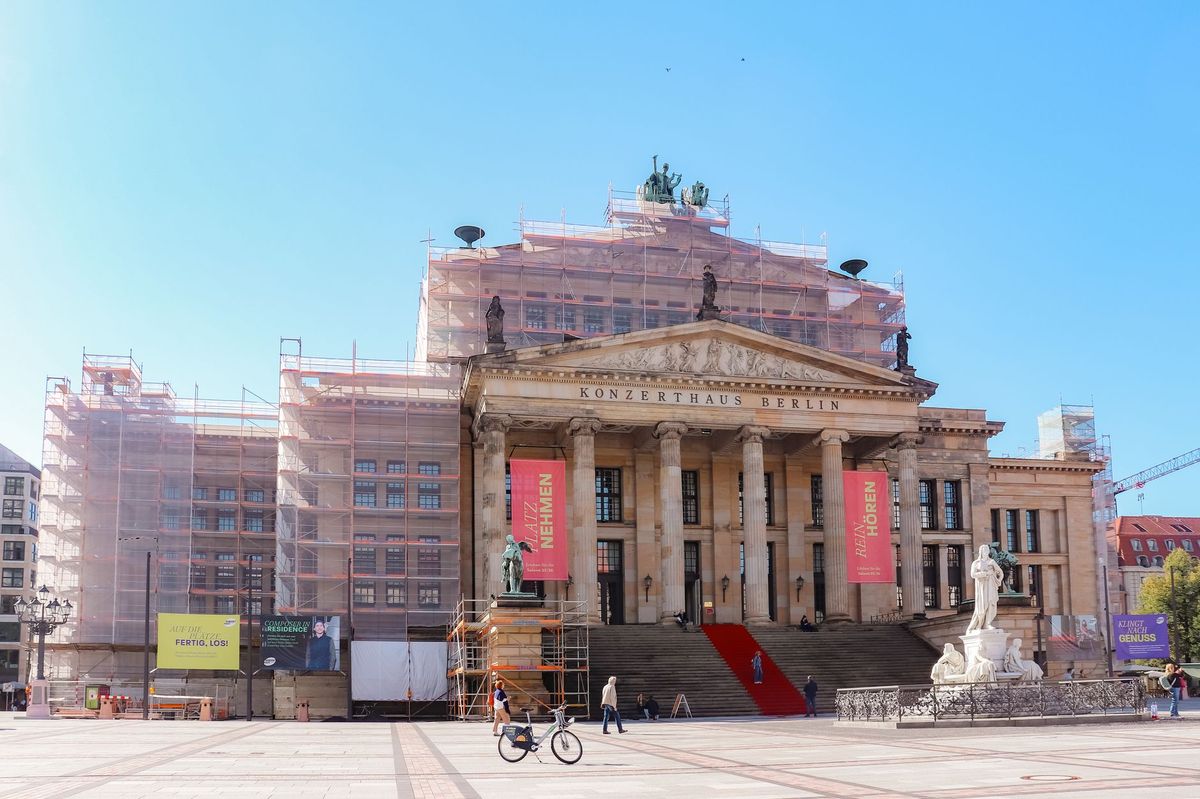
Major Renovation Cost Range: $250 to $600 per SF, with a national median of $385 per SF. Renovation costs are lower per SF but come with significant caveats — unknown existing conditions can generate costly change orders, and renovation projects must work within the structural and spatial constraints of the existing building. Hidden conditions including asbestos abatement, lead paint remediation, structural deficiencies, and outdated utility infrastructure can add 15 to 30% to renovation costs beyond initial estimates.
The Crossover Point. The data shows that renovation becomes cost-competitive with new construction only when the existing building is structurally sound (no major foundation or structural frame deficiencies), free of significant environmental remediation (asbestos, lead, PCBs), able to accommodate modern mechanical, electrical, and technology systems without extensive structural modification, and historically significant (qualifying for federal historic tax credits that offset 20% of qualified rehabilitation expenditures). When an existing city hall requires environmental remediation, structural repair, and extensive MEP replacement, renovation costs frequently approach or exceed new construction costs while delivering a building that still carries the constraints of the original structure.
What's Being Built: Modern Civic Design
Modern city hall construction reflects several design trends that affect construction scope and cost. Transparency and Public Access is achieved through extensive glazing, open floor plans, and visible council chambers that communicate openness and accountability. Construction implications include curtain wall and storefront glazing systems, open floor plate structures with minimal interior bearing walls, and audio-visual systems in council chambers designed for public broadcasting.
Energy Performance requirements for public buildings increasingly mandate LEED certification, net-zero energy capability, or compliance with state-specific energy codes that exceed baseline requirements. Construction features include high-performance building envelopes (R-30+ walls, R-40+ roofs), geothermal or air-source heat pump HVAC systems, solar photovoltaic arrays (often covering parking areas), and building automation systems with energy monitoring and optimization.
Security Integration reflects post-9/11 and post-pandemic requirements including public screening areas with magnetometer and X-ray capability, ballistic-rated counter screens in service areas, secure records storage and server rooms, and surveillance camera systems throughout public areas.
Business tip: City hall projects are among the most politically visible construction projects a contractor can undertake. The city council and mayor are simultaneously the owner, the user, and the political oversight body — a unique dynamic that requires exceptional communication, transparency, and stakeholder management skills from the construction team.
Funding and Procurement
City hall construction is funded through general obligation bonds, capital improvement program (CIP) budgets, certificates of obligation, and occasionally federal grants (CDBG for communities meeting income eligibility). The procurement process follows state public bidding requirements, with most city hall projects using competitive sealed bidding or construction manager at-risk delivery.
Historic city hall renovations may qualify for the federal Historic Rehabilitation Tax Credit (20% of qualified expenditures for certified historic structures listed on or eligible for the National Register of Historic Places), which can significantly offset renovation costs and tip the renovation vs. new construction analysis in favor of rehabilitation.
Bottom line: city hall construction is a steady, well-funded niche within the municipal building market. The renovation vs. new construction analysis is project-specific, but contractors who understand both approaches — and can help municipal clients navigate the decision with accurate cost data — will build credible practices in this politically important and publicly visible construction market.
Council Chamber Construction
The council chamber (also called council chambers, meeting hall, or legislative chamber) is the most architecturally significant and construction-intensive space in a city hall. A modern council chamber typically includes a raised dais for the mayor and council members (semi-circular or linear configuration with individual microphones, voting systems, and display screens), a clerk's station with audio recording and meeting management equipment, public seating (50 to 300+ seats depending on community size), attorney and staff positions with dedicated technology connections, AV systems for meeting broadcast, presentation display, and video conferencing, and acoustic treatment providing speech intelligibility and recording clarity.
Council chamber construction costs range from $300 to $600 per SF — significantly more than standard meeting rooms due to the specialized AV systems, acoustic treatments, architectural finishes, and the ceremonial quality expected of the community's primary democratic space. A council chamber in a mid-size city hall typically costs $1.5 to $3 million for a 3,000 to 5,000 SF room.
Many communities now require council chambers to be designed for broadcast — either cable television, internet live-streaming, or both — which adds professional lighting, multiple camera positions, sound-absorbing wall treatments, and a control room for video production. Broadcast-ready council chamber construction adds $200,000 to $500,000 to the base chamber construction cost.
Civic Design and Community Identity
City hall construction carries a unique burden of civic representation — the building serves not just as a functional workplace but as a physical symbol of community identity and democratic governance. This symbolic function influences construction decisions in ways that increase costs compared to standard commercial office buildings.
Exterior Materials and Craftsmanship. City halls typically use higher-quality exterior materials than commercial buildings — natural stone, masonry, precast concrete, or high-quality curtain wall systems rather than the less expensive EIFS, metal panel, and tilt-up concrete systems common in commercial construction. The cost premium for civic-quality exterior construction is typically 20 to 40% above equivalent commercial building enclosures.
Public Spaces. City halls incorporate public lobbies, atriums, and gathering spaces that are larger and more architecturally elaborate than commercial building lobbies. These spaces serve as venues for community events, art displays, and informal civic engagement, requiring premium floor finishes, feature lighting, and robust HVAC systems sized for public assembly occupancy loads.
Public Art Integration. Many communities require that 1 to 2% of city hall construction budgets be allocated to public art — sculptures, murals, installations, or integrated architectural art elements. While the art procurement is typically managed separately from the construction contract, the contractor must coordinate with artists during construction to install foundations, mounting systems, lighting, and other infrastructure supporting the art program.
Business tip: City hall projects offer contractors an opportunity to showcase their quality capabilities in a highly visible public setting. A well-constructed city hall generates community pride and serves as a lasting reference project that demonstrates the contractor's commitment to quality craftsmanship. Consider city hall projects as marketing investments as well as revenue opportunities — the visibility and prestige of a successful city hall project can generate business development returns for years after completion.
Adaptive Reuse for City Halls
A growing trend in municipal construction is converting existing commercial buildings — vacant department stores, bank headquarters, office buildings — into city hall facilities. Adaptive reuse projects offer several advantages for municipalities including lower construction costs (typically 15 to 30% below new construction for equivalent finished space), faster occupancy (12 to 20 months versus 24 to 36 months for new construction), downtown revitalization benefits (converting vacant buildings into active civic uses), and preservation of existing architectural character in established commercial districts.
Construction challenges for city hall adaptive reuse include structural modifications to accommodate council chambers with column-free spans, floor reinforcement for file storage and vault areas, security system installation within an existing building envelope, and accessibility upgrades (elevators, ramps, accessible restrooms) in buildings designed before ADA requirements. Adaptive reuse construction costs range from $200 to $450 per SF, compared to $400 to $750 per SF for new construction.
Several notable adaptive reuse city hall projects illustrate the approach. El Paso, Texas converted a former department store into a city hall and regional history museum at a cost of $85 million, achieving LEED Gold certification. Macon, Georgia converted a historic hotel into consolidated city-county government offices at $45 million. These projects demonstrate that adaptive reuse can deliver civic-quality facilities at competitive costs while contributing to downtown economic development.
Operating Cost Considerations
City hall construction decisions have significant long-term operating cost implications that should influence design and construction choices. Modern city halls operate 50 to 60 hours per week and are expected to serve communities for 40 to 60 years, meaning operating costs will substantially exceed initial construction costs over the building's lifecycle.
Key construction decisions affecting operating costs include HVAC system selection (geothermal systems cost 30 to 50% more to install but reduce heating and cooling costs by 40 to 60% compared to conventional systems), building envelope performance (each dollar invested in insulation and air sealing quality saves $2 to $4 over the building lifecycle in reduced energy costs), lighting systems (LED fixtures with daylight harvesting controls reduce lighting energy consumption by 50 to 70% compared to conventional fluorescent systems), and water conservation features (low-flow fixtures and rainwater harvesting systems can reduce municipal water costs by 30 to 50%).
A lifecycle cost analysis comparing construction alternatives — not just first cost — helps municipalities make construction decisions that minimize total cost of ownership over the building's 40 to 60-year service life. Contractors who present lifecycle cost data alongside their construction bids demonstrate sophistication that differentiates them from competitors focused solely on initial construction price.
Contractor Selection Factors
City hall construction procurement considers several factors beyond price that affect contractor selection. Quality of prior government building projects is typically weighted heavily in evaluation criteria, with selection committees reviewing photographs, references, and site visits to previous projects. Understanding of public meeting and operational requirements — demonstrating knowledge of council chamber design, security needs, and civic design expectations — shows specialized capability. Community engagement capability, including experience managing public communication during construction in visible urban locations, is increasingly valued. And diversity and local hiring commitment reflects the political importance of demonstrating community benefit from public construction investment.
Business tip: City hall projects frequently involve public design review processes — presentations to city councils, planning commissions, and community groups — before and during construction. Contractors should be prepared to participate in public meetings, present construction schedules and phasing plans to non-technical audiences, and respond to community concerns about construction impacts (noise, traffic, parking disruption). Communication skills are as important as construction skills in this highly public project environment.
Public Safety and Emergency Management Integration
Modern city hall construction increasingly incorporates emergency management functions that were traditionally housed in separate facilities. Small to mid-size cities that cannot justify a standalone emergency operations center often integrate EOC capabilities into the city hall, requiring construction features including a multi-purpose room that can be converted to an emergency operations floor with redundant communications, video display capability, and flexible workstation configurations, backup power generation sized to operate essential city hall functions (including the EOC, communications, and IT systems) for 72+ hours, hardened communications infrastructure including fiber optic backbone, redundant internet connections, and amateur radio capability, and a dedicated IT/server room with UPS, environmental controls, and physical security. These emergency management features add $500,000 to $2 million to city hall construction costs but provide essential community resilience capabilities that justify the investment.
You can pressure-test these figures for your own project with our free cost estimator and the markup margin calculator.
Frequently Asked Questions
How are city hall construction cost analysis projects funded?
Industry analysts tracking city hall construction cost analysis report that 2026 has brought measurable shifts. With data showing $2.5, the trend line suggests continued movement through the remainder of the year. Builders should factor this into both current bids and forward-looking project estimates.
What is the average cost of city hall construction cost analysis?
Market research on city hall construction cost analysis shows that geographic concentration matters significantly. With figures reaching $3.5 billion in key markets, the opportunities are substantial but location-dependent. States with strong population growth and infrastructure investment tend to see the highest activity levels.
Which states are investing the most in city hall construction cost analysis?
Year-over-year comparisons for city hall construction cost analysis show meaningful change. The figure of $400 from current data represents a shift that contractors need to account for in their planning and bidding strategies. Historical trend analysis suggests this trajectory may continue through the end of the year.