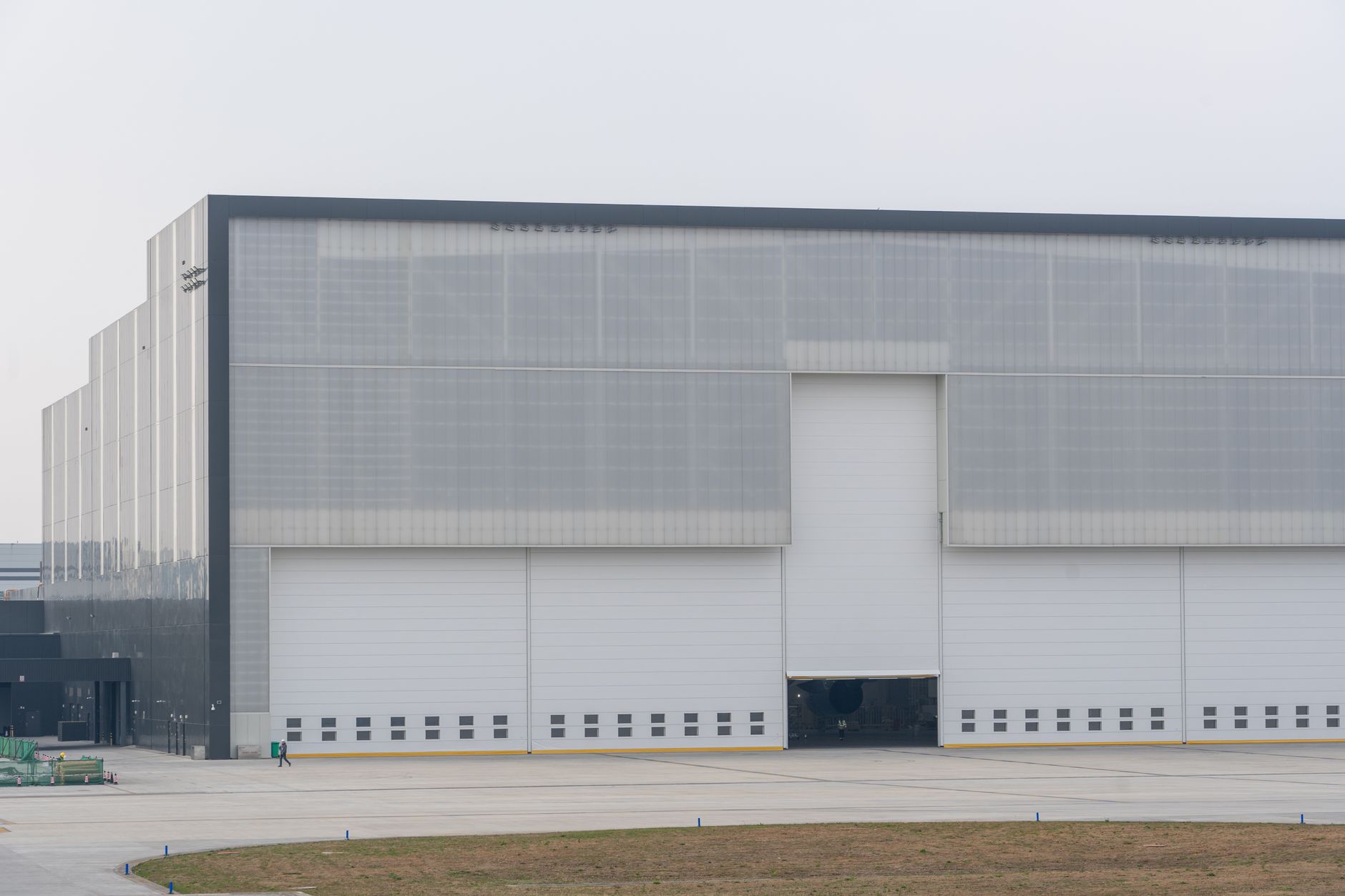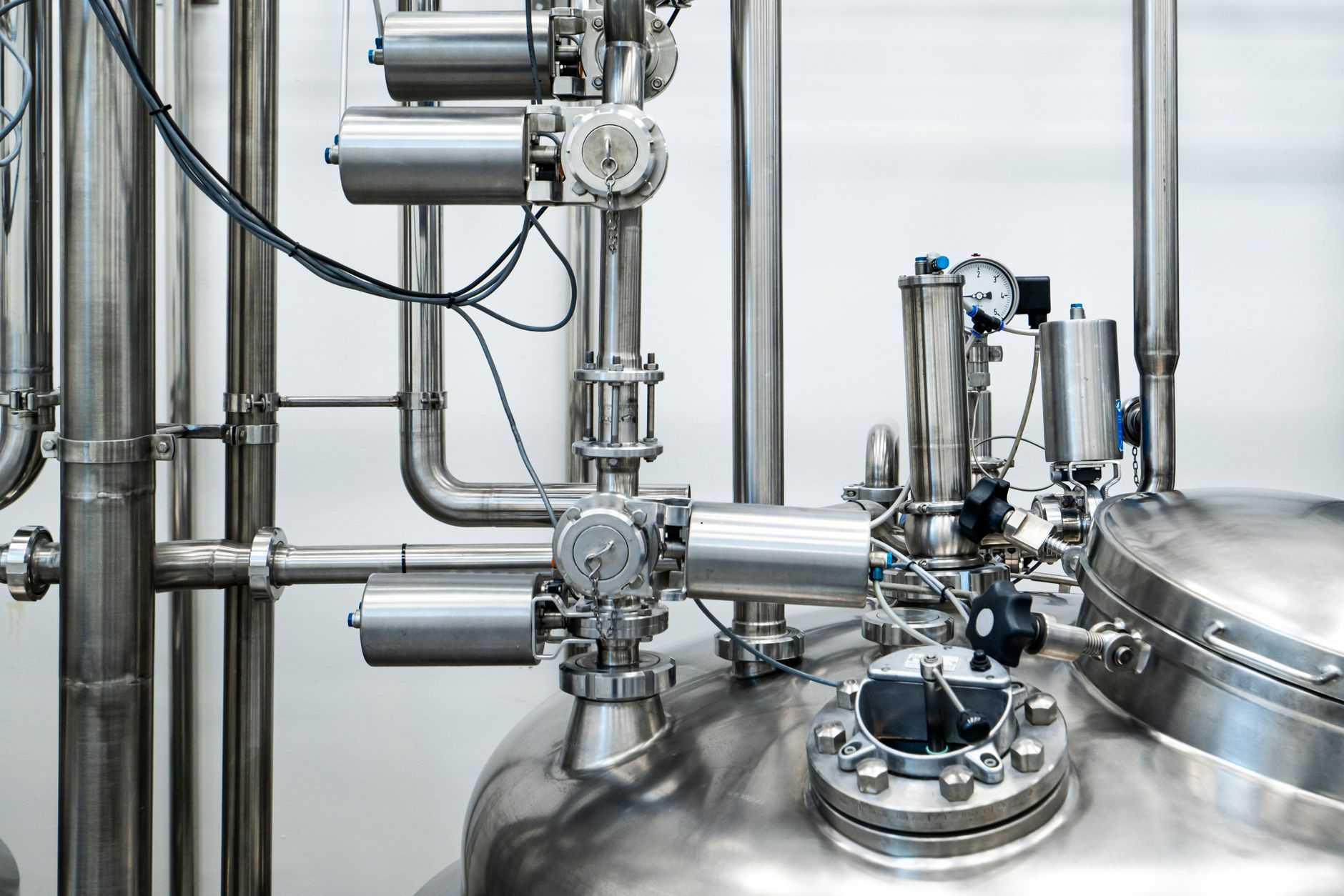
On May 6, 2026, Eli Lilly cut the ribbon on Lilly Lebanon Advanced Therapies, the company's first dedicated genetic medicine manufacturing plant and the first fully completed building on its 600-acre campus in Boone County, Indiana. The same day, Lilly announced another $4.5 billion across two of its three Lebanon sites.
That is the shape of this job. A qualified, operating pharmaceutical plant is running inside a live construction site, with heavy work continuing on two adjacent projects and the total commitment still climbing. If you want to understand how the biggest industrial buildout in the Midwest is actually being delivered, the contract structure is where to look.
What sits on the 600 acres
Lilly's Lebanon campus occupies roughly 600 acres east of I-65, north of the city, as the anchor tenant of Indiana's LEAP Research and Innovation District, a district ultimately planned to exceed 9,000 acres.
Three distinct projects are in play.
Lilly Lebanon API (LP1). The active pharmaceutical ingredient site, budgeted at approximately $3.7 billion. The campus plan covers 12 buildings totaling more than 1.6 million square feet, ranging from a 3,200-square-foot visitors center up to a pair of three-story, 330,000-square-foot manufacturing facilities, plus administrative offices, labs, utilities, warehousing, and a fire station. Lilly has described it as the largest API production site in U.S. history. Opening is scheduled for 2027.
Lilly Lebanon Advanced Therapies (LP2). The genetic medicine plant, opened May 6, 2026.
Lilly Medicine Foundry. A separate $4.5 billion, 1.2 million-square-foot complex across seven buildings, combining research, process development, and advanced manufacturing for small molecules, biologics, and genetic medicines. It broke ground May 6, 2025, and is targeted to be operational in late 2027.
Total committed across the LEAP District is roughly $18 billion, part of more than $21 billion Lilly reports investing in Indiana capital expansion since 2020.
Track how much this grew. The original 2023 campus announcement described up to 500 permanent jobs and up to 1,500 temporary construction jobs. The current project office puts peak craft at approximately 4,500 workers on the API site, with roughly 5,000 temporary construction jobs and peak activity in 2026. Lilly added two buildings to the campus plan in 2024. This is not a project that has been trimmed.
EPCM is not CM at risk, and it changes your contract
Fluor Corporation provides engineering, procurement and construction management on the API project. Fluor booked its first multi-billion-dollar contract for this client in 2023, then booked a second multi-billion-dollar EPCM award in the first quarter of 2025, describing that facility as the largest investment in an active pharmaceutical ingredient facility in U.S. history. Fluor has stated the second contract is reimbursable.
That word carries most of the meaning. Under an EPCM structure:
- The EPCM firm is an agent, not a builder. Fluor engineers the facility, procures equipment and materials, and manages construction. It does not hold the trade contracts.
- The owner holds the trade contracts directly. Lilly contracts with the steel erector, the process piping contractor, the electrical contractor, and so on. Fluor coordinates them.
- The owner carries the risk. There is no guaranteed maximum price wrapping the trades. Cost growth in a package lands on the owner's balance sheet, not the manager's.
- The fee is reimbursable cost plus fee, not a lump-sum contract with contingency buried in it.
Compare that to the two structures most contractors know better. Under CM at risk, the construction manager converts to a GMP and takes cost exposure above it. Under design-build, one entity carries design and construction liability against a fixed price.
Owners choose EPCM when scope is going to move. On a GMP pharmaceutical facility, scope always moves, because process design keeps evolving through construction and regulatory requirements can shift late. Lilly is buying flexibility and paying for it by keeping the risk.
For a trade contractor, that is a meaningfully different job. You are likely contracting directly with the owner rather than a GC, you are being directed by a manager who is not your contractual counterparty, and change management runs through a reimbursable process that documents everything. Your fee structure and your general conditions carry differently on a reimbursable job than a lump-sum one, and it is worth running the actual numbers on it with a markup and margin calculator before you agree to a rate schedule rather than a price.
The second facility uses a different team entirely. Jacobs and Messer Construction managed LP2, the Advanced Therapies plant. Lilly has not publicly named a construction manager for the Medicine Foundry.
The schedule is driven by qualification, not substantial completion
This is the single biggest thing that separates GMP pharmaceutical construction from every other vertical, and it catches contractors who cross over from commercial or even from conventional industrial work.
On a commercial building, you finish, you get a certificate of occupancy, the owner moves in. On a GMP facility, substantial completion is roughly the halfway point of the part that matters. After construction ends, the facility goes through commissioning and qualification: installation qualification, operational qualification, and performance qualification. Every process weld gets documented. Every stainless line gets passivated and tested. Every cleanroom penetration gets verified. Every utility system has to demonstrate it performs within specification, repeatedly, before a single commercial batch can be made.
Practical consequences for the trades:
- Documentation is a deliverable, not paperwork. Weld maps, material traceability certificates, and test records are contract deliverables. Missing documentation stops qualification the same way missing work does.
- Rework carries a qualification penalty. Cutting into a qualified system to fix something means requalifying it.
- Your schedule float is not where you think. Trades that finish "on time" but hand over incomplete turnover packages hold up the whole qualification sequence.
Firms without process-piping and cleanroom experience routinely underbid this documentation load. It is a real cost, and it belongs in your number.
What one mat slab looks like at this scale
The clearest picture of the physical work came from the LP2 foundation. In late October 2023, Messer Construction executed a monolithic mat slab pour for the pharmaceutical manufacturing building: 5,548 cubic yards of concrete, about 24 million pounds, placed continuously over 13 hours by two shifts of self-perform crews, with zero injuries. It took 584 truckloads from five batch plants, roughly 44 trucks per hour, on top of 1,070 tons of rebar. The team modeled truck placement sequences in advance, tracked deliveries and pump turnaround through a purpose-built app, and had a third-party mass concrete specialist monitoring internal temperatures to control curing.
That is one slab, on one building, on a campus with 19 buildings across two projects and a third under construction next door. Multiply the batch-plant demand, the haul route load, and the aggregate consumption by that factor and you understand why regional material logistics is a constraint on a job like this. Contractors sizing similar work can benchmark against our construction cost data.
4,500 craft workers in Boone County
Peak craft on the API project alone is approximately 4,500 workers, with the Medicine Foundry generating over 2,000 more construction jobs and about 400 permanent high-skill roles. Peak activity is 2026, which means the draw is happening right now.
Boone County is not a labor shed that had 4,500 idle pipefitters, electricians, and millwrights waiting. Those workers travel in, and the wage and per-diem pressure spreads outward into the Indianapolis metro market, where every other commercial and industrial contractor is competing for the same trades. If you are bidding unrelated work within an hour of Lebanon over the next two years, that pressure is in your labor number whether you priced it or not. Regional demand trends are tracked in the state construction dashboards.
What is still ahead
The API site opens in 2027 and the Medicine Foundry is targeted for late 2027, which means both are in the phase where mechanical, electrical, process piping, controls, and cleanroom fit-out dominate the manpower curve, and where qualification work begins overlapping construction.
Two things to watch. First, whether Lilly commits again. It has raised this campus repeatedly, most recently by $4.5 billion in May 2026, and another increase would extend the craft draw past 2028. Second, how the staggered turnover holds up. Operating a qualified genetic medicine plant beside active heavy construction imposes real constraints on the remaining work: dust control, vibration, utility tie-ins, road closures, and crane picks all have to respect a facility that is now making product. That is the kind of interface that quietly costs a project weeks, and it is the reason turnover sequencing on a campus like this gets planned years out.