In fiscal year 2025, OSHA issued $201 million in penalties against construction employers — the highest total in the agency's 55-year history. The number reflects both increased enforcement activity and the penalty inflation adjustments that took effect in January 2025, which raised the maximum per-violation penalty to $16,550 for serious violations and $165,514 for willful or repeat violations.
I have spent the last decade helping contractors avoid becoming part of this statistic. The data is clear — the same violations appear on OSHA's top 10 list year after year, which means the same workers keep getting hurt, and the same employers keep failing to protect them.
The Top 10 Most Cited OSHA Construction Standards in 2025
OSHA publishes its most frequently cited standards annually. For fiscal year 2025, the construction industry's top 10 are:
1. Fall Protection — General Requirements (29 CFR 1926.501)
Citations: 7,271 | Penalties: $38.4 million
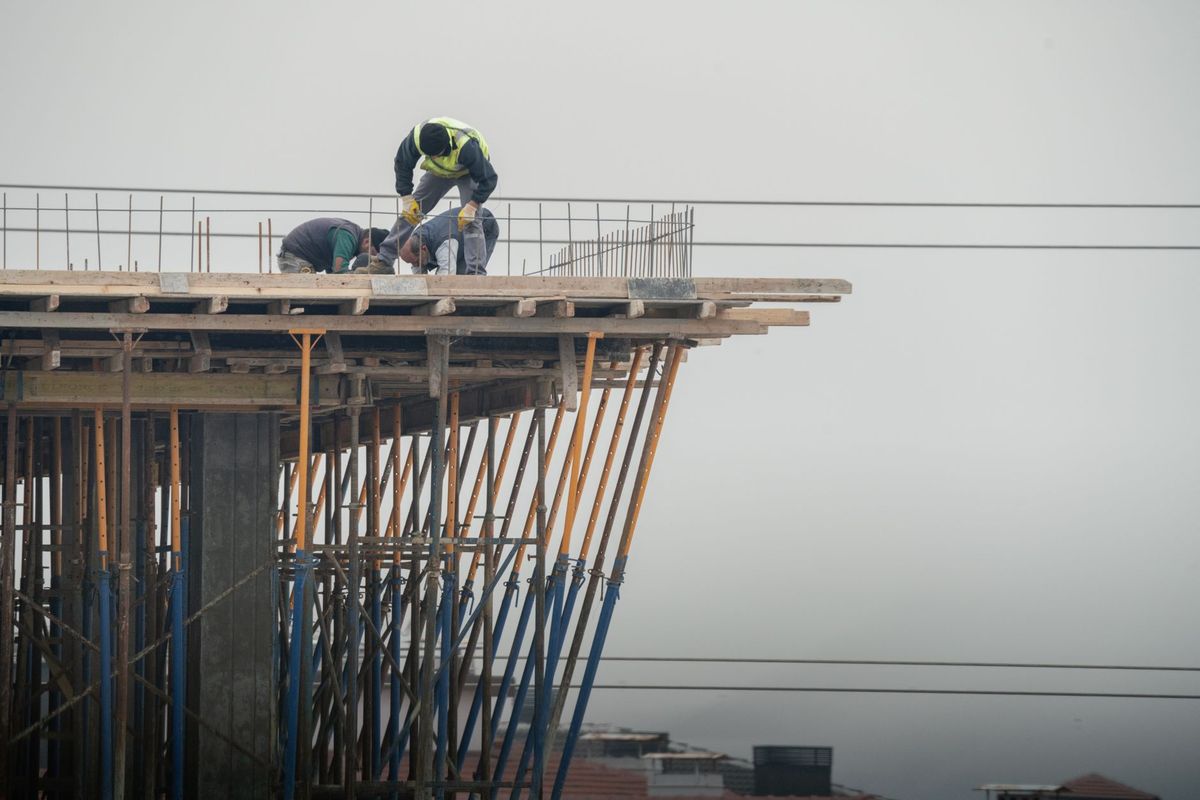
For the 14th consecutive year, fall protection tops the list. OSHA 1926.501 requires that employers provide fall protection for employees working at heights of six feet or more in construction. The standard covers guardrail systems, safety net systems, and personal fall arrest systems.
BLS Census of Fatal Occupational Injuries data shows that falls to a lower level killed 423 construction workers in 2024, accounting for 36.2% of all construction fatalities. The overwhelming majority of these deaths involved workers who were not tied off, were working on surfaces without guardrails, or were using equipment that had not been inspected.
Safety note: If I could eliminate one hazard from every jobsite in America, it would be unprotected leading edges. The fix is known. The equipment is available. The standard is clear. Every one of those 423 deaths was preventable. Every single one.
2. Hazard Communication (29 CFR 1926.59 / 1910.1200)
Citations: 3,947 | Penalties: $14.2 million
HazCom violations center on missing or incomplete Safety Data Sheets, inadequate labeling of secondary containers, and failure to train workers on chemical hazards present on site. Construction workers handle solvents, adhesives, concrete additives, welding gases, and dozens of other substances daily. OSHA requires that SDSs be readily accessible during each work shift — not in a trailer a quarter-mile from the work area.
3. Scaffolding — General Requirements (29 CFR 1926.451)
Citations: 3,184 | Penalties: $16.8 million
Scaffolding violations include incomplete planking, missing guardrails, inadequate access, and failure to have a competent person inspect scaffolds before each shift. OSHA defines a competent person as someone capable of identifying existing and predictable hazards and authorized to take corrective action. On too many jobsites, the "competent person" designation exists on paper but not in practice.
BLS data shows that scaffold-related falls and collapses injured 4,420 construction workers in 2024 and killed 61.
4. Ladders (29 CFR 1926.1053)
Citations: 2,812 | Penalties: $9.6 million
Ladder violations are pervasive because ladders are ubiquitous. The most common citations involve using damaged ladders, failing to extend ladders three feet above the landing surface, loading ladders beyond their rated capacity, and using metal ladders near electrical hazards. OSHA 1926.1053(b)(1) requires that ladders be maintained in a safe condition at all times — a standard that seems obvious until you inspect the ladders on an average residential jobsite.
5. Fall Protection — Training Requirements (29 CFR 1926.503)
Citations: 2,648 | Penalties: $11.3 million
Separate from the general fall protection requirements, 1926.503 mandates that each employee who might be exposed to fall hazards be trained by a competent person qualified in the subject matter. The training must cover how to recognize fall hazards, the procedures for erecting and using fall protection systems, and the proper handling of materials and equipment.
Many employers check the training box during orientation but fail to provide trade-specific or site-specific fall protection training. A roofer's fall hazards are fundamentally different from an ironworker's. Generic training does not meet the standard.
6. Eye and Face Protection (29 CFR 1926.102)
Citations: 2,410 | Penalties: $7.8 million
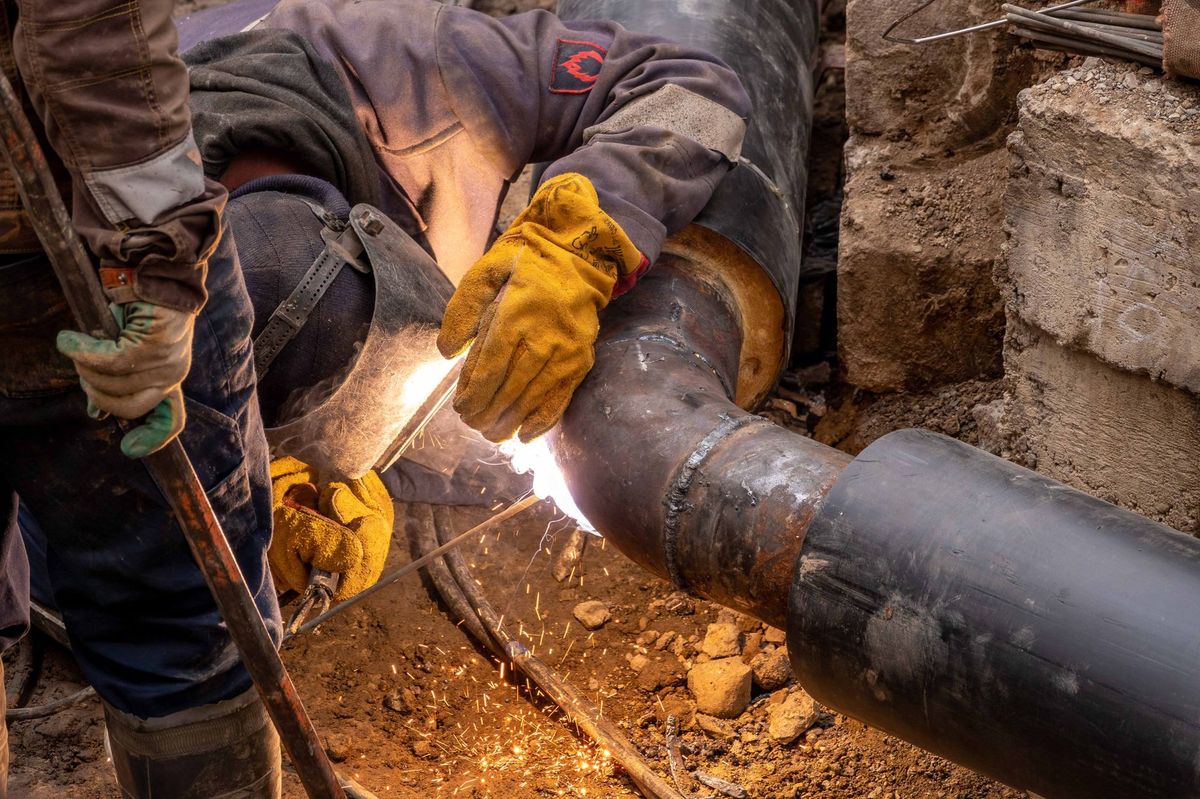
OSHA 1926.102 requires eye and face protection when employees are exposed to hazards from flying particles, molten metal, chemical splashes, or harmful radiation. BLS data reports 18,400 eye injuries in construction in 2024, resulting in an average of 5 lost workdays per incident. Safety glasses cost $3-15. The average eye injury costs $5,200 in medical treatment and lost productivity, according to the National Safety Council.
7. Respiratory Protection (29 CFR 1926.103 / 1910.134)
Citations: 2,186 | Penalties: $8.9 million
Respiratory protection violations increased 22% from 2024, driven by increased enforcement around silica dust exposure on concrete cutting and grinding operations. OSHA's Table 1 for silica compliance (1926.1153) specifies engineering controls and respiratory protection for common construction tasks. Compliance with Table 1 is straightforward — the table literally tells employers which respirator to use for each task. Despite this, violations persist because employers either do not provide respirators or do not ensure proper fit testing.
The silica standard specifically requires initial medical evaluations before an employee is fit-tested for a respirator. Many contractors skip this step, which is both a violation and a genuine health risk — workers with undiagnosed respiratory conditions can be harmed by respirator use itself.
8. Stairways (29 CFR 1926.1052)
Citations: 1,944 | Penalties: $6.1 million
Stairway violations often overlap with fall protection issues. The standard requires handrails on stairs with four or more risers, stair treads that are reasonably slip-resistant, and adequate illumination. Temporary stairways during construction frequently lack one or more of these elements. On multistory residential projects, I regularly find stairs with missing handrails, uneven risers, and debris on treads that create slip hazards.
9. Electrical — Wiring Methods (29 CFR 1926.405)
Citations: 1,782 | Penalties: $7.4 million
As a former electrician, this one is personal. Wiring methods violations include improper use of flexible cords, failure to protect conductors entering boxes, and inadequate grounding. OSHA 1926.405(a)(2)(ii)(J) requires that flexible cords be connected to devices and fittings so that there is no pull on the cord — a requirement violated on virtually every jobsite that uses temporary power.
BLS data shows electrical contact killed 74 construction workers in 2024. Another 2,200 suffered nonfatal electrical injuries requiring medical treatment.
Safety note: Electrical standards exist because electricity does not give second chances. A ground fault that trips a GFCI is an inconvenience. The same fault without GFCI protection can kill. OSHA 29 CFR 1926.404(b)(1) requires GFCI protection for all 120-volt, 15- and 20-ampere receptacle outlets on construction sites. There is no exception, no workaround, and no excuse. Test your GFCIs monthly and before each use.
10. Personal Protective and Life Saving Equipment (29 CFR 1926.95 / 1926.100-107)
Citations: 1,658 | Penalties: $5.4 million
This catch-all category covers hard hats, high-visibility vests, hearing protection, and other PPE requirements. Hard hat violations remain the most commonly cited, particularly on residential sites where the smaller scale creates a false sense of security. OSHA revised the hard hat standard in 2024 to explicitly encourage (but not mandate) Type II helmets that protect against lateral impacts. The industry is slowly transitioning, but the Type I hard hat — which only protects the crown — remains predominant.
Total Penalty Analysis: $201 Million
The $201 million in total construction penalties for fiscal year 2025 breaks down as follows:
- Serious violations: $112 million across 24,600 citations (average penalty: $4,553)
- Willful violations: $52 million across 418 citations (average penalty: $124,400)
- Repeat violations: $29 million across 312 citations (average penalty: $93,000)
- Other-than-serious: $8 million across 6,200 citations (average penalty: $1,290)
The number of willful violations — where OSHA determines that the employer intentionally disregarded the law or was plainly indifferent to worker safety — increased 18% from fiscal year 2024. The average willful penalty of $124,400 reflects OSHA's increasing use of instance-by-instance citations, where each exposed worker constitutes a separate violation.
OSHA conducted 31,400 construction inspections in fiscal year 2025, up from 28,100 in 2024. The increase reflects additional funding from the fiscal year 2025 appropriation and the deployment of 142 new compliance officers specifically trained for construction site inspections.
The Fatality Picture
BLS Census of Fatal Occupational Injuries preliminary data for 2024 (the most recent available) reports 1,168 construction fatalities, a rate of 9.4 per 100,000 full-time equivalent workers. That rate is down slightly from 9.7 in 2023 but remains far above the all-industry average of 3.5 per 100,000.
The "Fatal Four" hazards continue to account for the majority of construction deaths:
- Falls: 423 fatalities (36.2%)
- Struck-by incidents: 198 fatalities (17.0%)
- Electrocution: 74 fatalities (6.3%)
- Caught-in/between: 51 fatalities (4.4%)
Combined, these four hazard categories killed 746 workers — 63.9% of all construction fatalities. OSHA estimates that eliminating the Fatal Four would save 631 workers' lives per year.
Compliance Cost vs. Penalty Cost
The financial argument for compliance is overwhelming. OSHA's own regulatory analysis, supplemented by National Safety Council data, shows:
- Average cost of fall protection equipment per worker: $250-400/year
- Average cost of a fall-related fatality to an employer: $1.29 million (direct costs) plus $4.1 million (indirect costs including litigation, schedule delay, and reputation damage)
- Average cost of OSHA 10-hour training per worker: $25-75
- Average cost of a serious OSHA violation penalty: $4,553
- Average cost of a lost-time injury: $42,000 (workers' comp plus indirect costs)
A contractor with 100 field employees who fully complies with fall protection, PPE, and training requirements spends approximately $65,000 per year above what a non-compliant contractor would spend. One serious fall — just one — costs more than a decade of compliance investment.
The National Safety Council's 2025 injury cost calculator estimates that the construction industry spent $11.5 billion on work-related injury and illness costs in 2024. That figure includes medical expenses, wage replacement, administrative costs, and employer liability. It does not include the incalculable cost of a worker who does not come home.
Most Cited Contractors
OSHA enforcement data is public. The contractors with the largest penalties in fiscal year 2025 include several repeat offenders:
- The largest single penalty — $2.1 million — was assessed against a roofing contractor in Texas for willful violations involving unprotected workers on residential roofs, with nine workers exposed
- A masonry contractor in Florida received $1.8 million in penalties for repeated scaffold safety violations after a worker fell 34 feet
- An electrical contractor in California was cited $1.4 million for trenching violations where workers were in an unshored excavation that exceeded five feet in depth
OSHA's Severe Violator Enforcement Program (SVEP) now includes 412 construction companies — firms that have been cited for willful or repeat violations involving high-gravity serious hazards. SVEP companies are subject to mandatory follow-up inspections and enhanced settlement terms.
Safety note: If you are a subcontractor working for a general contractor who pressures you to cut safety corners, document everything. OSHA's whistleblower protection under Section 11(c) of the OSH Act prohibits retaliation against workers who report safety violations. The wage growth in construction means you have options. No job is worth dying for, and no contract is worth a worker's life.
What Must Change
The same ten violations appear every year because the same root causes persist: inadequate training, cost-cutting on safety equipment, production pressure that overrides safety protocols, and a culture on too many jobsites that treats compliance as a bureaucratic nuisance rather than a life-saving obligation.
OSHA's penalty increases are necessary, but penalties alone will not fix the problem. The $201 million in fines represents a fraction of the construction industry's $2.1 trillion annual output. For many contractors, citations are a cost of doing business rather than a deterrent.
What changes behavior is leadership. The safest contractors I work with share common traits: their owners walk jobsites weekly, their supervisors conduct daily safety briefings that last more than 30 seconds, they empower workers to stop work without fear of retaliation, and they invest in training that goes beyond the minimum OSHA requirements.
Frequently Asked Questions
What is the most common OSHA violation in construction?
Fall protection (29 CFR 1926.501) has been the most cited OSHA standard in construction for 14 consecutive years, with 7,271 citations and $38.4 million in penalties in fiscal year 2025. Falls to a lower level killed 423 construction workers in 2024 and remain the leading cause of death on construction sites. The standard requires fall protection for workers at heights of six feet or more.
How much did OSHA collect in construction penalties in 2025?
OSHA assessed $201 million in total penalties against construction employers in fiscal year 2025, the highest total in the agency's history. Serious violations accounted for $112 million across 24,600 citations, while willful violations totaled $52 million across 418 citations. The average serious violation penalty was $4,553, and the average willful violation penalty was $124,400.
What is the construction fatality rate in the US?
BLS preliminary data for 2024 shows a construction fatality rate of 9.4 per 100,000 full-time equivalent workers, down slightly from 9.7 in 2023 but still nearly three times the all-industry average of 3.5. A total of 1,168 construction workers died on the job in 2024. The "Fatal Four" hazards — falls, struck-by, electrocution, and caught-in/between — accounted for 63.9% of all construction deaths.
Take Action Now
Pull your company's OSHA citation history today — it is public at osha.gov/establishment-search. If you find violations, do not just pay the fine and move on. Conduct a root-cause analysis. Determine whether the same hazard still exists. Retrain the affected crews and document everything. Then call a competent safety consultant and ask them to audit your top three projects before OSHA does. The $201 million in penalties is a warning. The 1,168 deaths are the reason the warning exists.