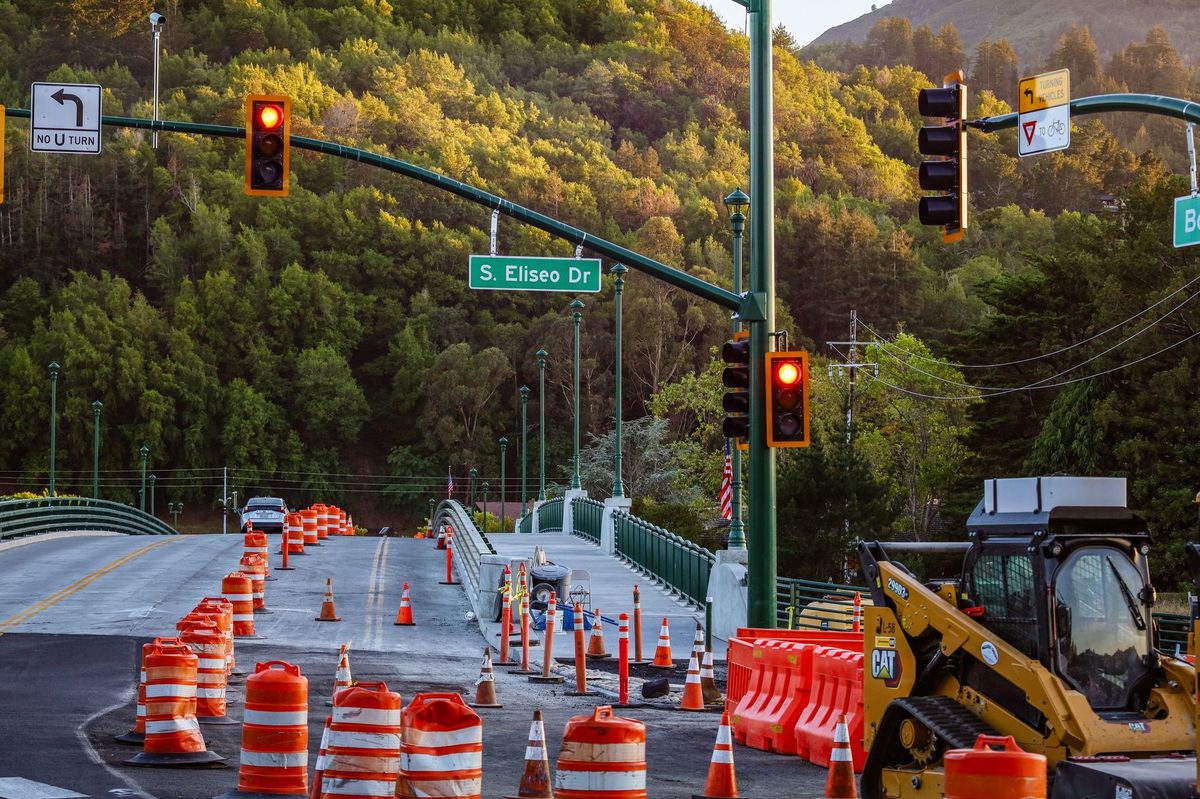
Eight hundred and fifty-seven workers and motorists were killed in highway work zone crashes in 2024. That figure, from FHWA's annual work zone fatality data, is not an abstraction — it is 857 specific people who did not go home. It also represents a 6.2% increase from 2023, reversing a modest improvement trend that safety professionals had documented over the prior three years.
The federal response to that trend is a strengthened regulatory framework that took full effect in 2026. Updated requirements under the Manual on Uniform Traffic Control Devices (MUTCD) 11th Edition and 23 CFR Part 630, Subpart J — the federal work zone safety rule — now impose more explicit requirements on contractors performing federal-aid highway work. Understanding exactly what these regulations demand, what documentation proves compliance, and where the interaction between FHWA and OSHA jurisdiction creates additional obligations is no longer optional for any contractor working on public roads.
857 Deaths, 40,000 Injuries: The Scale of the Problem Justifies the Regulation
The FHWA data is unambiguous about the scale. Beyond the 857 fatalities in 2024, an estimated 40,000 work zone crashes occur annually in the United States, injuring workers and motorists. The total economic cost of work zone crashes — including property damage, emergency response, medical costs, productivity losses, and traffic delay — averages $68,000 per incident, according to FHWA's work zone crash cost estimation model.
That $68,000 average spans enormous variation. A rear-end crash into a parked truck at low speed might cost $12,000 in vehicle damage and minor injury treatment. A high-speed intrusion crash killing a flagging crew member generates liability exposure, workers' compensation claims, OSHA investigation costs, and project delay costs that regularly exceed $3 million in total economic impact.
The distribution of who dies in work zones matters for understanding the regulatory focus. According to FHWA fatality data:
- 69% of work zone fatalities are motorists or vehicle passengers, not workers. This explains why temporary traffic control — managing vehicle behavior through work zones — receives such heavy regulatory emphasis.
- 22% of work zone worker fatalities involve struck-by incidents — workers hit by construction equipment or passing vehicles that intruded into the work zone.
- 9% involve other causes including falls, caught-between incidents, and equipment rollovers.
The struck-by percentage is the most actionable for contractors. It is the category most directly addressed by the regulatory changes taking effect in 2026, specifically through intrusion alarm systems and worker tracking requirements.
23 CFR Part 630, Subpart J: What Federal Law Actually Requires
The foundation of federal work zone safety regulation for construction contractors working on federal-aid highways is 23 CFR Part 630, Subpart J, first enacted in 2004 and substantially updated through FHWA rulemaking finalized in 2023, with full contractor compliance required by January 2026.
Under 23 CFR 630.1008, every federal-aid highway project with construction, maintenance, or utility work must have a Temporary Traffic Control (TTC) plan. The TTC plan is not optional, not informal, and not something that can be developed the morning of mobilization. The regulation specifies that the TTC plan must:
- Identify the specific TTC methods to be used for each phase of work, referenced to the applicable MUTCD standard drawings
- Address each distinct traffic pattern or lane configuration change the project requires
- Specify the type, placement, and spacing of all devices: barricades, cones, drums, signs, arrow boards, and any automated devices
- Be prepared by or under the supervision of a person qualified in TTC through training or experience
- Be available on-site at all times during active work
The cost to develop a compliant TTC plan for a straightforward overlay project runs $8,000 to $25,000 depending on project complexity. For complex Interstate interchange reconstruction projects, specialized TTC engineering firms charge $40,000 to $120,000 for plan development and construction-phase monitoring services. These costs are legitimate direct project costs and should be budgeted as such — not treated as overhead.
Documentation Requirements Under 23 CFR 630.1008
The regulatory text of 23 CFR 630.1008 specifies what the TTC plan must contain. Compliance documentation that will satisfy both FHWA project inspectors and OSHA compliance officers includes:
Pre-construction: Written TTC plan referencing MUTCD Part 6 standards, signed by the responsible engineer or qualified person; traffic control phasing schedule keyed to the construction schedule; device inventory confirming all devices meet crashworthiness standards (addressed below); signed acknowledgment that flagging personnel have received ATSSA-approved flagging training.
During construction: Daily traffic control setup inspection records documenting device condition, placement, and any deviations from the approved plan; night inspection records if Type B or C nighttime operations are conducted; flagging crew sign-in sheets confirming vest compliance (ANSI/ISEA 107-2015 Class 2 minimum for roadway work, Class 3 for flagging in high-speed environments); documentation of any intrusion events or near-miss incidents.
Post-incident: If a vehicle enters the work zone and strikes a worker, equipment, or TTC device, 23 CFR 630.1014 requires the prime contractor to notify the state DOT project engineer within 24 hours and prepare a written incident report within 72 hours. Failure to provide this documentation is an independent regulatory violation separate from whatever OSHA investigation may follow.
Crashworthy Equipment: MASH TL-3 Compliance is Now Mandatory
One of the most significant equipment-related changes in the 2026 regulatory framework is the explicit requirement that all new temporary traffic control devices installed on federal-aid projects meet the MASH (Manual for Assessing Safety Hardware) TL-3 standard. This requirement replaced the older NCHRP Report 350 standard for new purchases effective January 1, 2020, but the transition period for phasing out existing Report 350-compliant inventory expired for most device categories as of the beginning of 2026.
The practical implications are direct. If your equipment inventory includes concrete barrier, portable attenuating units, or end treatments purchased before 2020 under NCHRP Report 350 certification, those devices may no longer be allowable on federal-aid projects. FHWA guidance documents issued in 2024 clarified that Report 350-certified portable concrete barriers and impact attenuators may not be used on new federal-aid contracts awarded after January 1, 2026.
The cost of replacing non-compliant devices is substantial. MASH TL-3 portable concrete barrier (32-inch F-shape or single-slope) costs approximately $85 to $120 per linear foot of barrier. A typical Interstate lane closure requiring 2,000 feet of barrier protection involves $170,000 to $240,000 in equipment exposure — equipment that must meet MASH certification.
Truck Mounted Attenuators (TMAs) are required on all shadow vehicles on Interstate projects. MASH TL-3 compliant TMAs run $28,000 to $55,000 per unit depending on make and model. Contractors who have been renting TMAs from equipment suppliers should verify that rental fleet equipment is MASH-certified; suppliers who provide non-compliant equipment for federal-aid projects expose both themselves and the contractor to compliance liability.
ATSSA Type III barricades, the standard reflective barricade used for lane closures and pedestrian channelization, must display MASH-compliant reflective sheeting meeting ASTM D4956 Type XI or higher performance levels for nighttime visibility.
Automated Speed Enforcement: 14 States, Expanding Fast
Automated speed enforcement (ASE) in highway work zones — speed cameras that issue citations without a traffic stop — is now authorized in 14 states as of early 2026, up from 8 states in 2022. The 14 authorized states are: Maryland, Illinois, Oregon, New York, Pennsylvania, Virginia, Colorado, Georgia, New Jersey, Ohio, Texas, Michigan, Arizona, and Tennessee.
The FHWA work zone safety rule explicitly encourages ASE adoption, and IIJA funding is available to assist states in deploying ASE systems. For contractors, ASE has direct implications for crew safety. FHWA data from Maryland's program — the longest-running work zone ASE program at 25+ years — shows a 62% reduction in excessive speeding (defined as 12+ mph over the posted work zone limit) in camera-equipped zones compared to identical sites without cameras.
In ASE-authorized states, contractors working on state DOT projects should expect contracts to include provisions for ASE deployment at their work zones. The camera systems are typically state-supplied and operated; the contractor's obligation is to maintain the posted work zone speed limit signage, ensure sign placement meets the contract's speed reduction taper requirements, and cooperate with state personnel deploying and maintaining the camera equipment.
What Contractors Must Do in Non-ASE States
In the 36 states that have not yet authorized work zone speed cameras, contractors bear more direct responsibility for managing vehicle speeds through their work zones. MUTCD Part 6 requires that speed reduction tapers begin a minimum of 1/2 mile before the work area on Interstate highways, with advance warning signs posting reduced speed limits at the taper entrance, at the beginning of the buffer zone, and at the work area entry.
Many state DOTs — including those in non-ASE states — now require portable changeable message signs (PCMS) as a contract requirement on Interstate and U.S. route projects, with specific message sequencing for speed alerts. Operators of PCMS equipment on federal-aid projects are required to be trained in MUTCD-compliant message formatting; non-compliant messages (wrong abbreviation format, excessive words per display, improper spacing) are a citation item during contract compliance inspections.
Intrusion Alarm Systems: Required in 23 States for Nighttime Interstate Work
Passive intrusion alarm systems — systems that alert workers when a vehicle enters the protected work area — are now required by state DOT contract provisions for Type B and Type C nighttime work on Interstate highways in 23 states as of 2026.
The classification matters. Type B operations involve moving work without full lane closure (striping, inspection, minor maintenance). Type C operations are stationary nighttime work with lane closures on high-speed roads — the scenario where the combination of reduced visibility, worker fatigue, and high vehicle speeds creates the greatest struck-by risk.
Several technologies meet the intrusion alarm requirement. Radar-based intrusion detection systems trigger audible and visual alarms when a radar sensor detects a vehicle approaching the work area at unexpected speeds or from unexpected directions. Personnel proximity wearables — vests or hardhat-mounted sensors that detect vehicle proximity via radar or LIDAR and alert the worker through vibration or audible tone — are accepted by some state DOTs as an alternative or supplement to zone-based radar systems.
Costs for compliant intrusion alarm systems run $2,800 to $8,500 per deployed work zone, depending on the sensor type and zone size. On Interstate nighttime projects running 90+ nights of work, the cost is readily absorbed. Rental of intrusion alarm systems through equipment suppliers is widely available and is the most common approach for contractors without frequent nighttime work in their project mix.
OSHA and FHWA Dual Jurisdiction: How Compliance Interacts
Highway work zones fall under dual regulatory jurisdiction that creates compliance complexity. FHWA enforces its work zone rules through state DOT contracts — contract provisions, project engineer inspections, and the threat of work stoppage or contract default for uncorrected violations. OSHA enforces through 29 CFR 1926 Subpart G (Signs, Signals, and Barricades) and 29 CFR 1926 Subpart O (Motor Vehicles, Mechanized Equipment) — with citation authority and financial penalties.
The key practical consequence: you can be fully compliant with your state DOT contract requirements and still receive OSHA citations. The two regulatory frameworks overlap but are not identical. OSHA's General Duty Clause (Section 5(a)(1)) can reach work zone hazards not specifically addressed in OSHA's construction standards, including intrusion risk from passing traffic.
OSHA penalty exposure is significant. The maximum penalty for a willful violation is $156,259 per violation as of 2026 (adjusted annually for inflation). A finding that a contractor knowingly allowed workers to perform Type C nighttime work without required intrusion detection systems — after a fatality — would likely support a willful classification.
The interaction is most important during incident investigations. When a struck-by fatality or serious injury occurs in a work zone:
- The state DOT project engineer conducts an immediate incident investigation under the contract requirements of 23 CFR 630.1014
- OSHA opens an inspection under 29 CFR 1903 within 24 hours for any fatality
- Both investigations proceed simultaneously, and findings from one can be used in enforcement proceedings by the other
Contractors who maintain meticulous TTC documentation — setup inspection records, device compliance certifications, training records, daily logs — are in a substantially better position during both investigations than those who kept informal records or none at all.
High-Visibility Vest Requirements
The ANSI/ISEA 107-2015 standard governs high-visibility safety apparel, and its requirements have been incorporated into both MUTCD and OSHA regulations. The key distinctions for highway work:
Class 2 vests (bright background, retroreflective material, but less coverage than Class 3) meet the minimum requirement for workers not directly exposed to traffic.
Class 3 vests (more coverage, larger retroreflective strips, higher visibility) are required for workers in the roadway, flaggers, and all workers on Interstate and U.S. route projects. Class 3 vests must retain their retroreflective performance over time; soiled or faded vests that no longer meet photometric standards should be removed from service. OSHA inspectors have cited contractors for Class 3 vest requirements not being met when work was adjacent to live traffic lanes.
Compliance Documentation That Survives an Inspection
Having the right TTC setup is necessary but not sufficient. You need documentation that proves compliance to both FHWA and OSHA reviewers — documentation that exists before an incident, not after one.
The minimum documentation package for any federal-aid work zone includes: the approved TTC plan with engineer signature and date; a device inventory list with MASH certification records for all crashworthy devices; daily TTC setup inspection records (a simple checklist noting which devices were deployed, their condition, and who verified the setup); flagging crew training certificates (ATSSA flagging certification, valid for 4 years); TMA and shadow vehicle pre-operation inspection logs; and, for nighttime work on Interstates, intrusion alarm system setup and operation logs for each shift.
Store these records in a dedicated job file, not with general project correspondence. In OSHA and FHWA investigations, the speed with which you can produce organized compliance documentation signals the maturity of your safety program — and that perception affects how investigators approach the rest of their review.
The IIJA program has dramatically increased the volume of highway reconstruction work in all 50 states, which means more work zones, more regulatory exposure, and more inspections. State DOTs are increasing contract compliance inspection frequency on IIJA-funded work; FHWA's Federal-Aid program oversight has been expanded with additional inspectors specifically for work zone safety compliance. This is not a regulatory environment that tolerates informal compliance approaches.
Frequently Asked Questions
What is required in a temporary traffic control plan under 23 CFR Part 630?
Under 23 CFR 630.1008, a TTC plan must identify the specific traffic control methods for each work phase, reference the applicable MUTCD standard drawings, specify device type and placement, and be prepared by or under the supervision of a qualified person. The plan must be on-site at all times during active work. For complex Interstate projects, TTC engineering firms typically charge $40,000 to $120,000 to develop a compliant plan.
Are MASH-certified devices required on all highway construction projects?
MASH TL-3 certification is required for all crashworthy devices — concrete barriers, impact attenuators, end treatments — installed on federal-aid projects. Report 350-certified equipment can no longer be used on new federal-aid contracts awarded after January 1, 2026. Non-federal projects may still accept Report 350 devices depending on state requirements, but many state DOTs have adopted MASH requirements for all state-funded work.
What is the maximum OSHA penalty for a work zone safety violation?
The maximum penalty for a willful OSHA violation is $156,259 per violation as of 2026, adjusted annually for inflation. Serious violations carry maximums of $15,625 per violation. Following a struck-by fatality in a work zone, OSHA's inspection will evaluate whether the contractor had adequate intrusion protection, proper TTC setup, and compliant high-visibility apparel — each of which could be cited as a separate violation.
Do automated speed enforcement cameras affect contractor liability?
In the 14 states that authorize work zone ASE, camera deployment is typically a state DOT function, not a contractor responsibility. However, ASE authorization does not eliminate contractor liability for TTC setup. Contractors remain responsible for proper speed reduction signage, proper lane taper configuration, and maintaining the posted work zone speed limits regardless of whether cameras are present.
What training is required for flagging crews?
Flaggers on federal-aid highway projects must be trained in TTC methods, including proper flag/stop-slow paddle use, hand signals, vehicle stopping distances, and emergency procedures. ATSSA's flagger certification course is the most widely accepted credential; certificates are valid for 4 years. State DOTs vary in whether they require ATSSA specifically or accept equivalent training. Class 3 ANSI/ISEA 107-2015 high-visibility vests are required for all flagging personnel.
Your Action Item for This Week
Audit your current device inventory against the MASH TL-3 compliance requirement before your next federal-aid project mobilizes. Pull your equipment list and identify every piece of crashworthy TTC equipment — portable concrete barriers, impact attenuators, end treatments — and confirm each one carries a MASH certification, not just NCHRP Report 350. Equipment suppliers can provide MASH certification documentation for rental fleet items upon request. Any Report 350-only items need to be flagged, priced for replacement, and removed from your federal-aid project deployment list before they appear on a contract compliance inspection and generate a deficiency finding.