Apartment construction cost hit $150,000 per unit nationally in 2026, with the range spanning $110,000-$140,000 for garden-style (three-story walk-up) residential in secondary markets to $250,000-$350,000 per unit for high-rise urban residential with amenities. I've built or managed 1,200+ apartment units in the last five years across three states, and I've watched this cost climb 24% since 2021, driven by steel and concrete inflation, labor tightening on multi-family projects, and owner demand for higher-quality finishes and amenities.
Here's the breakdown of apartment construction cost by building type, what drives the per-unit number, and how to estimate residential projects when land, structure, and amenity scope dominate your estimate.
Apartment Building Types and Per-Unit Costs
Apartment construction cost varies dramatically based on building configuration, height, and amenity scope.
Garden-Style / Walk-Up Residential (3-4 Stories)
Garden-style apartments (three to four-story wood-frame construction) run $110 to $140 per unit in secondary markets and $140-$180/unit in metropolitan areas. A 100-unit garden-style complex (four buildings, 25-30 units each) costs $11 to $18 million total. The buildings are simple wood-frame with basic finishes, modest amenities (pool, clubhouse), and structured parking or surface lots.
Cost breakdown for a 100-unit garden-style complex at $130,000/unit ($13 million total):
- Land acquisition and site prep: $1.5-$2.5 million (11-19%)
- Building structure (wood frame, roof, envelope): $3.5-$5 million (27-38%)
- MEP systems (HVAC, electrical, plumbing): $1.8-$2.8 million (14-21%)
- Interior finishes (flooring, paint, fixtures): $1.8-$2.8 million (14-21%)
- Parking (surface or basic structure): $800,000-$1.5 million (6-11%)
- Amenities (pool, clubhouse, landscaping): $800,000-$1.2 million (6-9%)
- Permits, testing, contingency: $700,000-$1.2 million (5-9%)
Garden-style construction is the most cost-efficient residential format because wood-frame structure is inexpensive, interior layouts are efficient, and amenity scope is modest.
Mid-Rise Residential (5-8 Stories)
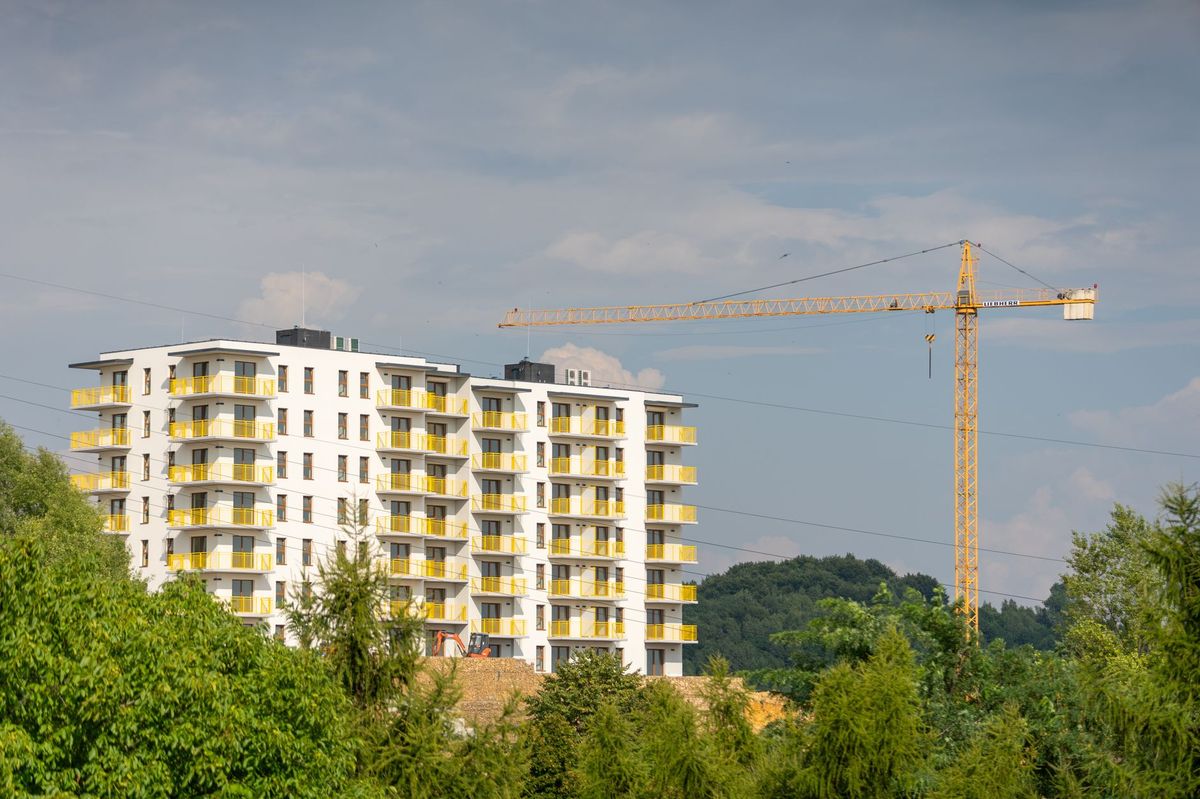
Mid-rise apartments (five to eight-story concrete or steel-frame construction) run $140 to $200 per unit depending on finish level and amenity scope. A 150-unit mid-rise complex costs $21 to $30 million total. Mid-rise allows higher density on constrained urban sites and typically includes premium amenities (fitness center, rooftop deck, concierge) and higher-quality finishes than garden-style.
Cost breakdown for a 150-unit mid-rise at $170,000/unit ($25.5 million total):
- Land acquisition and site prep: $2-$3.5 million (8-14%)
- Building structure (concrete frame, fireproofing): $5.5-$8.5 million (21-33%)
- MEP systems (HVAC, electrical, plumbing): $3-$4.5 million (12-18%)
- Interior finishes (flooring, paint, fixtures): $3-$4.5 million (12-18%)
- Parking (structured garage): $2-$3.5 million (8-14%)
- Amenities (fitness, lounge, outdoor space): $1.2-$1.8 million (5-7%)
- Soft costs (permits, contingency, testing): $1.8-$2.7 million (7-11%)
Mid-rise construction is more expensive per unit than garden-style because of concrete/steel structure, multi-level mechanical systems, and parking structure costs.
High-Rise Urban Residential (10+ Stories)
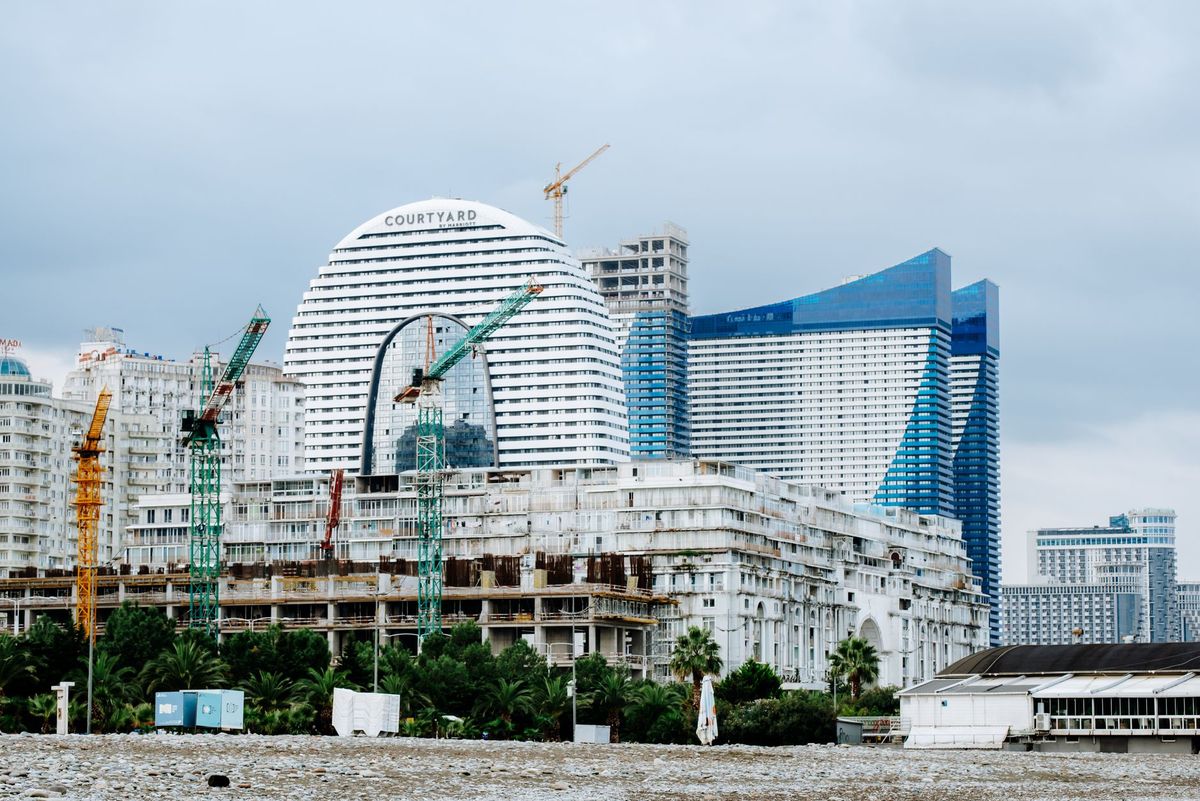
High-rise apartments in dense urban cores run $200 to $350+ per unit depending on market tier and finish level. A 200-unit high-rise in a primary market costs $40 to $70 million total. High-rises are typically mixed-use (retail below, residential above), require sophisticated mechanical systems, and include premium amenities and finishes.
Cost breakdown for a 200-unit high-rise at $250,000/unit ($50 million total) in a primary market:
- Land acquisition (expensive urban sites): $5-$8 million (10-16%)
- Building structure (steel frame, fireproofing): $10-$15 million (20-30%)
- MEP systems (distributed mechanical, redundancy): $5-$8 million (10-16%)
- Interior finishes (premium materials, custom features): $7-$10 million (14-20%)
- Parking (structured garage, often below grade): $4-$6 million (8-12%)
- Amenities (premium fitness, lounge, outdoor space): $2-$3 million (4-6%)
- Soft costs (permits, contingency, testing): $4-$6 million (8-12%)
High-rise construction is most expensive per unit because of land cost, structural complexity, distributed mechanical systems serving 10+ floors, premium finishes, and structured parking.
Construction Cost Breakdown by Component
A detailed cost analysis for a 150-unit mid-rise residential complex at $170,000/unit illustrates typical budget allocation:
| Component | Cost Per Unit | Percentage of Total |
|---|---|---|
| Land acquisition | $13,000-$23,000 | 8-14% |
| Structural frame | $37,000-$57,000 | 21-33% |
| MEP systems (HVAC, electrical, plumbing) | $20,000-$30,000 | 12-18% |
| Interior finishes | $20,000-$30,000 | 12-18% |
| Parking (parking cost per unit) | $13,000-$23,000 | 8-14% |
| Amenities and common areas | $8,000-$12,000 | 5-7% |
| Soft costs and contingency | $12,000-$18,000 | 7-11% |
Average per unit: $123,000 to $193,000 ($155,000 average).
What Drives Apartment Cost Per Unit
Five factors control whether an apartment lands at $110,000/unit or $250,000/unit.
Building height and structural system. Garden-style is wood-frame (cheapest). Mid-rise is typically steel frame or post-tensioned concrete. High-rise is steel or concrete with specialized fireproofing and life-safety systems. Each step up in height adds structural cost per unit because the building must support higher loads, requires more sophisticated mechanical distribution, and increases fireproofing complexity.
A 100-unit garden-style at 3 stories costs $15,000-$25,000 per unit for structure. A 100-unit mid-rise at 6 stories costs $35,000-$50,000 per unit for structure. A 100-unit high-rise at 12 stories costs $50,000-$70,000 per unit for structure.
Apartment unit size and layout. A 550-SF one-bedroom costs less to finish than a 850-SF two-bedroom because of reduced MEP runs, fewer fixtures, and less flooring/paint area. Cost scales roughly with unit size. A 550-SF unit costs $8,000-$12,000 to finish. An 850-SF unit costs $12,000-$16,000. On a 100-unit building, the difference between average 600-SF units and 900-SF units is $500,000+ of finishing cost.
Developers control this variable through unit mix decisions (percentage of 1-bed, 2-bed, 3-bed units).
Parking ratio and structure type. Parking is a significant cost variable. A garden-style community with surface parking costs $1,500-$2,500 per space. A mid-rise with structured parking costs $15,000-$25,000 per space. A high-rise with underground parking costs $35,000-$60,000 per space. A development built at 1.0 spaces per unit (100 parking spaces for 100 units) incurs that full per-space cost. A development at 0.6 spaces per unit reduces parking cost proportionally.
Parking cost per unit ranges from $1,500-$2,500 (surface lot) to $35,000-$60,000 (underground in high-rise).
Amenity scope and finishes. Basic amenities (pool, small clubhouse) cost $3,000-$5,000 per unit. Premium amenities (fitness center, multiple lounges, rooftop deck, concierge, high-end outdoor space) cost $8,000-$15,000 per unit. On a 150-unit building, the difference is $750,000-$1.5 million of cost variation.
Unit finishes also vary. Basic finishes (laminate countertops, vinyl flooring, Builder-grade cabinets) run $6,000-$8,000 per unit. Mid-level finishes (Quartz counters, wood-look tile, semi-custom cabinets) run $8,000-$12,000. Premium finishes (granite/marble, hardwood, custom cabinetry, stainless appliances) run $13,000-$18,000.
Geographic market and labor cost. The single biggest driver is labor cost. High-cost coastal markets (California, New York, Boston, Seattle) see residential construction at $200,000-$350,000 per unit. Moderate-cost Sunbelt markets (Austin, Nashville, Denver, Charlotte, Phoenix) see $140,000-$180,000 per unit. Low-cost secondary markets (Memphis, Little Rock, Oklahoma City, Wichita) see $100,000-$130,000 per unit.
Labor cost premium is 30-50% in high-cost markets versus 15-25% in moderate markets versus low-cost markets.
Regional Cost Variation
Apartment construction costs vary 50-70% between regions based primarily on labor cost and land value.
High-cost primary markets (50-70% above national benchmark): San Francisco, New York, Boston, Seattle, Los Angeles, Washington DC. Labor cost is the dominant factor — trades at $100-$140/hour fully-burdened are common. Land value in urban cores is also significantly higher. A $150,000-unit national benchmark might cost $220,000-$240,000 in these markets.
Moderate-cost Sunbelt and secondary metros (at or slightly above national benchmark): Austin, Nashville, Denver, Charlotte, Phoenix, Dallas, Atlanta. Competitive construction markets with adequate labor supply. $140,000-$180,000 per unit is typical.
Low-cost secondary markets (20-35% below national benchmark): Memphis, Little Rock, Tulsa, Wichita, Boise, parts of Midwest. Lower labor costs and abundant land make development significantly cheaper. $100,000-$130,000 per unit is typical.
Timeline from Land to Certificate of Occupancy
Apartment projects follow this typical schedule:
- Site acquisition and market analysis: 2-4 months
- Design and permitting: 4-8 months (varies by jurisdiction)
- Financing and capital commitment: 2-4 months (running parallel with permitting)
- Ground lease and utility installation: 1-3 months
- Foundation and structural: 4-8 months (depends on height)
- MEP rough-in: 3-6 months (parallel with structure)
- Interior construction: 3-6 months
- Punch list and operational prep: 1-2 months
Total: 18-32 months from acquisition to occupancy. High-rises can extend to 36+ months due to structural complexity.
Financing Impact on Cost Structure
Apartment construction financing typically uses construction loans (interest-only during construction, refinance to permanent loan at stabilization). Construction loan terms affect project timeline and cost:
- Typical construction loan is 1-2% above prime rate plus 2% loan fees
- Draw schedule requirements often require holdback of 10% until completion
- Extended timelines due to permitting or construction delays compound interest carrying costs
- A 100-unit apartment project with 18-month construction timeline at 7.5% construction loan rate costs $400,000-$600,000 in carried interest if there are 4-6 month delays.
Your Action Item for This Week
If you're estimating an apartment project, confirm four things with the developer: (1) building type (garden-style, mid-rise, high-rise) — costs differ dramatically, (2) unit count and mix (number of 1-bed, 2-bed, 3-bed) — unit size drives finishing cost, (3) amenity scope — premium amenities add $5,000-$10,000/unit, (4) parking ratio and structure type — parking costs $1,500-$60,000/unit depending on format. Use $150,000/unit as your baseline for a 150-unit mid-rise in a moderate market. Compare your estimate against broader commercial construction cost benchmarks. Deduct 25-35% for garden-style. Add 40-70% for high-rise. Add 20-30% if in a high-cost coastal market; subtract 20-30% if in a low-cost secondary market. Use the concrete calculator to estimate structure material for your specific building height and unit count. Then schedule a detailed conversation with your structural, MEP, and finishing crews about the specific building program — unit count, height, parking scope all affect their estimates.
Frequently Asked Questions
What is the average cost per unit for apartment construction?
Apartment construction cost averages $150,000 per unit nationally in 2026. Garden-style residential costs $110,000-$140,000/unit. Mid-rise costs $140,000-$200,000/unit. High-rise costs $200,000-$350,000/unit. Cost varies significantly by building type, market labor cost, and amenity scope.
What is the biggest cost component in apartment construction?
Building structure (foundation, frame, roof, envelope) represents 20-33% of total cost. MEP systems (HVAC, electrical, plumbing) represent 12-18%. Interior finishes represent 12-18%. Parking represents 6-14% depending on structure type. Land and soft costs represent the remainder.
How much does it cost to build a single apartment unit?
Total construction cost is $110,000-$350,000 per unit depending on building type and market. This includes the unit interior, proportional share of building structure, MEP, parking, and amenities. It excludes land and soft costs (architecture, financing, permitting).
Why is apartment construction more expensive than office construction?
Apartments include finishes in every unit (flooring, paint, cabinets, fixtures) — 12-18% of cost. Office is typically shell + core with tenant-specific finishes added later. Apartments also require more amenities (fitness, lounges, outdoor space) and parking infrastructure. Residential buildings typically have 0.6-1.0 parking spaces per unit; office buildings might have 0.3-0.5.
How much does parking add to apartment cost?
Parking cost ranges from $1,500-$2,500 per space for surface lots to $15,000-$25,000 for above-grade structure to $35,000-$60,000 for underground. A 150-unit building at 0.8 spaces per unit (120 spaces) costs $180,000-$7.2 million in parking depending on structure type. Per-unit parking cost ranges from $1,500 (surface) to $48,000 (underground high-rise).
What finishes do apartments typically include?
Standard finishes include vinyl or tile flooring, painted drywall, builder-grade cabinets, laminate countertops, and basic appliances. Premium apartments include hardwood or high-end tile, semi-custom cabinetry, quartz or granite countertops, and stainless appliances. Finish level typically represents $6,000-$18,000 per unit of total cost.
How do I estimate a specific project?
Get the project program (building height, unit count, unit sizes, parking count, amenity list). Use $150,000/unit as baseline for mid-rise moderate market. Adjust by building type: garden-style at -30%, high-rise at +50%. Adjust by market: high-cost +30%, low-cost -25%. Adjust by amenities: premium amenities +$8,000/unit. Then engage your structural, MEP, and finishing crews with the specific program to refine estimates. Unit mix (percentage of 1-bed, 2-bed) affects finishing cost significantly.