In Q1 2024, single-family starts outnumbered multifamily at a ratio of 3.8 to 1. In Q1 2026, that ratio is 2.5 to 1 — and it's still compressing. That's the number nobody on the residential side is talking about loudly enough, and it has real implications for where the work is and who's getting paid.
Here's the deal: multifamily construction starts hit 412,000 units on a seasonally adjusted annual rate in Q1 2026, according to Census Bureau data. Single-family came in at 1,031,000 SAAR for the same period. Both numbers are positive, but the trend line tells the real story. Multifamily is gaining ground, and three consecutive quarters of outperformance isn't noise — it's a structural shift.
If you're a residential contractor whose entire book of business is SFR, this is worth paying attention to. The contractors who figure out multifamily work now are going to have access to a much bigger pipeline over the next 18 to 36 months.
Why Multifamily Is Winning the Starts Race
Several forces are converging to push multifamily starts higher relative to single-family. None of them are going away quickly.
Land Cost Economics Are Forcing the Math
Land cost per multifamily unit in Sun Belt markets — Phoenix, Dallas, Charlotte, Atlanta — dropped 9 to 12 percent from the 2024 peak, but it's still high enough that single-family detached doesn't pencil in infill and near-urban locations. When you can spread a $1.2 million land cost across 60 units instead of 8 lots, the unit economics of a mid-rise apartment are dramatically better than a scattered SFR development at current land prices.
This is the same logic that's been driving townhome construction surges of 23% in recent quarters. But multifamily takes the density argument further: in urban-adjacent locations, mid-rise and high-density wood frame is the only product category that pencils at current land costs.
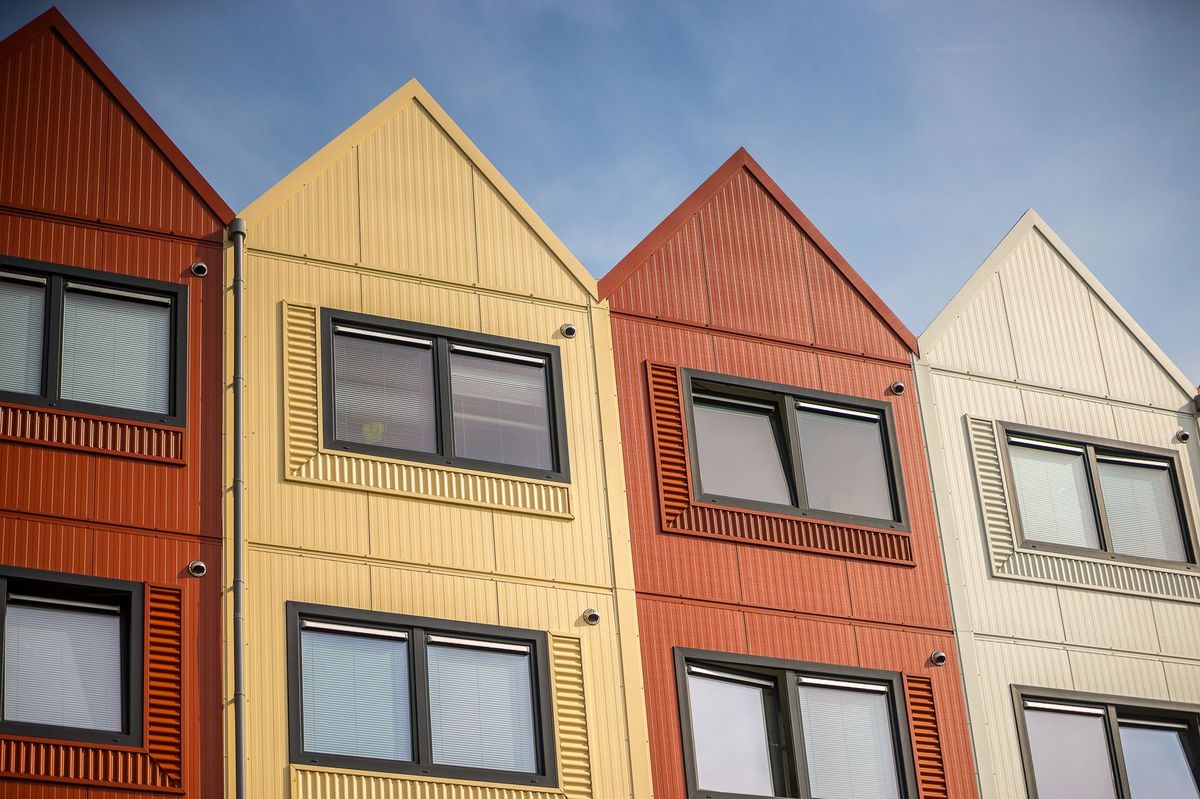
Type III-A wood frame mid-rise — five stories over podium — is running $195 to $240 per square foot in Sun Belt markets right now. Concrete podium construction adds another $65 to $80 per square foot, bringing the total to $260 to $320. These aren't cheap projects, but the revenue side (at $1,400 to $1,800 per month per unit in Phoenix and $1,600 to $2,200 in Charlotte) supports the construction cost when land is shared across 150 to 250 units.
14 States Passed Upzoning Legislation in 2025
Zoning reform is accelerating. Fourteen states passed upzoning legislation in 2025 alone, removing single-family-only zoning restrictions and allowing higher-density residential in corridors and near transit. This isn't just a coastal phenomenon — states like Montana, Tennessee, and Arizona are among the 2025 adopters, reflecting how broadly the housing affordability pressure has spread.
The practical effect is that land parcels that were previously limited to 4 to 6 single-family units can now support 20 to 50 multifamily units. Developers who've been sitting on land waiting for zoning relief are now pulling permits, and that permitting activity is flowing into the starts data you're seeing in Q1 2026.
This is directly connected to the multifamily permit declines we saw earlier — the 18% drop in 2024 was a pause, not a permanent reversal. Permits bottomed and are now recovering as zoning loosens and financing improves.
The Build-to-Rent Surge Is a Separate Category Worth Watching
Build-to-rent single-family construction — purpose-built SFR homes designed from the start as rental product — surged 28% to 68,000 starts in Q1 2026. This is a category that sits between traditional multifamily and conventional SFR, and it's creating work in specific markets at a scale that most residential contractors haven't fully registered.
The BTR concentration is tight: Phoenix leads with 12,400 BTR starts in Q1 2026, followed by Dallas at 11,200, Charlotte at 8,800, and Atlanta at 8,100. If you're in one of these four markets and you're not doing BTR work, you're missing a pipeline that's growing at 28% annually.
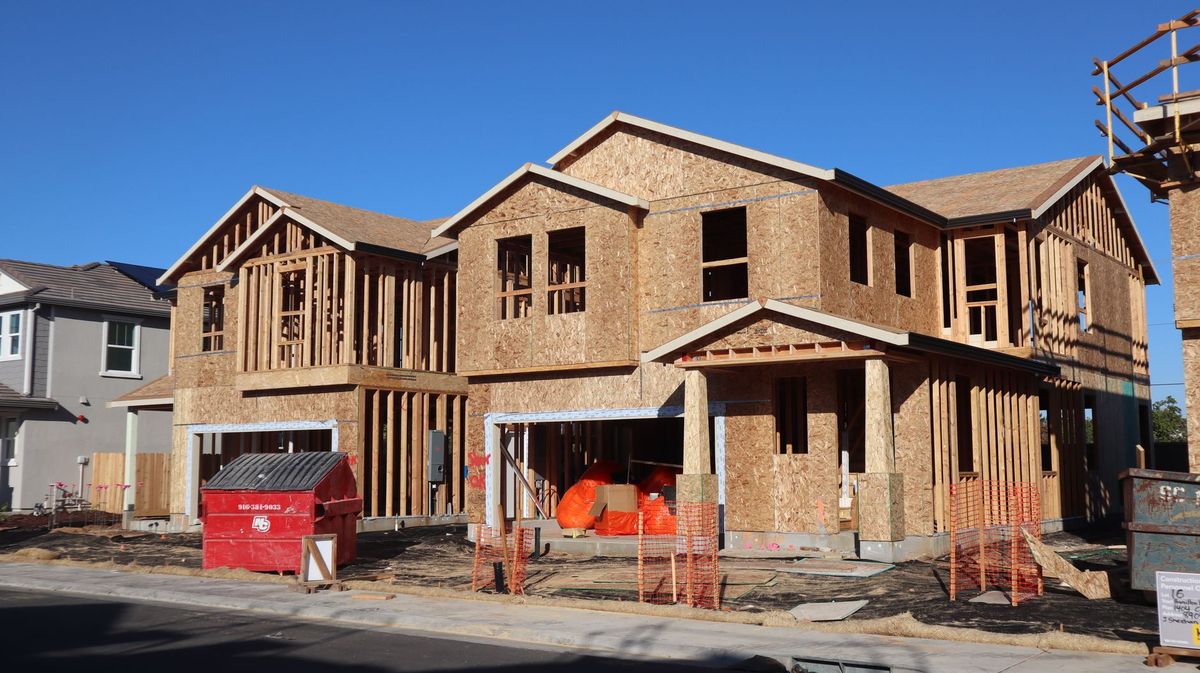
BTR construction looks like standard SFR from a trade execution standpoint. Framing is conventional, MEP rough-in follows normal residential code, finishes are typically Spec B-grade. The difference is who you're building for: institutional capital (Invitation Homes, Progress Residential, and a dozen private equity sponsors) with standardized product specs and high-volume expectations. These clients pay on time, provide complete construction documents, and want builders who can replicate the same house 40 to 80 times on a master-planned community. If your SFR crews can handle repetition, BTR is a natural next market.
Affordable Housing LIHTC Allocations Are Running Hot
The affordable multifamily market is worth 95,000 units of production in 2026, backed by $11.2 billion in Low Income Housing Tax Credit allocations. LIHTC projects are slower to develop — from initial application to groundbreaking is typically 18 to 30 months — but once they're funded, they build. State housing finance agencies are allocating at near-record pace, and the pipeline of projects moving from financing to construction is substantial.
Senior living starts are also up 12% year-over-year, driven by demographic math that doesn't need much explanation. The leading edge of the Baby Boomer generation is now 80 years old, and the 75-and-over population will grow faster over the next decade than any other age cohort in American history. Senior living construction — independent living, assisted living, memory care — is tracking that demographic curve.
What the Work Actually Looks Like
If you've spent your career on SFR and you're considering moving into multifamily, here's the honest breakdown of how the work differs.
Mid-Rise Framing Is a Different Animal
A 200-unit mid-rise takes 22 months from groundbreaking to certificate of occupancy. That's a completely different cash flow cycle than a 90-day single-family build. Your framing crew will be on one job for a long time, which is actually good from a logistics standpoint — no constant mobilization and demobilization — but requires a different kind of project management.
Framing crew hourly rates in multifamily are running $42 to $58 depending on market, which is consistent with SFR rates. But the productivity metrics are different. On a Type III-A stick-frame floor plate, an experienced multifamily framing crew will turn 8,000 to 12,000 square feet of floor per week. The layout is repetitive, which helps — once you've framed Level 2, Level 3 is a copy. But the coordination with podium concrete, elevator shaft work, stairwell continuity, and corridor fire-rated assemblies requires foremen who understand multifamily-specific details.
MEP Rough-In Is Where the Big Money Is
On a 200-unit building, MEP rough-in runs $3.8 million to $6.2 million. That's the range from a basic apartment building in a lower-cost market to a higher-spec project in a major metro. The mechanical side is dominated by corridor and common area HVAC (central plant versus individual PTAC units is a major cost variable), and the electrical side has grown with EV-ready and solar-ready code requirements that are being incorporated into new projects even ahead of state mandate.
Plumbing on a multifamily project concentrates fixtures vertically — a 200-unit building might have 400 bathrooms stacked in 20 plumbing chases. Chase layout efficiency and rough-in sequence discipline are critical; a mistake on Level 3 that forces re-work cascades through six more floors. MEP subs who specialize in multifamily develop a production rhythm that's genuinely different from custom residential.
How to Break Into Multifamily as an SFR Contractor
The entry point for most SFR contractors is BTR or townhome work, not mid-rise. Here's the practical path:
Start with a BTR general contractor relationship. BTR GCs — national firms like Century Communities, Smith Douglas Homes, and regional operators — are always looking for subcontractors who can handle volume. Your SFR framing, plumbing, and electrical crews don't need significant retraining for BTR work. The product specs are standardized and the GC provides detailed take-offs.
Once you have BTR relationships and a track record, approach affordable housing developers and nonprofit housing organizations building 40 to 80 unit developments. These projects are less competitive than market-rate multifamily, more mission-driven, and a good proving ground for the mid-rise skills your crews need to develop.
The IIJA infrastructure spending pipeline has also created associated mixed-use and transit-oriented development opportunities near infrastructure corridors. Affordable housing developers are deliberately targeting transit-adjacent sites, so IIJA project zones are fertile ground for multifamily subcontractor relationships.
Where the Work Is Concentrated
Not all multifamily markets are equal. Q1 2026 starts are heavily concentrated in specific metros.
Sun Belt metros: Phoenix, Dallas-Fort Worth, Charlotte, Atlanta, and Austin continue to drive national multifamily volume. Land cost declines of 9 to 12% from the 2024 peak have restored feasibility for projects that went on hold 18 months ago. Phoenix alone accounts for a disproportionate share of BTR starts nationally.
Secondary Midwest metros: Columbus, Indianapolis, and Kansas City are seeing multifamily development supported by strong job growth in logistics, tech, and healthcare, combined with land costs that are 40 to 60% lower than Sun Belt primaries.
East Coast urban infill: Boston, Washington D.C., and Philadelphia are producing mid-rise and high-rise multifamily at a pace driven by upzoning and transit-oriented development policies. Concrete podium and steel construction dominates in these markets — a different skill set from wood frame — but the volume is real.
If you're considering chasing multifamily work in a new market, look at where BTR starts are concentrated first. That's your fastest entry point, and the Phoenix-Dallas-Charlotte-Atlanta corridor is where BTR operators are most active right now.
Frequently Asked Questions
What's the difference between Type III-A and Type V wood frame for multifamily? Type III-A (also called "three over one" or five-story wood frame) uses non-combustible exterior walls with combustible framing, allowing five-story wood frame construction over a concrete podium. This construction type is how you build 150-to-250 unit mid-rise apartments in most Sun Belt markets. Type V-B is fully combustible construction, limited to three stories, and used for smaller multifamily projects like garden apartments and smaller affordable housing. The difference in cost between Type V and Type III-A on a 200-unit project can be $2 to $5 million depending on market, but Type III-A allows significantly more units per acre, which makes the land math work on higher-value sites.
How do I bid multifamily work if I've never done it before? The biggest bidding mistake SFR contractors make on multifamily is underestimating the coordination complexity. On a 200-unit project, the number of RFIs, submittals, and coordination meetings is five to ten times what you'd see on a custom home project of equivalent dollar value. Factor a minimum 12% overhead and profit on multifamily versus 8 to 10% on SFR to account for the coordination burden. Get a mentor — find an experienced multifamily PM who's willing to consult, even for a few thousand dollars — before submitting your first multifamily bid.
Is build-to-rent just a hot market trend or is it structural? BTR is structural. The U.S. homeownership rate for adults under 35 has dropped from 43% in 2005 to 37% in 2025, and the institutional appetite for single-family rental product has grown commensurately. Invitation Homes, AMH (American Homes 4 Rent), and a dozen private equity-backed operators are building BTR as a permanent asset class, not a cyclical trade. The 28% growth in BTR starts in Q1 2026 reflects continued capital commitment to the sector, not a speculative blip.
What are the biggest profit risks on a multifamily project versus SFR? The two biggest profit destroyers on multifamily are change order scope creep and schedule overruns triggered by trade coordination failures. On a 22-month project, a two-month schedule slip can cost a GC $400,000 to $800,000 in extended general conditions. For subs, delayed starts on subsequent phases directly impact your crew utilization. The second risk is MEP coordination — on complex mid-rise projects, BIM clash detection between mechanical, electrical, and plumbing systems is standard practice. If you're not using BIM or don't have a relationship with a sub who does, you'll find the conflicts in the field instead of on paper, and that's expensive.
How much does affordable housing (LIHTC) work pay compared to market-rate multifamily? LIHTC projects typically pay 5 to 15% less than market-rate multifamily on a per-square-foot basis, reflecting the tighter developer budgets that come from tax credit financing constraints. However, LIHTC projects have guaranteed financing from day one (you don't start construction without the credits and equity in place), which eliminates the financial risk of a market-rate project where the developer might pull the plug if lease-up projections soften. For subcontractors, LIHTC work trades some margin for certainty — and in an uncertain market, that trade-off is often worth making.
Your Action Item for This Week
Pull up permit data for your MSA on the Census Bureau's Building Permits Survey (census.gov/construction/bps). Filter for multifamily units authorized in the last 12 months and look at the trend line. If your market has seen multifamily permit growth above 10% year-over-year, you're sitting in a market where GCs are actively looking for reliable subcontractors. Find two multifamily general contractors active in your market — look at active building permits at your local building department to identify GC names — and request a subcontractor qualification meeting this week. You don't need multifamily experience to get that first meeting. You need a track record on volume SFR work, a clean bonding letter, and a clear pitch on what your crews can handle. The entry door is open right now.