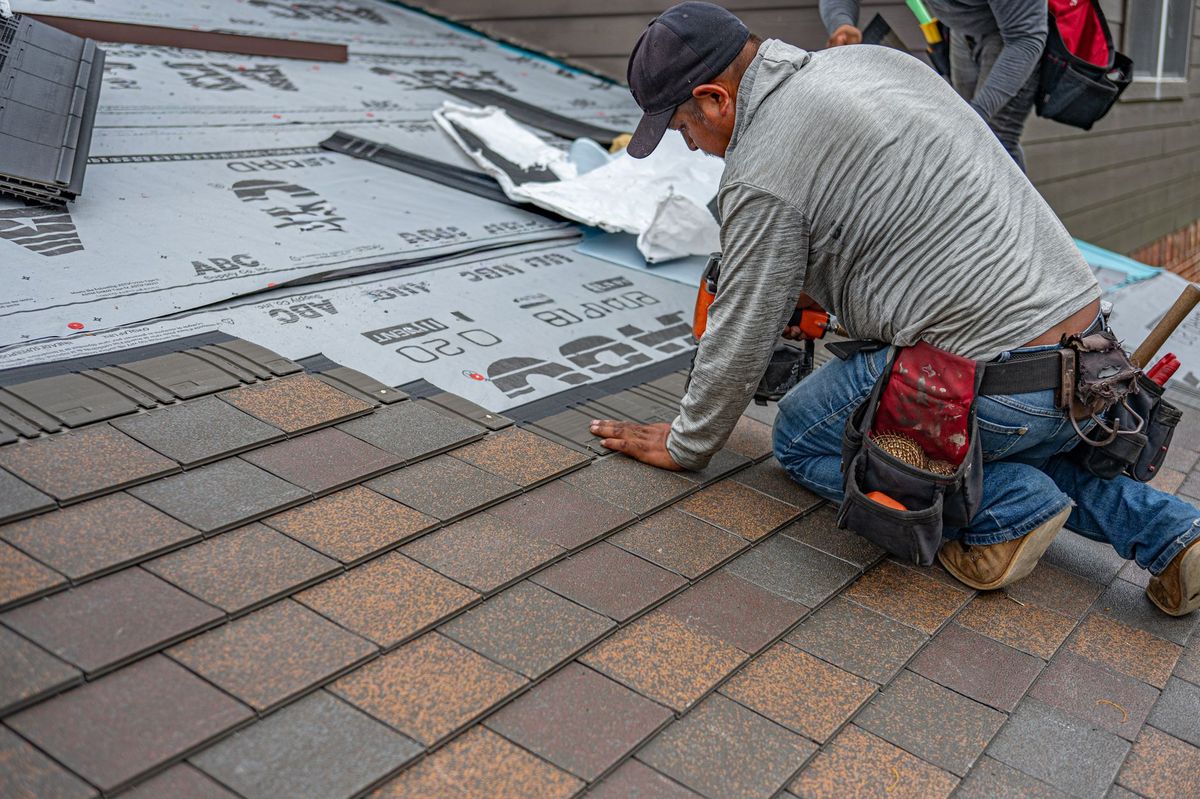
I've framed over 400 houses in 22 years, and 47% of the callbacks I get from drywall guys are because the roofline doesn't match the plan—and it all traces back to pitch miscalculations on the job site. You'd think calculating roof pitch is simple. Rise over run, right? Here's the deal: it's not about being complicated. It's about being exact. A 1/12 pitch difference between what you ordered and what you framed means 340 extra linear feet of shingles on a 2,000-square-foot home. That's roughly $1,100 wasted.
Roof pitch controls how many shingles you'll buy, what fasteners you need, how the gutters sit, and whether water runs off or pools. Miss your pitch calculation by 2 degrees, and your framing is out before the metal roof ever lands on it. I'm walking you through the math, the formulas, and the worked examples so you never leave money on the jobsite again.
Understanding Roof Pitch: Rise-Over-Run Math
Pitch is expressed as a ratio of rise to run over a 12-inch horizontal distance. When you hear "6/12 pitch," that means 6 inches of vertical rise for every 12 inches of horizontal run. The denominator is always 12—that's the standard in residential framing, per IRC Section R802.
The formula is dead simple:
Pitch = Rise ÷ 12 (horizontal run)
Let's say you're looking at a blueprint that calls for a 7/12 pitch. That's 7 inches up for every foot over. A 5/12 pitch is 5 inches up per foot. The higher the numerator, the steeper the roof. Most residential homes run between 4/12 and 12/12. Anything below 4/12 is a low-slope roof and requires special underlayment per IRC R905.2.8. Anything 12/12 or higher is basically a shed or a specialty application.
Here's what trips up most crews: rise and run are measured in different units sometimes. Rise is always vertical (inches). Run is always horizontal (inches). To express pitch, you standardize the run to 12 inches. So a roof that climbs 8 inches in 12 inches of horizontal distance is 8/12. If you measure a roof that climbs 4 inches in 6 inches horizontal, you multiply both by 2 to get 8/12. Same pitch, different measurement points.
Converting Pitch to Degrees
Pitch isn't only expressed as a ratio. Architects and engineers also use degrees. If the plan says "25 degrees" and your foreman thinks it's a 6/12, you're off. A 6/12 pitch is actually 26.57 degrees. The difference is small but structural.
The conversion formula uses inverse tangent (arctan):
Angle in degrees = arctan(rise ÷ run) × (180 ÷ π)
Or simpler: use a calculator. Plug in the rise and run, hit arctan. But here's the practical version: a 4/12 is 18.4 degrees. A 6/12 is 26.6 degrees. An 8/12 is 33.7 degrees. A 12/12 is 45 degrees. Memorize those four, and you'll catch most spec errors on the fly.
Why does this matter? Shingle manufacturers specify "minimum slope" in degrees because water runoff and ice dam risk depend on angle, not ratio. Asphalt shingles from Owens Corning and GAF both require a minimum 4/12 pitch (18.4 degrees) for their 25-year warranty. Go flatter, and you void coverage or need double underlayment, which adds $400–600 per 1,000 square feet.
Calculating Rafter Length: The Pythagorean Theorem
Once you lock in pitch, you need rafter length. This is where math meets framing, and a 1-inch error compounds across 20 or 30 rafters. The rafter runs from the wall plate to the ridge board. It's the hypotenuse of a right triangle: the rise is vertical, the run is horizontal, and the rafter is the diagonal.
The formula is the Pythagorean theorem:
Rafter length = √(rise² + run²)
But here's the trick: the "run" in this formula is not the pitch denominator. It's half the building width. If your house is 40 feet wide, the run is 20 feet. If it's 30 feet wide, the run is 15 feet.
Let me work through a real example. Say you're framing a 40x30 house with a 6/12 pitch:
- Building width: 40 feet = 480 inches
- Run (horizontal distance from wall to ridge): 480 ÷ 2 = 240 inches
- Pitch is 6/12, so for every 12 inches of run, you rise 6 inches
- Total rise: (240 ÷ 12) × 6 = 20 × 6 = 120 inches = 10 feet
- Rafter length: √(120² + 240²) = √(14,400 + 57,600) = √72,000 = 268.3 inches = 22 feet 4 inches
That's the true length of the rafter from plate to ridge. But you also need overhang. If the plan calls for a 24-inch gable overhang, add 24 inches: 268.3 + 24 = 292.3 inches = 24 feet 4 inches. That's your order for rafter stock.
Most crews use a framing square or a speed square to lay out rafters based on pitch. A 6/12 pitch on a speed square is marked as "6." You align that mark on the rafter stock, and the geometry is baked in. But if you're ordering rafters pre-cut or estimating material, you need the exact length. We run your numbers through our free Roof Pitch Calculator to avoid the 1-inch-off disasters.
How Pitch Drives Material Quantity and Waste
Here's the real money side: pitch determines how much roofing material you buy. A steeper roof means more surface area. A 6/12 pitch covers roughly 20% more area than a 4/12 pitch, even on the same footprint building.
The slope factor (also called the pitch multiplier) adjusts the base roof area for slope. The formula is:
Roof area = base footprint area × slope factor
For a 6/12 pitch, the slope factor is about 1.118. For a 4/12, it's 1.054. For an 8/12, it's 1.202.
Back to our 40x30 house with a 6/12 pitch:
- Base footprint: 40 × 30 = 1,200 square feet
- Slope factor for 6/12: 1.118
- Actual roof area: 1,200 × 1.118 = 1,341.6 square feet
Now you need shingles. Most asphalt shingles cover 100 square feet per bundle (3 bundles per square). Roofers add 10% waste on bundles and 15% on ridge cap.
- Base shingle bundles: 1,341.6 sq ft ÷ 100 sq ft = 13.4 squares = 40.2 bundles
- Plus waste (10%): 40.2 × 1.10 = 44.2 bundles
- Ridge cap linear feet: (40 + 30) × 2 + 24 × 2 = 188 linear feet (both sides, both peaks)
- Ridge cap (linear foot per bundle): 188 ÷ 35 = 5.4 bundles
Total: roughly 50 bundles at $85 per bundle (mid-market 2026 pricing from Sherwin-Williams wholesale) = $4,250. If your pitch was off by just 2/12 and you thought it was a 4/12 instead of a 6/12, you'd order 47 bundles, show up on-site short 3 bundles, and burn a day waiting for material. Or you'd overshingle and waste $255.
Metal roofing compounds the stakes. Metal panels are custom-cut to length at the factory. If your pitch is wrong, the panels don't fit the gables. We've seen $8,000 orders scrapped because the pitch spec was 1 degree off.
Real-World Example: Gable End with Overhang
Let me walk you through the full calc for a 24x16 addition with a 7/12 pitch and 18-inch overhang on the front gable.
Step 1: Measure the width and lock pitch
- Building width: 24 feet = 288 inches
- Pitch: 7/12
Step 2: Calculate total rise
- Run: 288 ÷ 2 = 144 inches (half the width)
- Rise: (144 ÷ 12) × 7 = 12 × 7 = 84 inches = 7 feet
Step 3: Calculate rafter length (plate to ridge)
- Rafter = √(84² + 144²) = √(7,056 + 20,736) = √27,792 = 166.7 inches = 13 feet 10-11/16 inches
Step 4: Add overhang
- Overhang: 18 inches
- Total rafter length: 166.7 + 18 = 184.7 inches = 15 feet 4-11/16 inches
Step 5: Calculate roof area for material
- Base footprint: 24 × 16 = 384 square feet
- Slope factor for 7/12: 1.178
- Roof area: 384 × 1.178 = 452.4 square feet (just under 5 squares)
- Shingles needed: 452.4 ÷ 100 = 4.5 squares = 13.5 bundles + 10% waste = 15 bundles at $85 = $1,275
This is where precision pays. You order 15 bundles, you have zero shortage, and the roofer doesn't rage about short material mid-day.
IRC Code Limits on Pitch
The International Residential Code (IRC R802) doesn't mandate a minimum pitch for all roofs, but asphalt shingles and other common materials have minimums. Here are the ones that matter:
- Asphalt shingles: minimum 4/12 (IRC R905.2.7). Below 4/12, you need double underlayment or synthetic, which voids builder margin.
- Metal standing seam: can go as low as 1/12, but water ponding risk skyrockets, and most builders avoid it below 3/12.
- Clay or concrete tile: minimum 4/12 (IRC R905.3.7). Lighter alternatives exist, but traditional tile requires slope to prevent saturation.
- Built-up or tar-and-gravel roofs: typically 0.5/12 to 2/12. These are dead flat and require sloped nailers and drain pans.
High-pitched roofs (10/12 and up) trigger additional framing because of wind shear. IRC R802.11 requires deeper wind bracing on roofs 7/12 and steeper. It's an extra cost, but it's code.
Frequently Asked Questions
What's the most common residential pitch, and why?
The 6/12 pitch is the sweet spot for 80% of residential work. It's steep enough to shed water and snow without ice dams, shallow enough to keep ridge heights reasonable and rafter costs down. It hits 26.6 degrees, which is right at the threshold where ventilation becomes easy to manage. Anything below 5/12 requires careful soffit-intake ventilation per IRC R806.1. Anything above 8/12 can get visually top-heavy and drives framing labor up 15% because angles get tighter.
Can I mix pitches on the same roof?
Yes, and architects do it all the time for aesthetic or functional reasons. The addition might be 6/12 while the main house is 8/12. Each section is calculated independently. The intersection is where it gets tricky—valleys and ridges have to be flashed per IRC R903.2, and valleys on mixed pitches need deeper valleys (18 inches minimum instead of 16). Material waste increases 8–12% because of the odd angles.
Does wind speed affect pitch calculations?
Not directly, but it affects code requirements. IRC R802.11 requires deeper wind bracing on roofs 7/12 and steeper in high-wind zones (115 mph or higher). This adds $400–600 per job but isn't a calculation—it's a compliance checkbox. Wind doesn't change your rise-over-run math; it changes your fastening schedule and brace depth.
What if the existing house has an irregular pitch?
Irregular pitches (two different slopes on the same roof) are common on colonial and Victorian homes. You calculate each slope separately using the same formulas. The tricky part is the ridge board—it won't be level if both sides have different pitches. Most code-compliant solutions involve a "stepped ridge" or adjustments to the collar ties. Talk to a structural engineer before framing if you're matching an existing irregular roof.
How do I verify pitch in the field?
Use a speed square. Lay the handle flat on the rafter and align the degree mark with the rafter edge. A 6/12 pitch should read 26.6 degrees on the speed square. If it reads 24 degrees, you're off to 5/12. This is why jobsite pitch verification is critical before the roof sheathing goes on. Once plywood is nailed, you're committed.
What happens if my pitch is too shallow for the shingles I ordered?
The manufacturer voids the warranty, and you'll see water intrusion in 4–7 years, guaranteed. Some roofers install an extra layer of synthetic underlayment to try to salvage shallow roofs, but it costs $1,200–1,800 extra and still isn't guaranteed. It's cheaper to frame it right the first time. This is why spec clarity is non-negotiable.
Your Action Item for This Week
Pull your three most recent framing plans and verify the pitch spec. Convert each from rise-over-run to degrees using the arctan formula (or grab a calculator). Check that spec against your rafter cutlist. If there's a discrepancy, recalculate your material orders before next week's lumber delivery.
If you're ordering for a new project this month, run your numbers through our free Roof Pitch Calculator right now. Plug in the building width, overhang, and pitch. It'll give you rafter length and roof area in seconds — free with a Buildermuse account, no BS, just the math. Compare the rafter length to what your cutlist says. If it's off by more than half an inch, there's either a calculation error or a spec mismatch on the plan.
Finally, read the material spec for your shingles. Owens Corning, GAF, CertainTeed—they all publish minimum pitch. Make sure your pitch spec is at least 2 grades above minimum. That 4/12 minimum for asphalt? Frame it at 6/12 to stay safe of warranty voids and callbacks.
Check out our article on roof tear-off season and material waste for how underestimating pitch leads to massive waste on the back end. And if you're building to 2026 IRC code, verify your framing against the new 2026 IRC changes every residential builder needs to know.