Building a house from permit approval to move-in takes 7 to 16 months for most single-family homes in 2026. Production homes in active subdivisions run faster — 7 to 10 months. Custom homes on private lots typically run 12 to 16 months. The wide range comes down to complexity, location, your contractor's backlog, and how quickly decisions get made.
Here's the realistic phase-by-phase breakdown — and what actually causes projects to run long.
Pre-Construction: 2–6 Months Before Ground Breaks
Most homebuilders underestimate how long the work before construction takes. By the time your GC is ready to schedule the excavator, you've typically spent 2–6 months in pre-construction.
Design and architecture (4–12 weeks): For a production home with a defined plan, this phase is minimal — plan selection and option choices. For a custom build, expect 8–20 weeks for schematic design, design development, and construction documents if you're working with an architect.
Permitting (2–16 weeks): Permit timelines vary enormously by jurisdiction. Rural counties with smaller permit offices can turn around residential permits in 2–4 weeks. High-growth suburban markets — Phoenix, Austin, Boise, Charlotte — have permit offices processing thousands of applications and routinely running 8–14 week backlogs. Some California jurisdictions take 16–24 weeks for custom home permits.
Financing (4–8 weeks): Construction loans close slower than purchase mortgages. Expect 4–8 weeks from application to closing, and have all your documents — plans, specs, contractor bids, site survey — ready before you apply. Incomplete loan packages are the most common reason closings slip.
Site preparation (1–4 weeks): Tree clearing, rough grading, erosion control, and utility staking before foundation work begins.
Phase 1: Foundation — 2–5 Weeks
Foundation work sets the pace for everything downstream. It's also weather-dependent and can't be rushed.
Excavation and footer forming: 2–5 days on a flat, well-drained lot. Sloped lots, high water tables, or rocky soil add time. A lot that requires blasting adds 2–4 weeks.
Concrete pours: A standard basement or crawl space takes 3–5 separate concrete pours: footers, stem walls or basement walls, and slab. Each pour requires a cure period — typically 24–48 hours before the next phase.
Waterproofing and backfill: After the foundation walls cure and pass inspection, waterproofing, drainage board, and perimeter drain installation add 3–5 days. Backfill and final grade around the foundation adds another 1–2 days.
Total: 2–4 weeks for a straightforward slab-on-grade foundation. 4–6 weeks for a full basement. Add 2–4 weeks for challenging site conditions.
Phase 2: Framing — 3–8 Weeks
Framing is the most visible phase and the one homeowners are most excited to see progress on. It's also heavily dependent on crew availability.
A professional framing crew of 4–6 can frame a 2,400-square-foot two-story home in 10–14 days of actual work. But "actual work days" rarely translate to calendar days cleanly — there are inspection holds, material delivery windows, and weather delays built into every schedule.
Wall framing: 5–8 days for a typical two-story home.
Floor systems: Engineered floor joists or LVL beams are typically delivered pre-cut and install quickly — 2–4 days per floor.
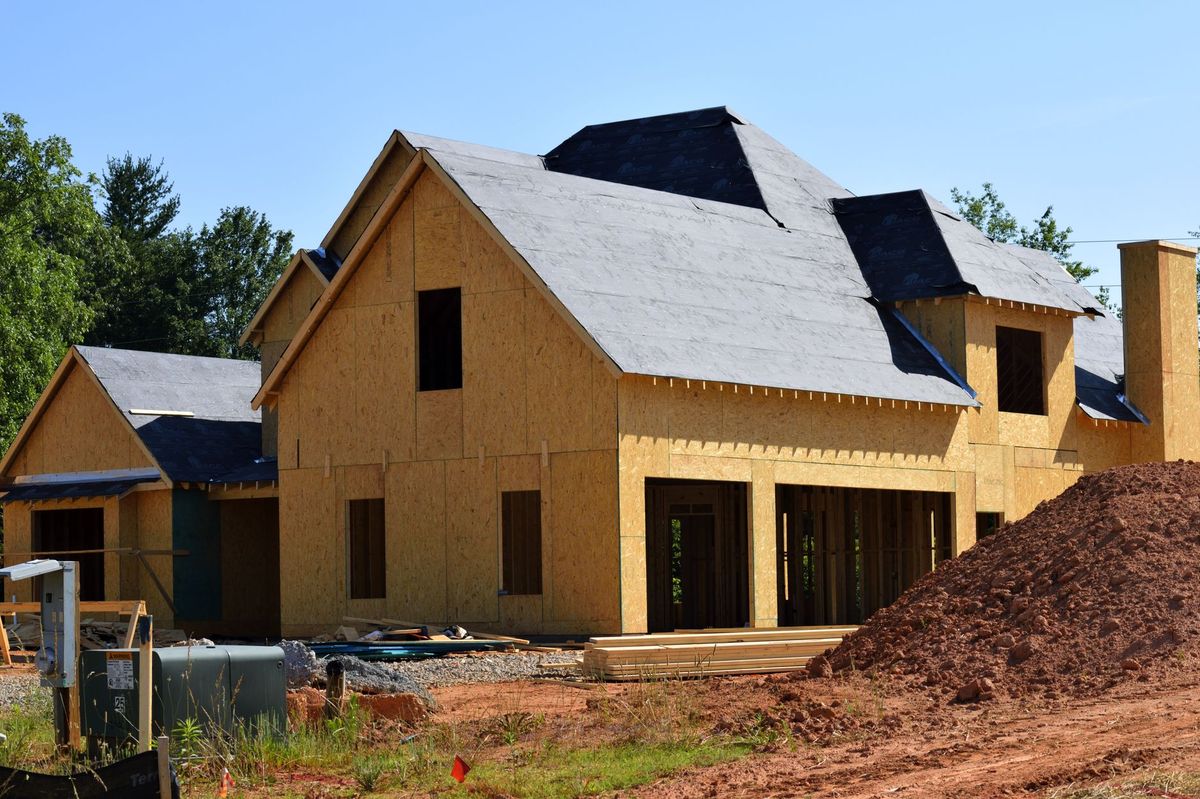
Roof framing: Stick-framed roofs take longer than truss systems. A truss crane set can complete a roof structure in 1–2 days. Stick framing a complex hip or valley roof takes 1–3 weeks.
Windows and exterior doors: Ordered as soon as plans are finalized because lead times on windows run 4–12 weeks. If your window order gets delayed, framing is done and the project is sitting waiting for windows. This is one of the most common schedule killers in 2026 — supply chain issues on specialty windows remain a problem.
Total framing phase: 3–6 weeks for standard production homes, 5–10 weeks for complex custom builds.
Phase 3: Mechanicals Rough-In — 4–8 Weeks
After framing passes inspection and the house is dried in (roof on, windows in), the mechanical trades move in. Plumbing, electrical, and HVAC rough-in typically run concurrently — but in practice they're often sequenced due to trade scheduling.
Plumbing rough-in: 1–2 weeks. Drain, waste, and vent lines through framing; water supply lines to fixture locations.
Electrical rough-in: 1–2 weeks. Panel installation, branch circuit wiring, box locations for outlets, switches, and fixtures.
HVAC rough-in: 1–2 weeks. Ductwork installation, equipment pad, refrigerant line sets.
Gas rough-in (if applicable): 3–5 days.
Each trade requires a rough-in inspection before insulation can proceed. Scheduling inspections in high-volume markets adds 3–7 business days of waiting time per inspection.
Total: 4–8 weeks, heavily dependent on subcontractor availability. In tight labor markets like Austin and Nashville, waiting 2–3 weeks for a plumber's schedule is common and pushes the overall schedule regardless of everything else.
Phase 4: Insulation and Drywall — 3–5 Weeks
Insulation: 2–5 days for a standard blown or batt insulation install. Spray foam adds cost and 3–5 days. Insulation inspection required before drywall.
Drywall hang and mud: Hanging drywall takes 3–5 days for a typical home. The mud (compound) phase is time-intensive — three coats with drying time between each coat adds 7–12 days. Temperature and humidity affect drying time; winter builds often run slower here.
Tape, texture, and prime: 3–5 days.
Total: 3–5 weeks.
Phase 5: Finishes — 6–12 Weeks
Finish work is where custom homes diverge most sharply from production homes in timeline. The more decisions that need to be made (tile selections, cabinet specifications, light fixtures, hardware), the longer this phase runs.
Trim carpentry: 1–2 weeks for door casings, window trim, base molding, crown molding.
Cabinets and countertops: Cabinet installation takes 1–3 days. Countertop templating happens after cabinets are set; fabrication and installation adds 2–3 weeks for stone. This is another common wait period — don't let countertop lead times catch you by surprise.
Tile work: Showers, bathroom floors, and kitchen backsplash. 1–3 weeks depending on scope.
Flooring: Hardwood installation and finishing adds 1–2 weeks. LVP or engineered products install faster.
Painting: Interior paint takes 1–2 weeks.
MEP trim-out: Plumbing fixtures, electrical devices and fixtures, HVAC registers and equipment startup. 1–2 weeks, often running concurrent with other finish work.
Total finish phase: 6–10 weeks for a well-organized production home. 10–16 weeks for a complex custom home with extensive tile, millwork, and specialty finishes.
Phase 6: Final Inspections and Punch List — 2–4 Weeks
Final inspections cover plumbing, electrical, mechanical, and the overall building certificate of occupancy. Most projects require 3–6 separate final inspections, each with scheduling lead times.
After inspections, there's a punch list phase — correcting items identified during final walkthrough. A well-run project has a short punch list. A project with multiple subcontractor coordination failures can have hundreds of items. Plan on completion taking longer than expected when punch list scope is not managed proactively throughout the project.
What Actually Causes Projects to Run Long
In my experience building in New England, the schedule killers show up in a predictable pattern:
Permitting delays are the most common and least controllable cause of extended timelines. If you're in a slow-permit jurisdiction, factor it into your move-in date from day one.
Owner decision delays on finish selections are the second most common cause of schedule extensions. Every week a countertop selection is deferred is a week added to the back end. Get selections finalized before drywall starts.
Sub scheduling gaps in tight labor markets. A 2-week gap between framing finish and rough plumbing start is a 2-week slip to your schedule. GCs with strong sub relationships fill these gaps; GCs without them don't.
Window and door lead times have improved from the worst of supply chain disruptions but still run 6–10 weeks for most manufacturers. Order early.
Weather: Frost delays foundation work. Rain delays concrete pours and exterior work. Builds that start in November in northern climates carry real weather risk.
FAQ
How long does it take to build a 2,000-square-foot house? A 2,000-square-foot production home typically takes 7–10 months from permit approval to certificate of occupancy. A custom home of the same size runs 12–14 months. Add 2–6 months of pre-construction for design and permitting.
What is the fastest a house can be built? Modular and manufactured homes can be assembled on-site in 1–3 months after the foundation is complete, since major components are built in a factory simultaneously. For stick-built construction, 5–6 months from ground break to move-in is aggressive but achievable with a dedicated crew, no weather delays, and fast permit turnaround.
Does building in winter take longer? Yes, in colder climates. Foundation work, concrete pours, and exterior framing are all sensitive to freezing temperatures. A project that starts foundation work in November in the Midwest or Northeast should budget 2–4 extra weeks for weather-related delays versus a spring start.
What causes the most construction delays? In order of frequency: permitting delays, owner indecision on selections, subcontractor scheduling gaps, material delivery issues, and weather. The first two are entirely preventable with planning.
Is it faster to build a production home or a custom home? Production homes are significantly faster — 7 to 10 months versus 12 to 16 months — because plans are standardized, material packages are pre-ordered, and the builder's subcontractors are familiar with the product. Custom homes take longer at every phase because every decision is made fresh.
Can I speed up the construction timeline by paying more? Somewhat. Paying premium rates can get you better sub availability and faster scheduling, especially for trades like framing and drywall. You can also accelerate material orders with expedite fees. But some timelines — permit processing, concrete cure times, inspection scheduling — are largely fixed regardless of what you pay.