$8.7 Billion on Parks — The Post-Pandemic Outdoor Boom Is Real Money
Municipal parks and recreation construction spending hit $8.7 billion in 2026, according to the National Recreation and Park Association's annual Agency Performance Review and municipal bond data. That is a 42% increase over 2019 pre-pandemic levels and the highest annual total NRPA has ever recorded.
The pandemic permanently shifted how Americans use public space. Park visits increased 37% between 2019 and 2023, per the NRPA, and usage has stayed elevated. Municipalities responded with bond measures, dedicated sales taxes, and federal ARPA funds to build the outdoor amenities their residents demanded. Now those projects are hitting the construction market.
If you run a construction shop that does concrete, plumbing, site work, or mechanical — and you have been ignoring parks departments — you are walking past funded work with thin bid fields and reasonable payment terms.
Business tip: Parks and recreation projects are typically bid separately from transportation and utility work. Many contractors never think to check the parks department bid board. That means less competition for you.
Why Did Park Spending Jump 42% Above Pre-Pandemic Levels?
Three revenue streams converged:
Voter-approved bond measures. NRPA data shows $4.1 billion in parks-specific bond measures passed in 2024 and 2025 elections. The passage rate for park bonds was 78% — higher than school bonds (68%) and transportation bonds (62%). Voters like parks.
ARPA (American Rescue Plan Act) reprogramming. Municipalities received $350 billion in ARPA State and Local Fiscal Recovery Funds. The Treasury Department's final reporting data shows that $6.2 billion of ARPA funds were directed to parks, recreation, and public spaces as an eligible use under the "revenue replacement" category. Most of this money must be committed by December 2026, creating urgency to bid and award projects.
Dedicated local revenue. At least 14 major cities have passed dedicated parks taxes or fees since 2020. Denver's SCFD (Scientific and Cultural Facilities District) tax generates $68 million annually for parks and cultural facilities. Austin's voter-approved parkland dedication fee produces $45 million per year. These are not one-time funds — they are permanent revenue streams that create multi-year construction pipelines.
The math: $4.1 billion in bonds plus $6.2 billion in ARPA plus ongoing dedicated revenue adds up to well over $12 billion in available capital for parks construction through 2028. The $8.7 billion in 2026 spending is the wave cresting, not the peak.
What Are Municipalities Actually Building?
The NRPA capital spending survey breaks down parks construction into categories:
Trails and Greenways — $2.1 Billion (24%)
Trail construction is the single largest category. The Rails-to-Trails Conservancy reports 3,800 miles of new trails under construction nationwide. Per-mile construction costs range from $500,000 for a basic crushed stone trail to $2.5 million for a paved multi-use path with lighting, drainage, and signage.
For contractors, trail work is high-volume, low-complexity site work — grading, drainage, paving, and minor structures (bridges, retaining walls, culverts). If you own earthmoving equipment, this is straightforward work.
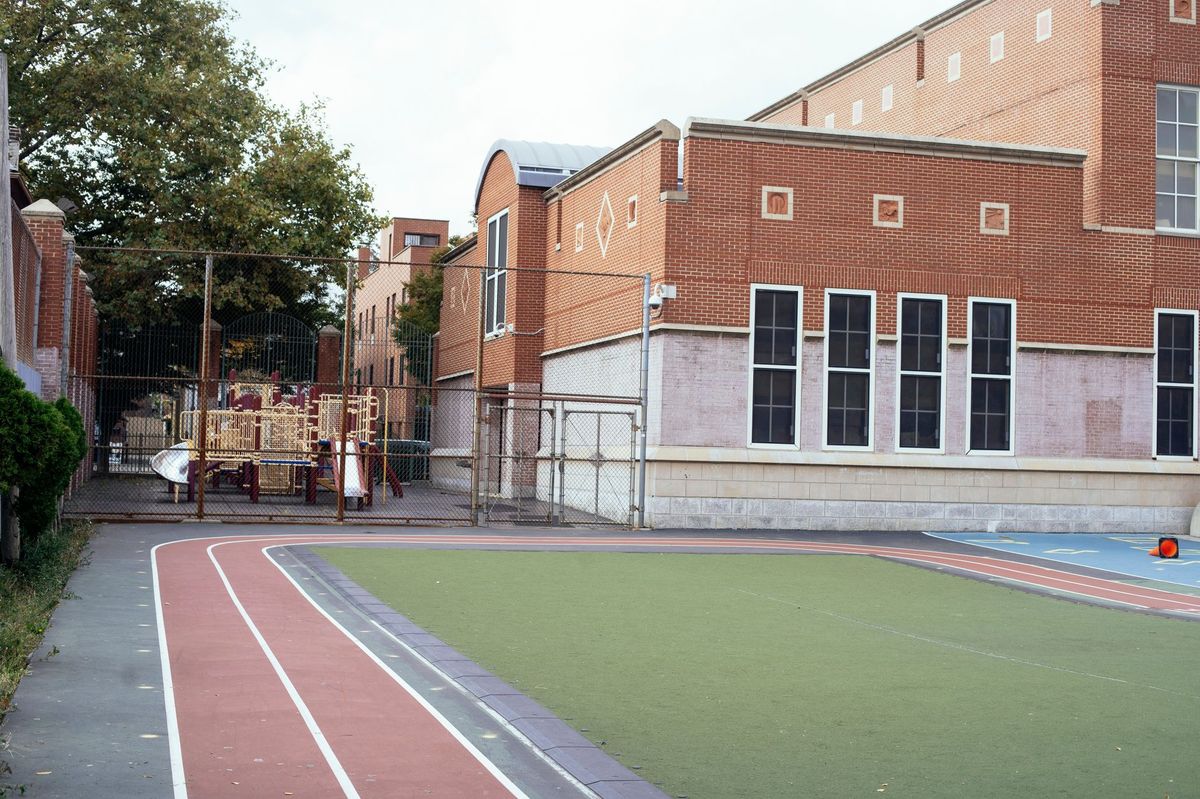
Playground and Splash Pad Construction — $1.7 Billion (20%)
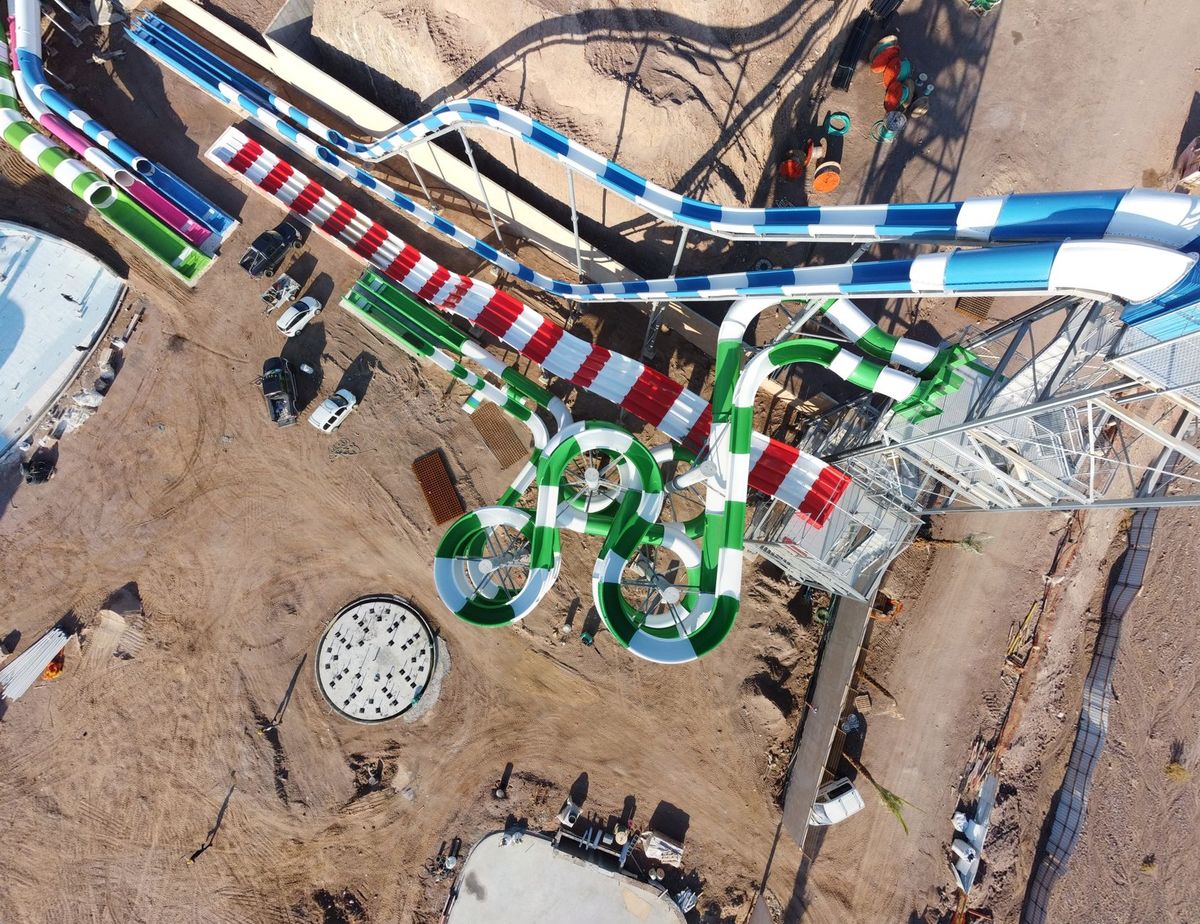
The splash pad boom is real. NRPA reports that splash pad installations grew 180% between 2019 and 2025. A typical community splash pad costs $350,000–$750,000 for the pad, mechanical systems, water treatment, and drainage. A large destination splash park can exceed $2 million.
The plumbing and mechanical scope on a splash pad is significant — recirculating water systems, UV and chemical treatment, backflow prevention, freeze protection, and drainage. This is specialty work that most site contractors sub out.
Business tip: If your shop does plumbing, get trained on splash pad mechanical systems. The Splash Pad Guide (published by Aquatic Development Group) covers design standards. Fewer than 200 contractors nationwide have splash pad installation experience, and demand is growing at 20%+ per year. That supply-demand imbalance means better margins.
Community Recreation Centers — $1.5 Billion (17%)
New community recreation centers are averaging $18–35 million per facility, depending on size and amenities. Standard features now include pools, fitness areas, gymnasiums, community meeting rooms, and commercial kitchens. These are full commercial construction projects requiring every major trade.
Park Facility Renovation — $1.3 Billion (15%)
Restroom buildings, pavilions, maintenance facilities, and park offices. Individual projects range from $150,000 (restroom building) to $3 million (maintenance facility). This is the right-sized work for small and mid-size GCs.
Athletic Fields and Courts — $1.1 Billion (13%)
Synthetic turf field installation runs $800,000–$1.2 million per field. Court resurfacing (tennis, basketball, pickleball) runs $25,000–$60,000 per court. Pickleball court construction has exploded — the Sports & Fitness Industry Association reports 48.3 million pickleball participants in 2025, up from 4.8 million in 2020. Municipalities are converting underused tennis courts and building new dedicated pickleball facilities.
Aquatic Facilities — $1.0 Billion (11%)
Public pools are expensive. A new community outdoor pool facility costs $4–8 million. An indoor aquatic center costs $15–30 million. Pool mechanical systems — filtration, chemical treatment, heating, and dehumidification (for indoor pools) — represent 30–40% of total project cost. This is high-value mechanical and plumbing work.
Which States Are Spending the Most?
NRPA data and municipal bond tracking show the top states by parks capital spending:
- California — $1.4 billion. Proposition 68 (2018) authorized $4 billion for parks statewide, and local bond measures have added billions more. California's per-capita parks spending is the highest in the nation at $36 per resident.
- Texas — $980 million. Fast-growing suburban cities like Frisco, McKinney, and Cedar Park are building entire park systems from scratch. Houston's $220 million Memorial Park Master Plan and Dallas's $285 million Harold Simmons Park are among the largest individual projects.
- Florida — $720 million. The Florida Recreation Development Assistance Program (FRDAP) provides state matching funds for local park projects. Tourist-dependent municipalities are investing heavily in public space to remain competitive.
- New York — $680 million. New York City's Department of Parks and Recreation has a $5 billion ten-year capital plan. Upstate cities like Rochester, Syracuse, and Buffalo are using ARPA funds for park revitalization.
- Colorado — $510 million. The Great Outdoors Colorado (GOCO) trust fund distributes lottery proceeds to parks and open space. Denver's Game Plan for a Healthy City is driving $450 million in parks investment over five years.
Business tip: Look at the mid-size cities, not just the large ones. Cities of 50,000–200,000 population are where the bid competition is thinnest for parks work. Their parks departments often struggle to attract enough bidders, which means better pricing for you.
How Do Parks Projects Get Procured?
Parks departments use several procurement methods:
- Competitive sealed bidding for projects above the municipal threshold (typically $25,000–$100,000). This is the most common method. Lowest responsible bidder wins.
- Job Order Contracting (JOC): Many parks departments use JOC for renovation and maintenance work. A JOC contract sets unit prices through a published price book (typically RSMeans), and the contractor applies an adjustment factor. If you win a JOC contract, you get a stream of small-to-medium projects without rebidding each one.
- Cooperative purchasing: Parks departments frequently piggyback on existing contracts through purchasing cooperatives like Sourcewell, HGAC, or BuyBoard. If your company has a cooperative purchasing contract, parks departments can buy directly from you without competitive bidding.
The math: a JOC contract with a parks department that spends $3 million per year on renovation and maintenance, with a 3-year term, is $9 million in guaranteed revenue with minimal bid costs after the initial award. That is the kind of contract that stabilizes your backlog.
What Are the Prevailing Wage Considerations?
Parks construction is public work, so prevailing wage requirements apply in the 28 states that have prevailing wage laws. Key considerations:
- Landscape vs. construction classifications. Some states have separate wage determinations for landscape work and building construction. A splash pad project might have plumbing work classified under building trades ($45/hour) and grading work classified under highway/heavy ($32/hour). Know which classification applies to each scope element.
- Recreational facility classifications. Community recreation centers are classified as building construction, which typically carries higher prevailing wage rates than highway or heavy construction.
- Trail construction classifications. Trails are often classified as highway/heavy construction, with lower wage rates than building trades. This affects your labor cost estimate.
What Workforce and Equipment Do You Need?
Parks construction requires a mix of capabilities:
- Site work crews: Grading, drainage, paving, and utility installation. These crews do the bulk of trail, athletic field, and general park improvement work.
- Concrete crews: Flatwork (walkways, plazas, splash pads), foundations, retaining walls, and skate park construction. Parks departments love decorative concrete — stamped, colored, exposed aggregate. If your concrete crew can do decorative work, you stand out.
- Plumbing and mechanical: Restroom buildings, splash pads, pool mechanical, irrigation systems, drinking fountains. Parks plumbing is not complex, but it must be durable — vandal-resistant fixtures and frost-proof designs are standard specifications.
- Electrical: Site lighting (LED is now universal), scoreboard and athletic field lighting, EV charging stations in parking areas, and security cameras. Athletic field lighting packages run $250,000–$500,000 per field and are often bid as standalone electrical contracts.
The equipment investment for parks work is modest. A small excavator, skid steer, compact roller, and dump truck cover most trail and site work. If you already own this equipment for other work, parks projects are incremental revenue with minimal additional capital expense.
Business tip: Parks departments plan capital projects 2–3 years in advance through published Capital Improvement Plans (CIPs). Every municipality with a parks department has a CIP. Pull it from their website, identify projects in your capability range, and introduce yourself to the parks director before the bid hits the street. Relationships matter more in parks work than in highway work.
What Is the Post-COVID Trend for Outdoor Amenities?
The pandemic created lasting shifts in public space design:
- Outdoor fitness equipment: Installations up 220% since 2019 per NRPA. Outdoor fitness stations cost $15,000–$50,000 per station, typically installed in groups of 8–12 along trails.
- Dog parks: New dog park construction up 85% since 2019. A basic dog park costs $150,000–$300,000 for fencing, surfacing, water features, and shade structures. Premium dog parks with agility equipment and separate small/large dog areas can reach $500,000.
- Outdoor event spaces: Amphitheaters, festival lawns, and bandshells. These projects range from $500,000 for a basic bandshell to $5–15 million for a full amphitheater with permanent stage, seating, and infrastructure.
- Nature play areas: Replacing plastic playground equipment with natural elements — logs, boulders, water channels, and plantings. Design fees are higher but construction costs are often lower than traditional playgrounds, at $200,000–$400,000 per installation.
Bottom line: the outdoor amenity market is expanding into categories that did not exist at scale five years ago. Early movers who build experience in splash pads, outdoor fitness, and nature play are positioning themselves for a decade of growth.
FAQ
How much is being spent on parks and recreation construction in 2026?
Parks and recreation construction spending reached $8.7 billion in 2026, a 42% increase over 2019 pre-pandemic levels, according to the National Recreation and Park Association. Major categories include trails ($2.1 billion), playgrounds/splash pads ($1.7 billion), and community centers ($1.5 billion).
What is driving the increase in parks spending?
Three factors: voter-approved bond measures totaling $4.1 billion in 2024–2025, ARPA fiscal recovery funds ($6.2 billion directed to parks), and dedicated local parks taxes adopted by at least 14 major cities since 2020. Post-pandemic outdoor recreation demand — park visits up 37% — provides the political support for this spending.
What are the best parks construction opportunities for small contractors?
Splash pads ($350,000–$750,000), restroom buildings ($150,000+), trail construction, athletic field work, and Job Order Contracting programs offer right-sized opportunities for small and mid-size firms. Bid competition is typically thinner for parks work than for highway or building construction.
Pull up your city's Capital Improvement Plan this week and search for "parks" and "recreation." Every project on that list will need a contractor. Call the parks director, introduce your shop, and ask to be added to the plan holders list. The $8.7 billion is real — go get your share.