The Department of Defense's Military Construction (MILCON) program for fiscal year 2026 totals $17.4 billion across approximately 400 projects spanning every military branch and combatant command. The numbers tell a different story than the headline defense budget figures suggest — while the overall defense budget gets the political attention, MILCON represents the physical infrastructure that enables military readiness, and it's one of the most predictable and well-structured construction markets in the federal sector.
MILCON encompasses all construction of military facilities worldwide, from barracks and family housing to airfield runways, shipyard dry docks, weapons storage facilities, and the specialized infrastructure that supports the nation's nuclear deterrent. For construction firms, MILCON offers a combination of characteristics rarely found in other markets: multi-year funded projects (appropriated in advance, not subject to continuing resolution disruptions), standardized procurement processes, prevailing wages, and a geographic distribution that creates opportunities in virtually every state.
FY2026 Budget Breakdown by Service
The FY2026 MILCON budget request distributes funding across the military services and defense agencies, with each branch receiving allocations based on its facility requirements and strategic priorities.
Army MILCON at $3.8 billion funds construction across the Army's installation network of 130+ domestic installations and overseas bases. Priority projects include barracks modernization (the Army has identified a $28 billion barracks renovation and replacement backlog driven by years of deferred maintenance and substandard living conditions), training facility construction at major training centers like Fort Liberty (formerly Fort Bragg), Fort Cavazos (formerly Fort Hood), and Joint Base Lewis-McChord, and infrastructure supporting the Army's force posture adjustments in the Indo-Pacific and European theaters.
Navy and Marine Corps MILCON at $4.2 billion is the largest single-service allocation, reflecting the capital-intensive nature of naval infrastructure. Major project categories include shipyard infrastructure optimization (the SIOP program represents a $21 billion, 20-year investment in the four public naval shipyards at Norfolk, Puget Sound, Pearl Harbor, and Portsmouth), aircraft carrier and submarine maintenance facility upgrades, Marine Corps base infrastructure modernization, and expeditionary base construction supporting force posture changes in the western Pacific.
Air Force MILCON at $3.6 billion funds construction across Air Force Global Strike Command, Air Combat Command, Air Mobility Command, and Space Force installations. Priority categories include B-21 Raider bomber beddown construction (new hangars, maintenance facilities, weapons storage, and support infrastructure at Ellsworth AFB, Whiteman AFB, and Dyess AFB), KC-46 tanker beddown facilities, F-35 beddown and sustainment infrastructure, and Space Force launch and ground system facilities at Cape Canaveral, Vandenberg, and other launch sites.
Defense-Wide MILCON at $3.1 billion encompasses construction for defense agencies and combatant commands, including special operations forces facility construction (SOCOM), intelligence community facilities, Defense Health Agency medical facilities, and Defense Logistics Agency distribution and storage facilities.
Military Family Housing at $2.7 billion funds the construction, improvement, and maintenance of family housing on military installations. The military housing privatization program has shifted most family housing to private developers under 50-year ground leases, but significant government-owned housing remains at installations not included in privatization programs, particularly overseas.
Project Types and Construction Characteristics
MILCON construction encompasses an exceptionally diverse range of facility types, from conventional office buildings and barracks to highly specialized structures that exist nowhere in the commercial sector.
Barracks and unaccompanied housing construction and renovation represents the largest single category of MILCON spending at approximately $4.5 billion annually when combined across all services. Following Congressional hearings that documented substandard living conditions at multiple installations, the services have accelerated barracks investment. Modern barracks construction follows the 1+1 standard (one soldier per bedroom, two soldiers per shared bathroom), with construction costs ranging from $250,000 to $350,000 per bed depending on location, design standard, and site conditions. A typical 300-bed barracks complex costs $75 to $105 million.
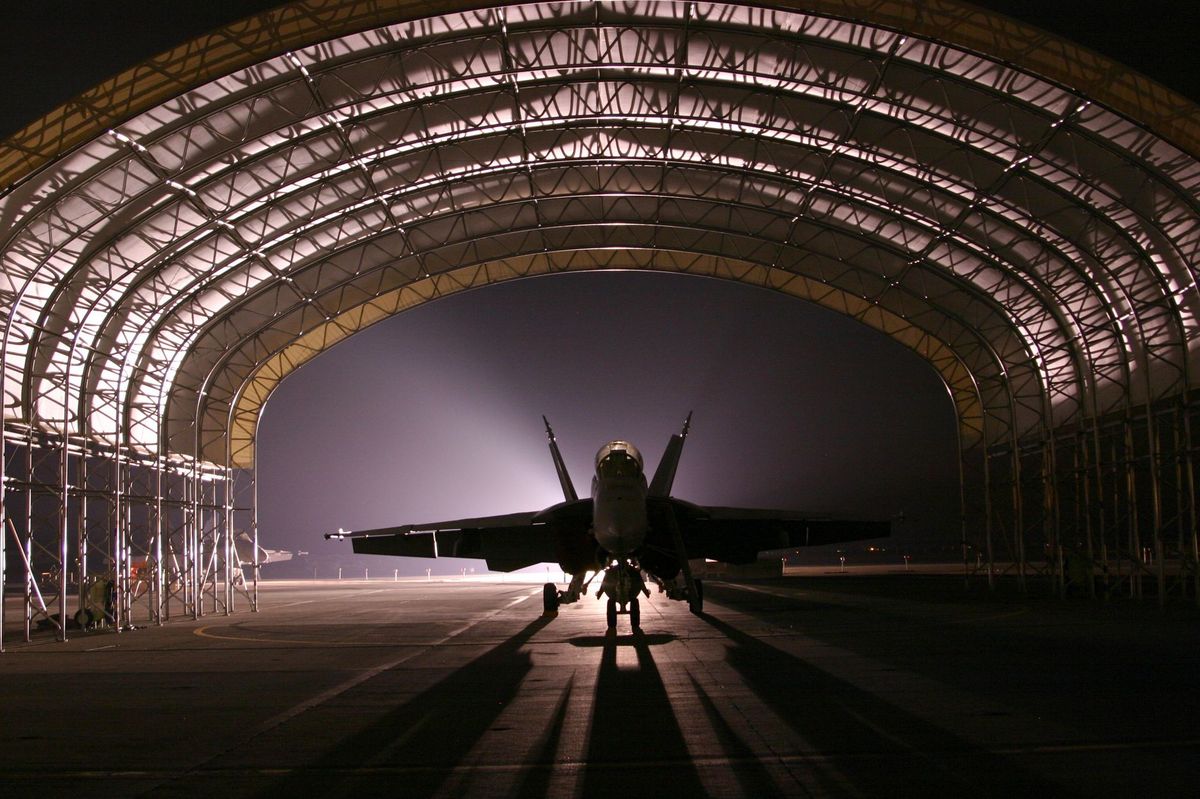
Maintenance and production facilities — hangars, shipyard buildings, vehicle maintenance facilities, and depot-level maintenance shops — represent the next largest category. These industrial buildings require large clear-span structures, heavy-duty floor slabs (200+ psf live load capacity for vehicle maintenance), bridge cranes, specialized ventilation for paint and coating operations, and environmental containment systems. Construction costs for military maintenance facilities range from $400 to $800 per square foot depending on the facility's function and the equipment it must support.
Operational and training facilities include headquarters buildings, command and control centers, simulation buildings, firing ranges, maneuver training facilities, and combat skills training buildings. Many of these facilities incorporate sensitive compartmented information facility (SCIF) construction — secure spaces with specific physical security requirements including radio frequency shielding, sound attenuation, enhanced access control, and intrusion detection systems. SCIF construction carries a significant cost premium of $200 to $500 per square foot above standard construction costs.
Infrastructure — roads, airfield pavements, utility systems, fuel storage and distribution, communications, and water/wastewater treatment — constitutes approximately 25% of MILCON spending. Airfield pavement construction using Portland cement concrete with high-strength mix designs (minimum 600 psi flexural strength) designed for heavy military aircraft loading (the C-5 Galaxy has a maximum gross weight of 840,000 pounds) is a specialized construction activity with limited contractor capability in many regions.
Procurement and Contracting
MILCON procurement follows the Federal Acquisition Regulation (FAR) with additional Department of Defense supplements (DFARS) and service-specific regulations. Understanding the procurement landscape is essential for contractors pursuing military construction.
The U.S. Army Corps of Engineers (USACE) serves as the construction agent for most Army and Air Force MILCON projects, managing design, procurement, and construction administration. USACE operates through its 38 district offices and manages hundreds of MILCON contracts annually.
The Naval Facilities Engineering Systems Command (NAVFAC) serves the equivalent role for Navy and Marine Corps MILCON. NAVFAC manages construction through its Engineering and Expeditionary Warfare Center (EXWC) and Atlantic and Pacific Facilities Engineering Commands.
Contract types include firm-fixed-price (the dominant contract type for MILCON), design-build (increasingly used for standardized building types), and multiple-award task order contracts (MATOCs) that enable rapid procurement of smaller projects through pre-competed indefinite delivery/indefinite quantity (IDIQ) contracts. MATOC contracts are particularly attractive for small to mid-size contractors, as they provide pre-qualified access to a steady stream of task orders without the competitive bidding cycle required for individual projects.
Small business set-asides account for a significant share of MILCON contract dollars. The DoD is required to meet small business contracting goals, and MILCON projects under approximately $35 million are frequently set aside for small business competition. Service-Disabled Veteran-Owned Small Businesses, HUBZone firms, and 8(a) firms receive additional preference in MILCON procurement.
Anti-Terrorism/Force Protection (ATFP) Requirements
A distinguishing feature of military construction is the mandatory application of Unified Facilities Criteria (UFC) 4-010-01, DoD Minimum Antiterrorism Standards for Buildings. ATFP requirements impose specific standoff distances from roads and parking areas, blast-resistant construction including progressive collapse resistance, forced entry resistance for doors, windows, and walls, and vehicle barriers and access control points.
These requirements add approximately 8 to 15% to construction costs compared to commercial buildings of similar function and drive demand for blast-resistant building systems, reinforced concrete construction, and vehicle barrier installation. Contractors working on MILCON projects must understand ATFP requirements and incorporate them into construction planning from the outset — failure to comply with ATFP criteria is a non-waivable requirement.
Geographic Distribution
MILCON projects are distributed across the United States in proportion to military installation concentration, creating construction opportunities in specific geographic regions.
The highest-volume MILCON states include Virginia (home to the Norfolk Naval Station, the Pentagon, and numerous Army and intelligence installations), California (Marine Corps bases, Navy installations, Edwards AFB, and Space Force facilities at Vandenberg), Texas (Fort Cavazos, Fort Bliss, Joint Base San Antonio, and multiple Army and Air Force training installations), North Carolina (Fort Liberty, Camp Lejeune, Marine Corps Air Station Cherry Point), Hawaii (Joint Base Pearl Harbor-Hickam, Schofield Barracks, Marine Corps Base Hawaii), Georgia (Fort Stewart, Fort Eisenhower, Robins AFB, Marine Corps Logistics Base Albany), and Washington (Joint Base Lewis-McChord, Naval Base Kitsap, Fairchild AFB).
These seven states collectively account for approximately 45% of domestic MILCON spending, creating concentrated construction markets where MILCON represents a significant share of local construction activity.
What This Means for Your Crew
MILCON offers several attractive characteristics for construction firms willing to navigate federal procurement requirements. Payment reliability is excellent — MILCON projects are fully funded before contract award, eliminating the appropriation uncertainty that can delay other federal construction. Contract sizes range from under $1 million (task orders on MATOC contracts) to over $500 million (major shipyard and specialized facility projects), providing entry points for firms of every size.
The key to building a MILCON contracting business is starting with MATOC and small business set-aside opportunities to build past performance — the federal procurement system weights contractor experience heavily, and past performance on DoD projects is the most valuable competitive credential. Register in SAM, pursue MATOC pre-qualification competitions in your region, and invest in understanding UFC requirements and USACE/NAVFAC quality management system expectations.
The IIJA funding past the halfway mark is relevant because MILCON projects at installations near IIJA-funded infrastructure corridors may benefit from improved access, utilities, and workforce availability. Conversely, MILCON projects compete with IIJA-funded civil works for the same construction workforce, particularly in regions with concentrated military installations and active infrastructure programs.
To put these numbers to work on your next bid, start with our free construction cost estimator and the markup margin calculator.
Frequently Asked Questions
What is MILCON?
MILCON stands for Military Construction, the Department of Defense program that funds the construction, renovation, and improvement of military facilities. The MILCON budget is a separate appropriation from the DoD's operations and maintenance funding, ensuring that construction funds are dedicated and available for obligation over multiple fiscal years. The FY2026 MILCON budget totals $17.4 billion across approximately 400 projects, including Army, Navy, Marine Corps, Air Force, Space Force, and Defense-wide facility construction, plus military family housing.
How do contractors get MILCON work?
Contractors access MILCON work through several channels: competitive bidding on individual projects advertised on SAM.gov (the federal procurement website), multiple-award task order contracts (MATOCs) that provide pre-competed access to a stream of smaller projects, small business set-asides for firms qualifying as small businesses under applicable NAICS codes, and subcontracting to prime contractors on larger projects. Registration in the System for Award Management (SAM) and relevant past performance experience are prerequisites. Contractors typically build MILCON experience through progressively larger projects, starting with maintenance and repair task orders and advancing to new construction as past performance credentials accumulate.
What are UFC requirements in military construction?
Unified Facilities Criteria (UFC) are DoD-specific design and construction standards that supplement or replace commercial building codes for military facilities. UFCs cover everything from structural requirements and anti-terrorism force protection (ATFP) standards to building envelope, mechanical, electrical, and fire protection specifications. Key UFCs that affect construction include UFC 1-200-01 (DoD Building Code, which adopts the International Building Code with DoD amendments), UFC 4-010-01 (Minimum Antiterrorism Standards for Buildings), UFC 3-600-01 (Fire Protection Engineering), and numerous facility-specific UFCs for hangars, barracks, medical facilities, and other building types. Contractors must obtain and comply with applicable UFCs, which are publicly available through the Whole Building Design Guide (WBDG) website.
What is the military housing privatization program?
The Military Housing Privatization Initiative (MHPI), authorized by the National Defense Authorization Act of 1996, enables the DoD to leverage private sector expertise and capital for the construction, renovation, and management of military family housing. Under MHPI, private developers enter into 50-year ground leases with the military, using a combination of government equity, private equity, and debt financing to build or renovate housing communities on military installations. The private developer then manages the housing and collects Basic Allowance for Housing (BAH) from military families as rent. MHPI has privatized approximately 200,000 housing units across 80+ installations. While housing quality concerns have generated Congressional scrutiny, the program continues to drive significant construction and renovation activity, with approximately $2 billion per year in privatized housing construction and improvement spending.
What to Watch
The MILCON market's trajectory is tied to geopolitical dynamics and Congressional defense spending decisions. Watch the National Defense Strategy — shifts in strategic priorities (Indo-Pacific focus, European deterrence, nuclear modernization) directly drive MILCON requirements in specific regions and facility types. Watch base realignment and closure (BRAC) discussions — while a new BRAC round faces political opposition, any future BRAC process would trigger massive construction at gaining installations and demolition/environmental cleanup at closing installations. Watch the B-21 beddown program — the construction requirements for the Air Force's new stealth bomber at three bases represent a multi-billion-dollar construction program that will ramp through 2027-2030. And monitor the state DOT budgets hitting record levels — military installations depend on state and local transportation infrastructure for access, and DOT investment near military bases can enhance or complicate MILCON construction logistics.