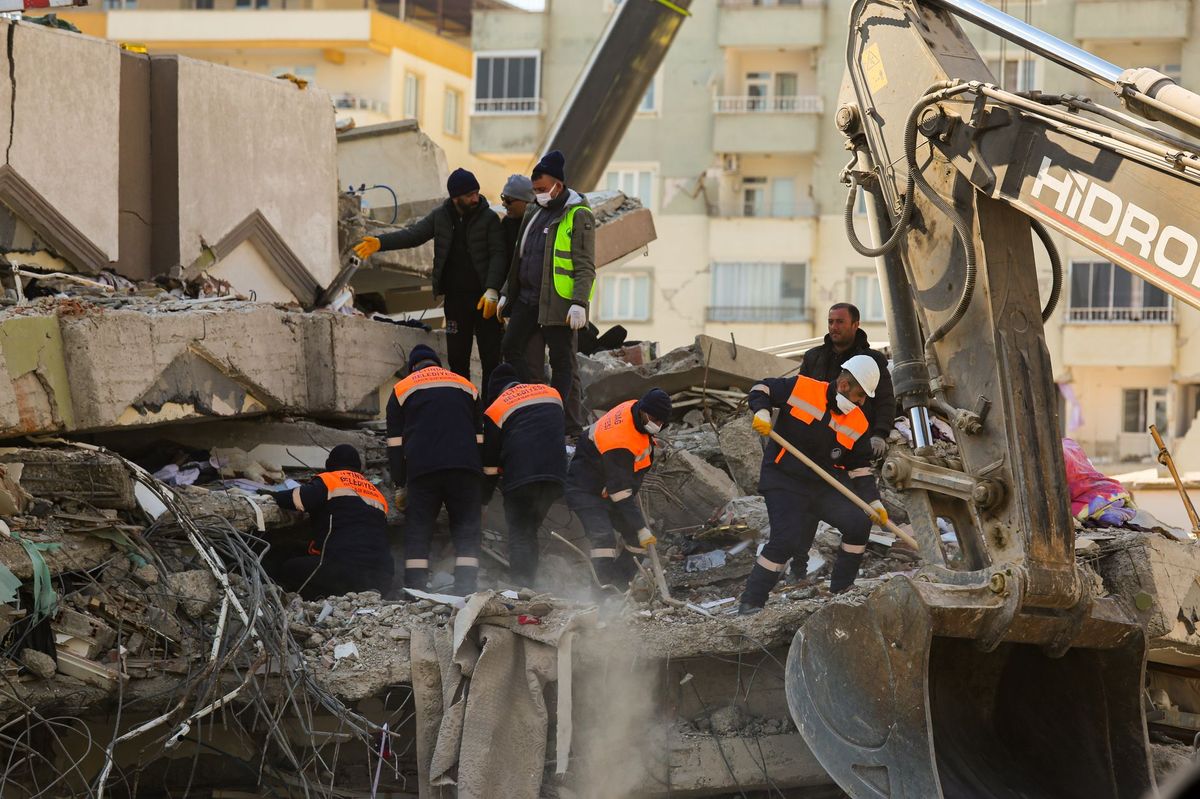
The math: emergency operations center (EOC) construction has surged to $1.4 billion in active projects across federal, state, and local government agencies, driven by the record 2024-2025 disaster seasons that exposed critical vulnerabilities in aging emergency management facilities. EOC construction costs average $800 to $1,500 per SF — among the highest per-SF costs of any government building type — reflecting hardened construction, redundant building systems, and technology integration requirements.
Bottom line: EOC construction is driven by disaster experience and the growing recognition that effective emergency management requires purpose-built facilities capable of sustained operations during the very events they're designed to manage. For contractors, EOCs represent high-value, technically demanding projects that require specialized capabilities in hardened construction, redundant MEP systems, and technology integration.
What Makes an EOC Different
Emergency operations centers are designed to remain fully operational during natural disasters, infrastructure failures, and security events that would disable normal buildings. This operational continuity requirement drives construction features including hardened structural systems designed for wind speeds of 200+ mph (hurricane-rated) and seismic Zone D or E (maximum seismic design category), blast-resistant construction for facilities in urban areas or military installations (designed to resist progressive collapse from vehicle-borne explosive threats), flood-resistant design with critical equipment elevated above projected flood levels plus 3 to 5 feet of freeboard, and impact-resistant fenestration (laminated, ballistic-rated windows) or windowless design for the highest-security EOCs.
Redundant Building Systems are the defining feature of EOC construction. Power systems include primary utility service (often dual feeds from separate substations), automatic transfer switching, diesel generator backup sized for 100% building load with 72 to 168 hours of fuel storage, and uninterruptible power supply (UPS) for critical technology systems. HVAC systems include redundant air handling units, chemical-biological-radiological (CBR) filtration for the highest-security EOCs, and positive pressure differential to prevent infiltration of contaminated outside air. Communications include redundant fiber optic feeds from diverse routes, satellite communications backup, amateur radio capability, and cellular signal amplification. Water and sanitary systems include on-site water storage (5,000 to 50,000 gallons) and backup sewage management for extended operations when municipal utilities may be disrupted.
Technology Integration represents 20 to 30% of EOC construction cost. The operations floor requires large-format video walls (typically 12 to 30 screens in 4K or higher resolution at $300,000 to $1.5 million), flexible workstation configurations with redundant power and data, audio/video conferencing capability with multiple simultaneous connections, situation awareness software displays including GIS, weather, and camera feeds, and acoustic design allowing simultaneous conversations without interference.
Active Construction Pipeline
The $1.4 billion active pipeline includes approximately 35 state-level EOC projects ($20 to $80 million each), 60+ county and city EOC projects ($5 to $30 million each), 15 federal EOC and COOP (Continuity of Operations) facility projects ($30 to $200 million each), and 25+ military installation emergency management facility projects.
Business tip: EOC construction is one of the few building types where the mechanical and electrical subcontract value regularly exceeds the general construction (structural, architectural) value. Contractors should plan for M&E subcontracts representing 40 to 50% of total project cost, well above the 30 to 35% typical of standard commercial construction.
Funding Sources
EOC construction is funded through FEMA Hazard Mitigation Grant Program (HMGP) funding triggered by disaster declarations, FEMA Pre-Disaster Mitigation (BRIC) competitive grants, state emergency management agency capital budgets, USDA Rural Development grants for rural EOCs, and local bond measures and capital improvement programs.
The most significant funding mechanism is HMGP, which provides 75% federal cost share for hazard mitigation projects including EOC construction. The record number of disaster declarations in 2024-2025 has generated substantial HMGP funding that states are deploying for EOC construction and upgrade projects.
Bottom line: EOC construction is a small but high-value market segment driven by disaster experience and the non-negotiable requirement for operational continuity during emergencies. Contractors with experience in hardened construction, redundant building systems, and technology integration will find sustained demand from government agencies at all levels.
Technology Infrastructure: The Construction Centerpiece
The technology systems in an EOC represent the single largest construction cost category and the primary differentiator between an EOC and a standard government office building. Understanding the technology construction scope is essential for contractors bidding EOC projects.
Operations Floor Design and Construction. The main operations floor is the focal point of EOC construction. A typical state-level EOC operations floor spans 5,000 to 15,000 SF and includes a video wall displaying situation awareness information (weather radar, traffic cameras, GIS mapping, social media monitoring, and television news feeds). Video walls use commercial LED or LCD display panels in configurations of 12 to 30+ screens, with total video wall costs of $300,000 to $1.5 million including displays, processors, mounting systems, and integration.
Workstations on the operations floor are arranged in functional clusters (operations, planning, logistics, finance/administration per the Incident Command System) with each station requiring redundant power (normal and UPS-backed circuits), dual network connections (primary and backup), multiple display monitors, telephone and radio communications, and cable management systems accommodating frequent reconfiguration.
The operations floor HVAC system must handle the substantial heat load generated by video walls, computers, and occupants at maximum staffing density (often 80 to 120 people in 5,000 to 10,000 SF during major incidents). HVAC design for the operations floor typically requires dedicated air handling units with redundant cooling capacity, supplemental cooling for the video wall and server equipment areas, and humidity control to protect sensitive electronics.
Communications Infrastructure. EOC communications construction includes a dedicated communications room housing radio base stations, telephone switching equipment, satellite communications terminals, and network equipment. The communications room requires enhanced physical security (reinforced walls, access control, CCTV), dedicated HVAC with N+1 redundancy, and grounding and lightning protection systems for the antenna infrastructure.
Antenna infrastructure on the EOC roof or adjacent tower includes VHF and UHF antennas for land mobile radio, HF antennas for long-range emergency communications, satellite earth station antennas (typically 1.2 to 2.4 meter dishes), and cellular signal amplification systems (bi-directional amplifiers or distributed antenna systems). Antenna construction and communications system installation typically requires coordination with a specialized communications contractor — one of the few subcontract categories that is truly unique to EOC construction.
Server Room and Data Center. The EOC server room supports critical applications including computer-aided dispatch (CAD), GIS mapping, Emergency Alert System (EAS), WebEOC or equivalent situation management software, and data backup and recovery. Server room construction follows Tier II or Tier III data center standards including raised access flooring, precision cooling (in-row or overhead CRAH units), UPS systems sized for the server load, fire suppression (clean agent rather than water), and cable tray and structured cabling infrastructure.
Hardened Construction Details
The physical hardening requirements for EOCs create construction challenges that require specific contractor expertise:
Wind Resistance. EOCs in hurricane-prone regions are designed to Essential Facility wind speed criteria — typically 200+ mph for the most critical facilities. This requires reinforced concrete or reinforced masonry wall construction (8 to 12 inch thickness), hurricane-rated window and door assemblies (tested to ASTM E1996 and FEMA 361 standards), and roof systems designed for the full wind uplift loading without relying on interior pressurization.
Flood Resistance. EOCs must remain operational during flooding events. Critical systems (generators, switchgear, communications, servers) are elevated above projected flood levels plus 3 to 5 feet of freeboard. In coastal areas, the entire building may be elevated on reinforced concrete piers or piles above the base flood elevation.
Blast Resistance. Federal EOCs and those in high-threat urban environments may require blast-resistant construction including progressive collapse resistance per GSA and DoD standards, laminated blast-resistant glazing, and setback distances for vehicle barriers.
Testing and Commissioning
EOC construction includes an extended commissioning and testing phase that goes well beyond standard building commissioning. Because an EOC must function during the very events it is designed to manage — storms, earthquakes, infrastructure failures — every redundant system must be verified under realistic conditions.
Functional Testing includes simulating utility power failure and verifying automatic generator startup and load transfer within the specified time (typically 10 to 30 seconds), operating on generator power for 72+ hours to verify fuel consumption, cooling capacity, and system endurance, simulating network and communications failures to verify backup systems activation, and conducting full-facility evacuation drills to verify life safety systems.
Tabletop and Functional Exercises using the completed EOC with emergency management staff verify that the facility supports emergency operations workflow, that technology systems function as designed under simulated stress, and that the building's environmental systems (HVAC, lighting, acoustics) maintain comfortable conditions during extended operations with maximum staffing.
The testing and commissioning phase typically extends 2 to 4 months beyond substantial completion, during which the contractor must maintain availability for system adjustments and deficiency corrections. This extended post-completion involvement should be factored into project staffing and overhead plans.
Scalability and Multi-Purpose Design
Modern EOCs are designed for scalability — the ability to expand operational capacity from day-to-day administrative use to full-scale emergency operations. Construction features supporting scalability include modular operations floor layouts with movable furniture systems that can be reconfigured from day-to-day workspace to emergency operations stations, scalable technology systems with additional display capacity, workstation connectivity, and communications channels that can be activated as needed, overflow space (training rooms, conference rooms, break areas) that can be converted to additional operations positions during major events, and external connection capability (portable communications, satellite uplinks, mobile command vehicle interfaces) allowing the EOC to serve as the hub of a distributed emergency management network.
This multi-purpose design approach ensures that the EOC is used daily for training, planning, and administrative functions — justifying the construction investment — while maintaining the capability to scale rapidly to full emergency operations when needed. Construction costs for scalable design are typically 5 to 10% higher than fixed-configuration design, but the improved utilization rate and operational flexibility provide significant long-term value.
Geographic and Hazard-Specific Design Variations
EOC design and construction vary based on the primary hazards faced by the community. Coastal EOCs emphasize flood resistance and wind hardening, with critical systems elevated above projected storm surge levels and building envelopes designed for sustained high-wind exposure. Earthquake-zone EOCs require base isolation or structural system configurations that maintain building functionality after design-level seismic events, with equipment mountings and interior finishes designed to resist earthquake forces without blocking egress or damaging critical systems. Tornado-region EOCs may incorporate FEMA safe room construction within the building — a hardened core area built to FEMA P-361 standards that provides near-absolute protection for occupants during EF5 tornado events.
These hazard-specific design requirements add construction costs ranging from 5% (basic wind hardening) to 25% (full seismic isolation with FEMA safe room) above the base EOC construction cost.
Cost Analysis and Justification
EOC construction costs are among the highest per-SF of any government building type, and the facilities are used at full capacity only during relatively infrequent emergency events. This combination creates political and budgetary challenges that require careful cost justification.
The economic argument for EOC construction rests on several quantifiable benefits. Effective emergency management reduces disaster losses by 15 to 25% according to FEMA cost-benefit analysis methodologies. For a community experiencing $100 million in average annual disaster losses, a 20% reduction in losses ($20 million per year) easily justifies a $20 to $40 million EOC construction investment over its 30 to 50-year service life.
Insurance market impacts provide additional justification. Communities with modern EOCs and comprehensive emergency management programs qualify for FEMA Community Rating System (CRS) credits that reduce National Flood Insurance Program premiums for all policyholders in the community by 5 to 45%. In a community with 10,000 flood insurance policies averaging $1,500 per year, a 20% CRS reduction saves policyholders $3 million per year — a benefit that accumulates over the EOC's entire service life.
Federal reimbursement efficiency also supports EOC investment. Communities with functional EOCs document disaster damage and manage FEMA Public Assistance claims more effectively, recovering 10 to 20% more federal disaster assistance than communities managing response from improvised facilities.
Business tip: When bidding EOC projects, emphasize your experience with hardened construction and redundant systems in your qualifications. EOC owners — typically emergency management directors and county administrators — prioritize contractor experience with the specific construction features that differentiate EOCs from standard government buildings. A contractor with proven experience constructing generator systems, communications infrastructure, and hardened building envelopes has significant competitive advantages over general contractors without this specialized experience.
Related Reading
Frequently Asked Questions
How are emergency operations center construction projects funded?
According to the latest industry data, emergency operations center construction is showing notable trends in 2026. Current figures indicate $1.4 billion, which represents a significant benchmark for contractors and developers planning projects this year. Regional variations apply, so checking local market conditions remains essential for accurate budgeting.
What is the average cost of emergency operations center construction?
Regional analysis of emergency operations center construction reveals uneven distribution across U.S. markets. The data point of $800 highlights the scale of activity, with Sun Belt and high-growth metro areas generally leading in volume. Contractors expanding into new territories should evaluate local demand indicators before committing resources.
Which states are investing the most in emergency operations center construction?
Compared to prior periods, emergency operations center construction has moved significantly. Current data showing $1,500 indicates the direction of the market, and contractors who adjust their strategies accordingly will be better positioned for profitability. Monitoring monthly updates from BLS and Census Bureau data releases is recommended.