The Ground Under Your House Just Got More Expensive
You can negotiate with your framer. You can value-engineer your cabinets. You can switch from hardwood to LVP and save $8,000. But there's one cost you absolutely cannot cut corners on, and it just went up 14% in a single year: the foundation.
The average cost of a residential concrete foundation in the United States hit $14.50 per square foot of footprint in early 2026, up from $12.70 a year ago. For a typical 2,000-square-foot slab-on-grade foundation, that's an increase from $25,400 to $29,000 — an extra $3,600 that has to come from somewhere. For a full basement foundation, the increase is even larger, pushing total foundation costs past $45,000 in many markets.
Here's the deal: foundation costs are driven by concrete prices, rebar and reinforcing costs, labor rates for concrete crews, and the increasing complexity of code-required structural provisions. All four of those inputs have been moving up simultaneously, creating a cost squeeze that's hitting every builder in the country. Let me break down what's happening and what you can do about it.
What's Driving the 14% Increase
Ready-mix concrete prices are up 11% year-over-year. The national average for ready-mix concrete hit $165 per cubic yard in Q1 2026, up from $149 a year ago. This increase is driven by energy costs (cement production is extremely energy-intensive), Portland cement price increases (up 15% due to supply constraints and regulatory costs at domestic plants), and transportation costs (concrete trucks are expensive to operate and maintain).
A typical residential slab-on-grade foundation requires 40 to 60 cubic yards of concrete, so the $16 per yard increase adds $640 to $960 to the material cost alone. A full basement with 8-foot walls requires 80 to 120 cubic yards, adding $1,280 to $1,920 in concrete cost.
Rebar and reinforcing steel costs are up 8%. Grade 60 rebar is running $0.85 to $1.10 per pound nationally, up from $0.78 to $1.00 a year ago. A residential foundation typically requires 2,000 to 4,000 pounds of rebar for a slab and 5,000 to 8,000 pounds for a basement, so the increase adds $140 to $800 depending on foundation type and local pricing.
Concrete labor rates are up 12%. Experienced concrete finishers and form setters are in extremely high demand, and their rates have increased accordingly. The national average for concrete crew labor is $65 to $85 per hour per worker, up from $58 to $75 a year ago. A typical residential foundation requires 120 to 200 labor hours for slab-on-grade and 300 to 500 hours for a full basement, so the labor increase adds $840 to $5,000 per foundation.
Code requirements are adding cost. The 2024 IRC includes updated seismic provisions that require additional reinforcing in many markets, and updated wind provisions that increase anchor bolt and hold-down requirements in high-wind zones. These code changes add $500 to $2,000 per foundation in affected areas — not in material costs alone, but in the engineering review and inspection requirements that accompany them.
Pro tip: If you're not already getting at least three concrete bids on every project, start now. Concrete pricing is the most variable trade cost in residential construction — I've seen bids on the same foundation differ by 25% to 30% between the highest and lowest bidder. The key is to compare apples to apples: make sure every bidder is pricing the same specification, including concrete strength, rebar schedule, finishing requirements, and any special provisions like vapor barriers or waterproofing.
Regional Breakdown: What Foundations Actually Cost
The $14.50 per square foot national average encompasses enormous regional variation. Here's what you'll actually pay in different parts of the country:
Northeast: $16 to $22 per square foot for a full basement (the predominant foundation type). Full basements in the Northeast run $38,000 to $55,000 for a 2,000-square-foot home, driven by deep frost footings (48 to 60 inches in most areas), high labor rates, and the cost of waterproofing required by code and buyer expectation. Poured concrete walls have largely replaced block in new construction, with formed poured walls running $12 to $18 per square foot of wall area.
Southeast: $10 to $14 per square foot for slab-on-grade (the predominant type). Slab foundations in the Southeast are generally the least expensive in the country, benefiting from shallow frost depths (12 to 24 inches), lower concrete prices, and competitive labor markets. Total slab costs for a 2,000-square-foot home run $20,000 to $28,000. Crawl spaces, common in parts of the Carolinas and Virginia, add $3,000 to $6,000 over slab construction.
Midwest: $14 to $19 per square foot for basements. Midwestern foundation costs fall between Northeast and Southeast extremes, with frost depths of 36 to 48 inches and moderate labor rates. Full basements run $32,000 to $45,000 for a 2,000-square-foot home. The Midwest has the highest rate of ICF (insulated concrete form) adoption for residential basements, which adds $3 to $5 per square foot over conventional formed and poured walls but provides insulation and waterproofing in a single step.
Mountain West: $12 to $17 per square foot, varying by foundation type. Markets like Denver, Salt Lake City, and Boise use a mix of full basements, crawl spaces, and slabs depending on local soil conditions and market preferences. Expansive soils are a major cost driver in parts of Colorado and Utah, where engineered foundations with deepened footings, post-tensioned slabs, or pier-and-grade-beam systems can add $5,000 to $15,000 over standard construction.
West Coast: $14 to $20 per square foot. California's seismic requirements make it the most expensive market for foundation construction on a per-square-foot basis. Seismic reinforcing, hold-downs, and the requirement for engineered foundation designs in many jurisdictions add significant cost. Slab-on-grade foundations in California run $28,000 to $40,000 for a 2,000-square-foot home. Hillside sites with caisson or retaining wall requirements can push foundation costs to $60,000 or more.
Texas: $10 to $15 per square foot for post-tensioned slab (the predominant type). Texas's expansive clay soils have made post-tensioned slabs the standard, with tensioning cable and engineering adding about $2 to $3 per square foot over a conventional slab. Total costs run $20,000 to $30,000 for a 2,000-square-foot home. The post-tension premium is well worth it in areas with high plasticity index soils — the cost of repairing a cracked conventional slab on expansive clay far exceeds the upfront investment in post-tensioning.
Pro tip: In markets with problematic soils — expansive clay, high water tables, organic deposits, or fill — always get a geotechnical report before you design the foundation. Yes, it costs $1,500 to $3,000. Yes, the homeowner doesn't want to pay for it. But a geotechnical report that identifies soil conditions and recommends an appropriate foundation design prevents the $20,000 to $50,000 surprises that come from building the wrong foundation on difficult soil. I've seen builders go bankrupt over foundation failures that a $2,000 soils report would have prevented. This is not optional.
Cost Management Strategies
Here's what the most cost-conscious builders are doing to manage foundation cost increases:
Optimizing the foundation footprint. Every square foot of foundation costs $10 to $22, so reducing the footprint by even 50 square feet saves $500 to $1,100. Two-story designs are inherently more foundation-efficient than ranch plans because they put more living space above the same foundation area. If you're not already pushing two-story plans in your entry-level product, the foundation math alone should motivate the switch.
Standardizing foundation designs. Custom-engineered foundations are more expensive than prescriptive-code foundations because of the engineering fees, the more detailed inspection requirements, and the inability to reuse the design across multiple homes. If your standard plans use prescriptive foundation provisions (which the IRC allows in most non-seismic, non-high-wind locations), you avoid the $1,500 to $3,000 engineering fee and simplify the inspection process.
Pre-purchasing concrete. Some builders are locking in concrete prices with their ready-mix supplier 6 to 12 months in advance, using fixed-price contracts that provide cost certainty. This strategy works best for production builders with predictable volume and start schedules. The ready-mix supplier benefits from guaranteed volume, and the builder benefits from price protection.
Exploring alternative foundation systems. Frost-protected shallow foundations (FPSF) can reduce excavation and concrete quantities by 30% to 50% in cold climates by using rigid foam insulation to protect against frost rather than deep footings. Helical piers with grade beams can be cost-competitive with conventional foundations on sites with difficult access or problematic soils. And precast concrete foundation systems, while less common, offer speed and quality advantages that can offset their higher material cost.
Scheduling pours strategically. Concrete work performed in extreme heat or cold requires special provisions — hot weather additives, cold weather protection, extended curing time — that add cost. Scheduling pours during moderate weather months saves $500 to $1,500 per foundation in avoided special provisions. Obviously you can't always control your schedule, but when you can, spring and fall pours are the most cost-effective.
The Quality Conversation
In a market where foundation costs are rising, it's tempting to look for savings by reducing concrete strength, using less rebar, or shortening cure times. Don't do it. The foundation is the one component of the house that absolutely cannot fail, and the cost of foundation remediation — $15,000 to $100,000 depending on the severity — dwarfs any savings from cutting corners during construction.
Here's what I tell every builder I work with: spend whatever it takes to get the foundation right. Use the specified concrete strength (typically 3,000 to 4,000 PSI for residential). Install the rebar per the plan. Maintain adequate concrete cover over reinforcing. Allow proper cure time before loading the foundation. And waterproof basement walls properly — not with a sprayed-on damproofing coating, but with a real waterproofing membrane if the design calls for it.
The foundation is not the place to save money. It's the place to spend it. Because every dollar you save on a bad foundation will cost you ten dollars to fix later — and that's if the homeowner doesn't sue you first.
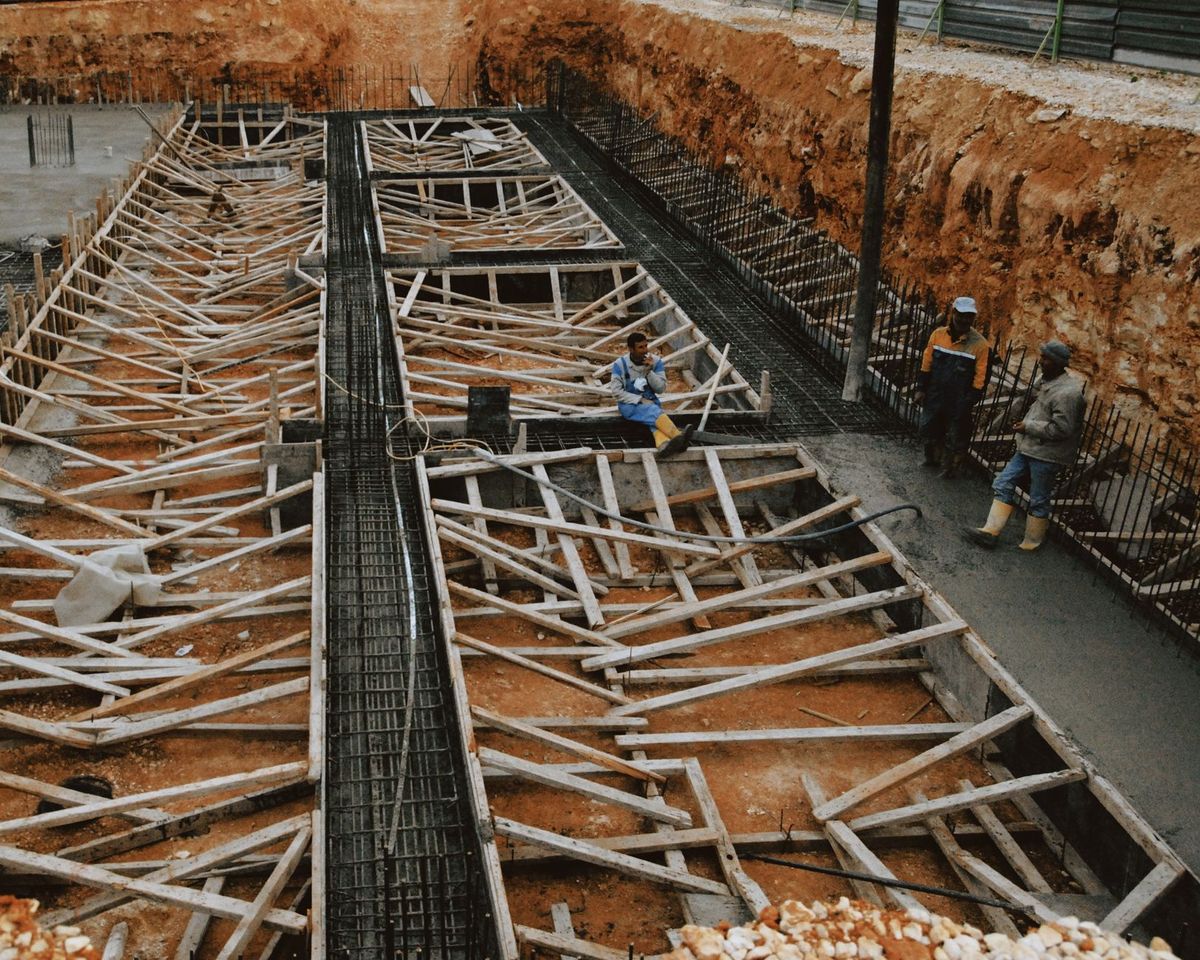
Pro tip: Take photos of every foundation before and during the pour — rebar placement, form alignment, anchor bolt locations, and hold-down details. Take photos of the finished pour. Store them in your project file permanently. If a foundation issue arises years later — and they do — those photos are your best defense. They prove what was installed and how it was built. A $50 investment in photo documentation has saved me from a $50,000 claim more than once. Do it on every project, every time.
Looking Ahead
Foundation costs are unlikely to decrease in the near term. Cement production capacity is constrained domestically, energy costs remain elevated, and the labor market for concrete workers shows no signs of loosening. Most industry forecasters project additional cost increases of 6% to 10% annually through 2028.
For builders, this means foundation costs will continue to put pressure on the overall cost of new construction, further widening the gap between new and existing home prices. The response needs to be a combination of design efficiency (smaller footprints, two-story designs), process efficiency (standardized designs, competitive bidding), and strategic purchasing (volume commitments, price locking).
And above all, quality. Because in a market where foundations are expensive, the one thing more expensive than a good foundation is a bad one. Get it right the first time. Your reputation and your balance sheet depend on it.
ICF: The Alternative Worth Considering
Insulated Concrete Forms have been gaining traction in residential foundation construction, particularly in cold climates where basement wall insulation is required by code. ICF foundations use interlocking foam forms that remain in place after the concrete is poured, providing both the formwork and the insulation in a single step.
The cost comparison is illuminating. Traditional formed and poured basement walls run $12 to $18 per square foot of wall area, plus $3 to $6 per square foot for insulation installed after the walls are stripped. ICF walls cost $18 to $25 per square foot of wall area, but this price includes the insulation — no separate insulation step is required. When you add the insulation cost to the traditional wall, the price difference narrows to $2 to $5 per square foot.
And ICF delivers additional benefits: R-values of R-22 to R-26 (versus R-10 to R-13 for insulated traditional walls), inherent waterproofing (the continuous foam eliminates the cold joints that are common leak points in traditional walls), faster construction (ICF walls can be stacked and poured in a single day for a typical residential basement), and reduced forming and stripping labor.
The builders I know who have switched to ICF for basements — and there are more of them every year — report that after a two-to-three-home learning curve, their crews install ICF at comparable or faster speeds than traditional forming. The key is training: ICF installation is different from traditional forming, and crews need proper instruction to avoid the mistakes (misaligned forms, blowouts during pour, inadequate bracing) that can be costly and dangerous.
Pro tip: If you're considering ICF, start with a basement job rather than an above-grade application. Basement walls are typically straight, single-height pours with minimal window and door openings — the simplest possible ICF application. Use a manufacturer like Nudura, Fox Blocks, or Logix that provides on-site training for your first project. The manufacturer's rep will walk your crew through the process and help avoid the common beginner mistakes. After two or three basements, your crew will be proficient, and you can evaluate whether to expand ICF to above-grade applications.
Related Reading
To put these numbers to work on your next bid, start with our free construction cost estimator and the concrete calculator.
Frequently Asked Questions
How much does residential foundation costs 2026 cost in 2026?
According to the latest industry data, residential foundation costs 2026 is showing notable trends in 2026. Current figures indicate $8,000. B, which represents a significant benchmark for contractors and developers planning projects this year. Regional variations apply, so checking local market conditions remains essential for accurate budgeting.
What states have the most residential foundation costs 2026 activity?
Regional analysis of residential foundation costs 2026 reveals uneven distribution across U.S. markets. The data point of 14% highlights the scale of activity, with Sun Belt and high-growth metro areas generally leading in volume. Contractors expanding into new territories should evaluate local demand indicators before committing resources.
How does residential foundation costs 2026 compare to last year?
Compared to prior periods, residential foundation costs 2026 has moved significantly. Current data showing $14.50 indicates the direction of the market, and contractors who adjust their strategies accordingly will be better positioned for profitability. Monitoring monthly updates from BLS and Census Bureau data releases is recommended.