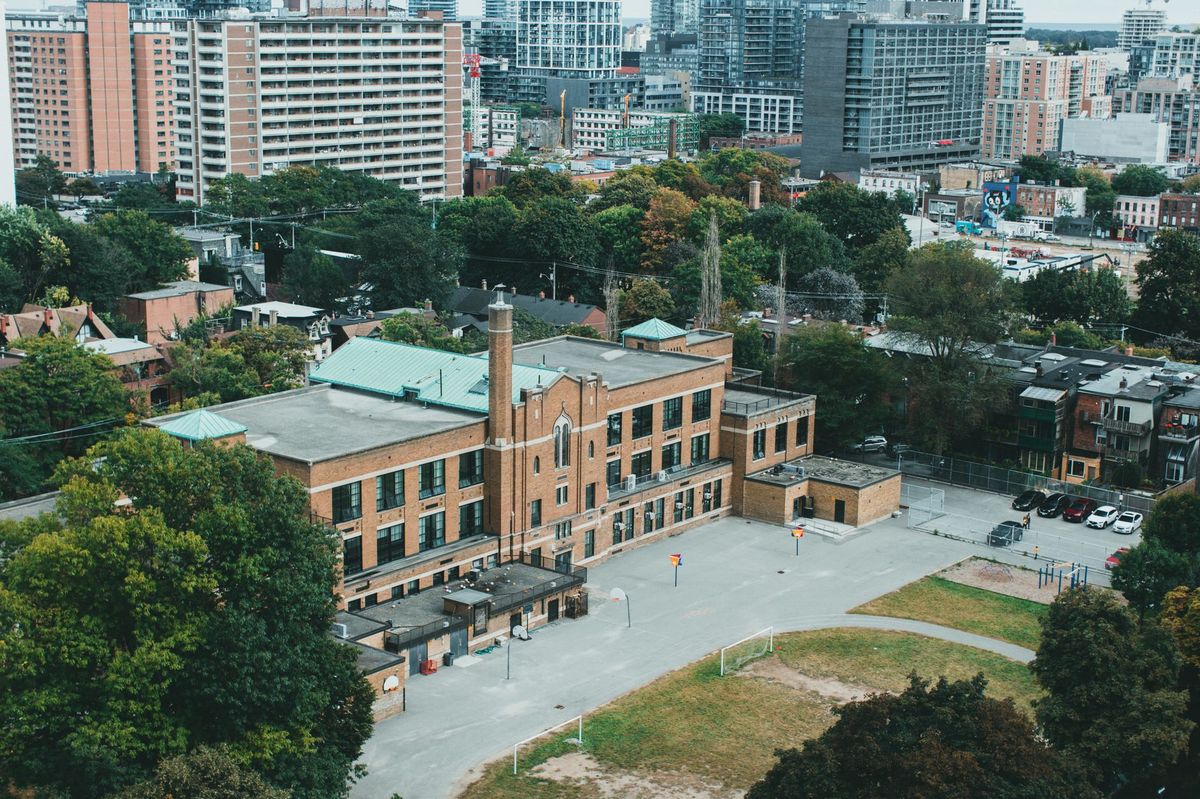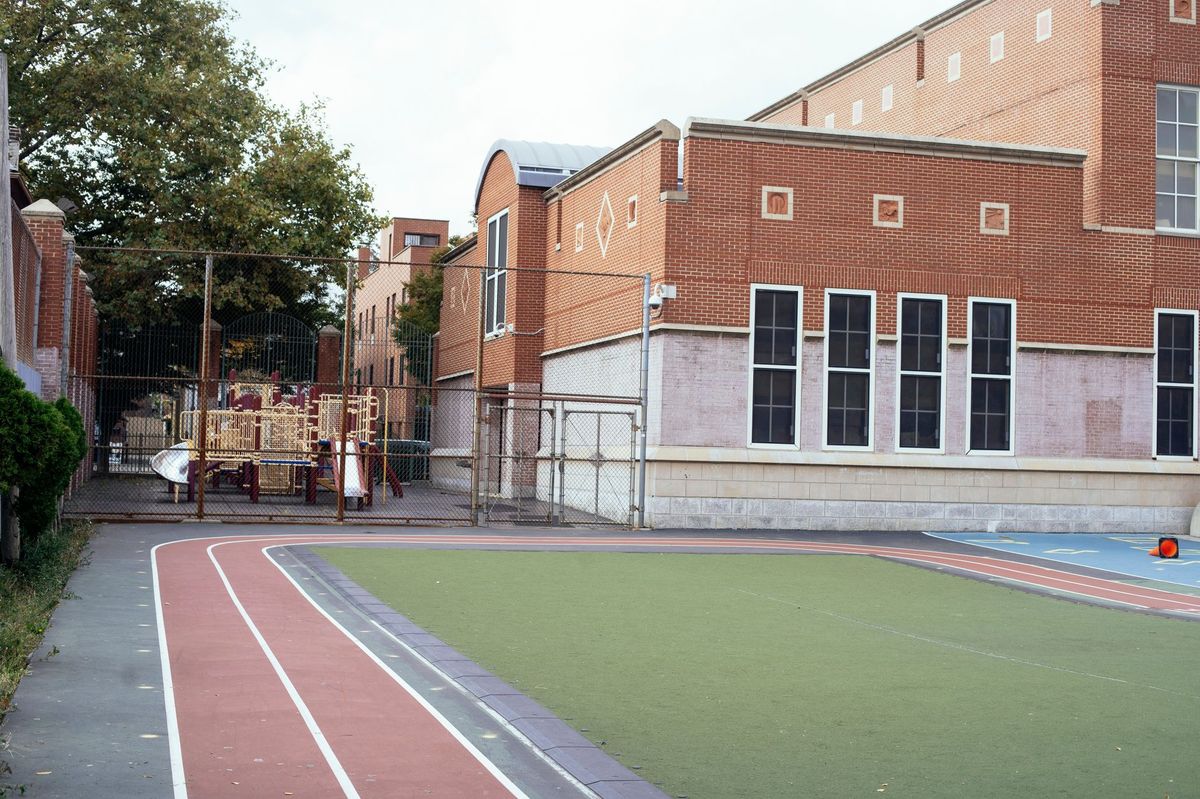
$89.3 billion. That's what the country is spending on school construction in fiscal 2026, and if you're a contractor who hasn't figured out how to get in front of school district procurement offices, you're leaving serious money on the table.
I've been tracking this market for a while now, and the volume right now is unlike anything I've seen in a decade. Dodge Data and McGraw Hill are both calling it a record year. Enrollment growth in the Sun Belt, aging infrastructure everywhere else, and a flood of bond money from California to Florida are all hitting at once. The pipeline is deep, the work is steady, and the clients pay.
Here's what you need to know about where the work actually is — by state, by trade, and by project type.
$89.3B Split: 63% Renovation, 37% New Construction
Before you start chasing the shiny new-build projects, understand the real breakdown. Of that $89.3 billion, roughly 63% is renovation and modernization work — not ground-up construction. That means $56 billion-plus is going toward upgrading existing school buildings, not cutting new footings.
That matters for your business. Renovation work requires different bonding thresholds, different pre-qualification requirements, and often different crews than new construction. Elementary school projects are running a median of $18.4 million, while high school projects clock in at $44.2 million median. A 1,200-student high school gut rehab is a serious job.
The split between new and renovation has widened every year since 2020. Most districts are making a calculated decision: land is expensive and scarce near existing populations, while the bones of a 1970s school often have decades of structural life left. What doesn't have decades of life left? The mechanical systems. The windows. The roofing. The electrical panels. That's where the money is flowing.
California Leads at $14.2B — and It's All Bond Money
California is the single biggest school construction market in 2026 at $14.2 billion, and the money is coming from two ballot measures: Proposition 28 and Proposition 2. Prop 2 alone authorized $10 billion in general obligation bonds for K-12 and community colleges. Combined with local school bonds passed in the November 2024 cycle, California school districts are sitting on an enormous stack of approved funding.
The practical reality for contractors: California school work requires DIR (Department of Industrial Relations) registration, certified payroll reporting, and full prevailing wage compliance on virtually every project. The paperwork burden is real, but the volume is there to support the overhead.
Texas is second at $9.8 billion, driven by record enrollment growth in the Dallas-Fort Worth, Houston, and Austin metro areas. Texas school districts have been running bond elections for four straight years and winning most of them. The state doesn't have prevailing wage requirements the same way California does, which makes the compliance picture simpler, but the competition is fierce.
Florida rounds out the top three at $7.1 billion. Miami-Dade alone has a multi-year capital program that keeps a hundred contractors busy. Florida school work has its own quirks — impact fees, hurricane wind load requirements, and a procurement system that rewards local certification.
If you're not in one of those three states, look at the next tier: New York, North Carolina, Georgia, and Arizona all have active school construction pipelines above $3 billion each.
The Trade Breakdown: HVAC, Electrical, and Roofing Are Leading
Here's the deal on trades: the renovation-heavy market means mechanical, electrical, and roofing subcontractors are having a banner year. Let me break down where the volume is concentrating.
HVAC. The average HVAC replacement cost per school building is running $2.1 million. With 18,000 school buildings identified nationally as having systems beyond their useful service life, you're looking at a $37.8 billion HVAC replacement backlog — and districts are finally starting to draw it down. Post-COVID indoor air quality mandates pushed this from a capital wish-list item to a legislative priority in many states. Mechanical contractors with school district experience and ESCO (Energy Service Company) relationships are booked out 18 months in some markets.
Electrical. The shift toward EV charging infrastructure, LED lighting retrofits, and smart building systems is driving electrical scopes on almost every school renovation. Adding to that: aging electrical panels in schools built before 1990 are a code compliance liability that districts can no longer defer. Electricians with commercial experience and 25% or more public-sector work in their mix are positioned well.
Roofing. The numbers here are stark. Industry estimates put the typical roofing replacement cycle at 20 to 25 years. There are 18,000 school buildings nationally that are at or past that threshold. Roofing contractors doing school work need to be comfortable with TPO, modified bitumen, and metal roofing systems depending on regional preferences, and many school projects require specific warranty periods (typically 20-year NDL membrane warranties) that limit which manufacturers you can spec.
Lead abatement. This one is growing fast and a lot of contractors aren't paying attention to it. Lead abatement contracts in school buildings are up 34% in 2026, driven by the EPA's updated Lead and Copper Rule and state-level mandates. If you're doing any renovation work on pre-1978 school buildings and you're not certified for lead abatement — or you're not subbing it to someone who is — you're creating liability exposure.
How Bonds Drive the Project Pipeline (and What That Means for Timing)
Most of the school construction dollars in 2026 are flowing through voter-approved general obligation bonds. Understanding the bond-to-shovel timeline matters for your pipeline planning.
Here's how it typically works: a district passes a bond measure in November. The next six months are spent on program management procurement, schematic design scoping, and board approvals. By 12-18 months post-election, the first design contracts are let. Construction bids typically follow 18-30 months after bond approval. That means bond measures passed in November 2023 and 2024 are the ones creating today's construction opportunities.
The implication: if you want to win school work in 2027 and 2028, you need to be tracking bond elections happening right now. Resources like Ballotpedia and your state school boards association typically track upcoming school bond measures. Sign up for those alerts.
Federally-assisted school projects — including any project with ESSER funds, BRIC grants, or federal emergency relief dollars — carry prevailing wage requirements under the Davis-Bacon Act. Make sure your estimators are pulling the correct wage determinations for the county before they put a number together.
For more context on how public bond spending is flowing through infrastructure at the state level, see our breakdown of state DOT budgets at record levels — the federal funding mechanisms are similar.
Getting on the Approved Vendor List: The Actual Process
A lot of contractors assume the school construction market is locked up by the big regional firms. It's not — but you do have to do the pre-work to compete.
Most school districts of any size maintain a pre-qualified contractor list. Getting on that list typically requires:
- Current financial statements (most districts want two to three years of reviewed or audited financials)
- Certificate of insurance meeting the district's minimums (often $5M general liability, $10M umbrella on larger projects)
- Current bonding letter from your surety showing single-project and aggregate capacity
- References from comparable public-sector work (schools or government buildings preferred)
- DIR/prevailing wage registration in states that require it
- A W-9 and vendor application in the district's procurement system
The actual process varies by district, but most post their vendor pre-qualification applications on their capital programs website or through a portal like PlanetBids, OpenGov, or DemandStar. Create accounts on all three if you haven't.
Small contractors often overlook the fact that school districts are required to actively solicit small business participation on publicly-funded projects. Certified small business, DBE, DVBE, and SBE firms get preference points in many scoring systems. If you qualify for any of those certifications and you're not using them, you're competing on an uneven field.
The ESSER Cliff and What Comes After
One honest caveat: a portion of current school construction activity is funded by ESSER (Elementary and Secondary School Emergency Relief) funds from the federal COVID response packages. The ESSER III obligation deadline was September 2024, with liquidation extended through January 2025. Most ESSER-funded projects are either in construction now or wrapping up.
That means the ESSER-fueled boost is largely spent. The $89.3B figure for 2026 is still strong, but the mix is shifting toward state bond funds and local tax revenue, which tend to have longer procurement timelines and more voter accountability pressure. Districts spending bond money face stricter audit requirements than districts spending federal grants.
The good news: the underlying demand drivers — enrollment growth in growing metros, aging infrastructure everywhere, indoor air quality standards — are not going away. The IIJA funding disbursements are also creating adjacent school infrastructure work: broadband to school buildings, energy upgrades through DOE programs, water infrastructure adjacent to school campuses. The pipeline extends well into the decade.
State-by-State Market Heat Map
To give you a practical picture, here's where the hottest school construction markets are in 2026 by state:
California ($14.2B): Dominated by Prop 2 bond work. Highest compliance burden. Highest volumes. Best for larger GCs and specialty subs with DIR registration.
Texas ($9.8B): Fast-growing suburban school districts in DFW, Houston, and Austin. Competitive but accessible for regional contractors. No state prevailing wage.
Florida ($7.1B): Heavy on hurricane-rated renovations and new capacity in high-growth counties. Miami-Dade, Broward, Orange County are the big buyers.
New York ($5.4B): NYC School Construction Authority alone is one of the largest school construction clients in the country. MWBE requirements are strict and enforced.
North Carolina ($4.1B): Bond packages from Charlotte-Mecklenburg, Wake County, and Guilford County driving a lot of activity.
Georgia ($3.8B): SPLOST (Special Purpose Local Option Sales Tax) is the primary funding vehicle. Strong suburban Atlanta market.
Arizona ($3.2B): High-growth desert school districts with fast-track procurement timelines.
FAQ
What types of school construction projects are most common right now? The majority — 63% — are renovations and modernization projects rather than new construction. Common scopes include HVAC replacement, roofing systems, electrical panel upgrades, Americans with Disabilities Act compliance, and indoor air quality improvements. New construction is concentrated in high-growth suburban districts in Texas, Florida, Arizona, and the Carolinas.
Do school construction projects require prevailing wages? On federally-assisted projects, yes — Davis-Bacon Act prevailing wages apply. California requires prevailing wages on all public school work regardless of federal funding. Texas and Florida do not have state prevailing wage laws, but some local jurisdictions add requirements. Always verify before bidding — the wage determination affects labor costs significantly.
How competitive is the school construction market for smaller contractors? Smaller contractors can compete effectively, especially on subcontract work and on projects under $10 million. Many districts have small business preference programs and set-asides. The key is getting pre-qualified early and building relationships with the district's capital programs office and the larger GCs managing the work.
What certifications help contractors win school construction work? Davis-Bacon wage compliance familiarity is essential for federally-funded work. In California, DIR registration is required. Lead abatement certification matters for pre-1978 buildings. SBE, DBE, DVBE, and MWBE certifications provide preference points in many school district scoring systems. HAZMAT certifications are increasingly relevant as asbestos and lead abatement scopes grow.
How long does it take from bond passage to construction start? Typically 18 to 30 months from bond election to breaking ground on the first projects. Program management is procured first (6-12 months post-election), then design (12-18 months), then construction bids. Large programs with multiple schools run as rolling bid packages, so contractors can enter the pipeline at multiple points over a 5-7 year bond program.
Your Action Item for This Week
Pull up Ballotpedia's school bond tracker and identify every school bond measure that passed in your state in the November 2023 and November 2024 elections. For each district with a bond package over $50 million, find their capital programs office contact or website. Look for pre-qualification applications on PlanetBids or OpenGov. Submit your pre-qualification packet to at least two districts this week. It takes two to four hours to do right, and it opens the door to a market with steady, predictable, publicly-funded work for the next five to seven years.