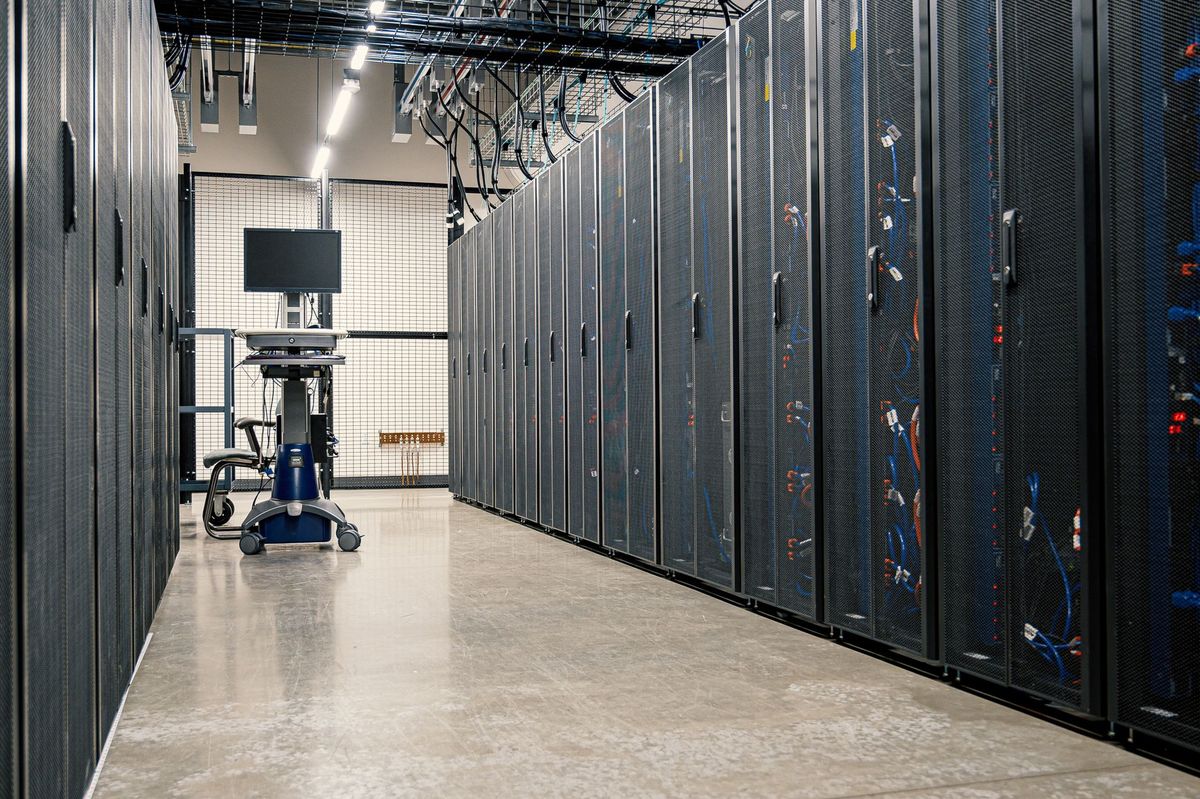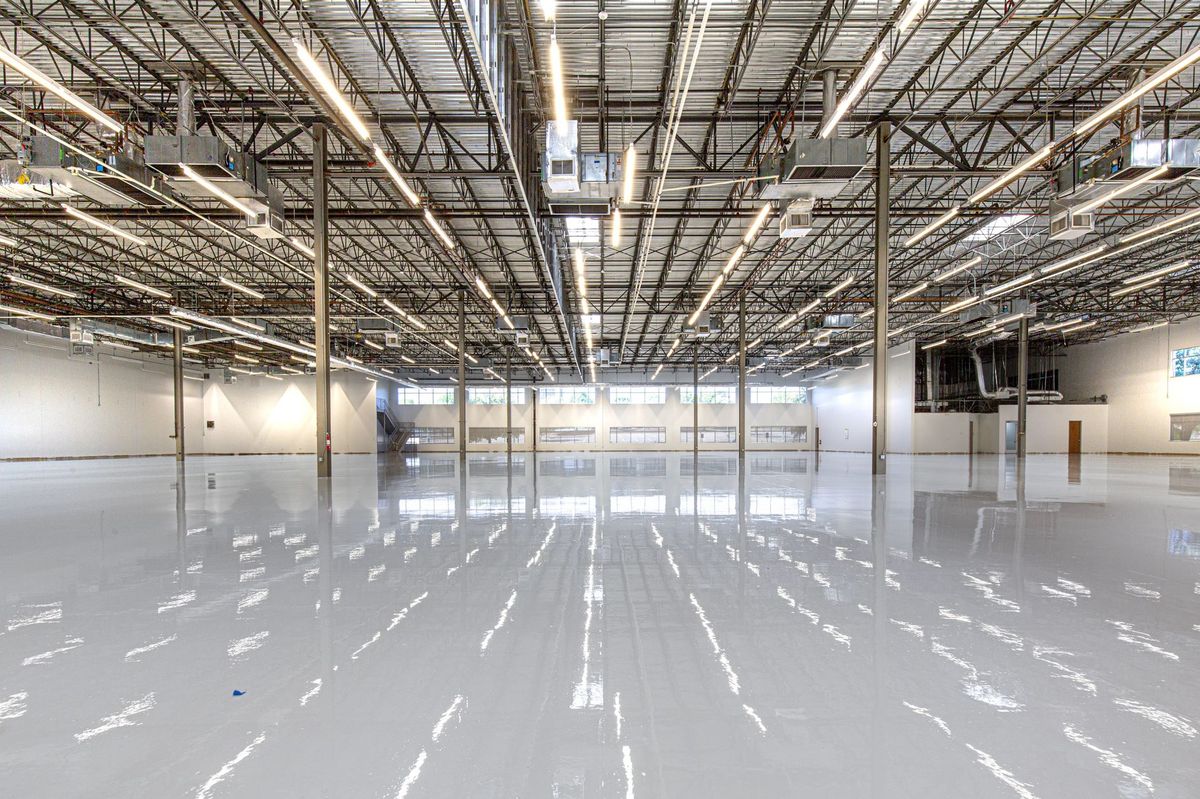
Data center construction is the fastest-growing piece of private nonresidential building in the country. The Census Bureau puts private data center construction at a seasonally adjusted annual rate of $84.95 billion in August 2026 (preliminary), up 73.2% from $49.05 billion a year earlier. In August 2021 it was $10.5 billion.
All of that money turns into labor demand, and it is concentrated in a few trades. Virginia's Joint Legislative Audit and Review Commission (JLARC) found in its 2024 study that a typical data center build has about 1,500 construction workers on site at peak, and that a single building usually takes 12 to 18 months to construct. The biggest campuses go further: Meta estimated 5,000 construction workers at peak for its $10 billion Richland Parish, Louisiana data center, with construction expected to run through 2030, according to Biz New Orleans's December 2024 report.
If you want the big picture on spending and markets, see our state-by-state data center construction tracker. This article is about the trades: who these jobs need, what the federal wage data says, and how crews and subcontractors get onto them.
Why Electrical Work Dominates
Data centers are electrical buildings. Cushman & Wakefield's 2026 Data Center Development Cost Guide, as summarized by CRE Daily in August 2026, puts power infrastructure as the single largest cost category in a greenfield build at 21%, ahead of core-and-shell construction and sitework combined at 17%. The same guide found switchgear costs rose 60% between December 2021 and early 2026, and noted that a shrinking pool of skilled trades is adding cost and stretching timelines.
The electrical scope includes medium-voltage distribution, switchgear lineups, transformers, standby generators and paralleling gear, UPS systems and batteries, busway, and miles of feeders and branch circuits. That is why electricians are usually the largest single trade on site and why the electrical crew size often sets the pace of the job.
The Trades These Jobs Need
Electricians
The core trade. Work in shortest supply tends to be medium-voltage terminations and switchgear, generator and transfer equipment installation, and the testing and commissioning work at the end of the job. Electricians with industrial, utility, or substation experience transfer well.
The Bureau of Labor Statistics reports a national median wage for electricians of $30.38 an hour ($63,190 a year) in May 2025, about 821,000 jobs, and projected employment growth of 9% from 2025 to 2035, which BLS calls much faster than average, with about 72,700 openings a year. Those are all-industry figures, not data center rates. Pay on large data center jobs depends on union agreements, overtime, and per diem, and varies widely by market. For state-by-state numbers, see our electrician wages by state.
Pipefitters and HVAC mechanics
Cooling is the second-largest trade package. Chilled water plants, large-diameter piping, air handling, and the liquid cooling loops that AI hardware increasingly requires all need pipefitters and HVAC mechanics. BLS reports a May 2025 national median of $30.67 an hour for plumbers, pipefitters, and steamfitters and $29.33 an hour for HVAC mechanics and installers. Our pipefitter wages by state covers regional differences.
Sheet metal workers
Air-cooled data halls still need a lot of ductwork, plenums, and containment. BLS reports a May 2025 national median of $29.71 an hour for sheet metal workers. See our sheet metal worker wages by state.
Ironworkers
Structural steel for large single-story halls, equipment platforms, and support steel for mechanical and electrical gear. BLS reports a May 2025 national median of $30.18 an hour for structural iron and steel workers. More in our ironworker wages by state.
Concrete finishers and operating engineers
The foundation package is first on the critical path. Data center slabs carry heavy equipment loads and tight flatness specs, and generator and transformer mats can fall under mass concrete rules. BLS reports May 2025 national medians of $27.41 an hour for cement masons and concrete finishers and $28.78 an hour for operating engineers. See our article on data center foundations and concrete finisher wages by state.
Low-voltage and telecom installers
Structured cabling, fiber backbone, cable tray, and security systems are a separate ecosystem from the power side. BLS reports a May 2025 national median of $30.72 an hour for telecommunications equipment installers and repairers (except line installers) and $35.73 an hour for telecommunications line installers and repairers. BICSI's Registered Communications Distribution Designer (RCDD) credential is widely used for people who design and specify cabling systems.
Laborers
Every phase needs general labor, from site work to cleanup during commissioning. BLS reports a May 2025 national median of $22.66 an hour for construction laborers.
What Wages Look Like in Data Center States
Here are BLS May 2025 median hourly wages for electricians and for plumbers, pipefitters, and steamfitters in several states with heavy data center activity. These are statewide medians across all industries, so they show the local baseline, not what a specific data center job pays.
| State | Electricians | Plumbers, pipefitters, steamfitters |
|---|---|---|
| Virginia | $30.24 | $29.07 |
| Texas | $28.16 | $28.77 |
| Georgia | $28.04 | $27.50 |
| Ohio | $31.11 | $30.45 |
| Indiana | $32.93 | $36.69 |
| Arizona | $29.36 | $29.84 |
| U.S. | $30.38 | $30.67 |
Source: BLS Occupational Employment and Wage Statistics, May 2025.
Cushman & Wakefield's 2026 guide adds some regional color: it found Silicon Valley paid the most for engineering and skilled electrical and mechanical trades among the markets it tracked, and Chicago led on general construction wages.
Subcontractors chasing this market usually start with the GCs' approved vendor lists, and the top 20 data center builders are where those lists live.
How Crews and Subcontractors Break In
You rarely walk onto a hyperscale project without a track record. The GCs are prequalifying subs well before the job breaks ground, and schedules are too tight to train a new sub mid-project. What tends to work:
Start smaller. Colocation and enterprise data centers, and smaller buildings on larger campuses, use the same systems at a smaller scale. A first project there gives you a reference.
Get prequalified before the bid. Contact the preconstruction or purchasing group at the GCs active in your market, not the project team. Bring your safety numbers (EMR, OSHA 300 logs, incident rates), bonding capacity, insurance, and a list of comparable work.
Consider a joint venture or second-tier role. Partnering with an experienced data center sub for the first job gives up margin but builds the experience credit and the relationship.
Fix your safety record first. Data center GCs screen safety performance hard. If your EMR is high, work on that before you spend time on prequalification.
Think about travel. Many of the biggest campuses are in rural areas, far from established labor pools. Crews willing to travel, and contractors who can manage per diem and housing, have more opportunities.
Look at the incentive rules. A few state programs set conditions that affect construction crews. Nevada's data center abatement statute, NRS 360.754, requires that at least 50% of the employees constructing an abated data center be Nevada residents unless the state waives it. Our state data center incentives guide covers the details.
For workers, apprenticeship is still the main path into electrical and pipe trades. See our ranking of apprenticeship programs.
What the Jobsite Is Like
Schedule pressure is constant. Data centers are often preleased; CBRE reports that more than 80% of capacity under construction in primary North American markets was preleased in H1 2026. A tenant is waiting on the delivery date, and the owner will push hard to protect it.
You will work near energized equipment. Parts of the building are energized for testing while other areas are still under construction. Expect strict lockout/tagout and energized work procedures, and expect the GC to require current NFPA 70E training for electrical workers.
Commissioning is intense. Integrated systems testing, where the team simulates a utility failure under load-bank load, often runs around the clock near the end of the job. Foremen who can run a crew through commissioning without mistakes are valuable.
Documentation is heavy. Test reports, torque logs, as-builts, and O&M manuals are part of the deliverable. Teams that keep paperwork current during the job finish closeout faster.
Work can be continuous. Most campuses are built in phases, so crews that perform well on the first building often move straight to the next.
FAQ
Which trade is in highest demand on data center projects?
Electricians. Power infrastructure is the largest cost category in a greenfield data center at 21%, according to Cushman & Wakefield's 2026 cost guide, and electrical crews usually set the pace of construction. Pipefitters and HVAC mechanics for cooling systems are next.
How many workers does a data center project need?
Virginia's JLARC study found about 1,500 construction workers on site at peak for a typical data center. The largest campuses need more: Meta estimated 5,000 at peak for its Richland Parish, Louisiana project.
What do data center electricians earn?
BLS does not publish data center-specific wages. The national median for electricians was $30.38 an hour in May 2025, and state medians in major data center states ranged from $28.04 in Georgia to $32.93 in Indiana. Actual rates on data center jobs depend on union agreements, overtime, and per diem.
Do I need special certifications to work on data centers?
Standard journeyman licensing is the baseline. Expect site requirements for NFPA 70E electrical safety training and OSHA safety training. For cabling design work, BICSI's RCDD credential is widely recognized. Manufacturer training on specific switchgear, UPS, or controls equipment helps on commissioning work.
How do subcontractors get on data center GC bid lists?
Prequalify early with the GCs active in your market, bring strong safety numbers and bonding capacity, and build a reference on smaller data center work or as a JV partner first. See our list of the top data center construction contractors.
Your Action Item for This Week
Pull your current safety numbers (EMR, OSHA 300 log, incident rates), bonding capacity, and a list of your largest electrical or mechanical projects, and put them on one page. Then call the preconstruction office of two GCs building data centers in your region and ask what their prequalification process requires. That one-page sheet and those calls are how you get on the list before the next project is bid.